To properly plumbing your espresso machine, you need to connect the water supply using an inlet valve, a pressure regulator, and suitable hoses or pipes rated for potable water. You must guarantee the water pressure stays between 80-100 psi for ideal extraction, adjusting the regulator as needed. Keeping the flow steady is essential for consistent flavor. Securing fittings and checking for leaks prevent issues. Continue exploring how these parts work together for perfect coffee every time.
Key Takeaways
- Measure and regulate water pressure to ensure optimal extraction and prevent damage, typically maintaining 80-100 psi for commercial machines.
- Use appropriate fittings, hoses rated for potable water, and secure clamps to connect the water inlet valve to the supply line safely.
- Install a pressure regulator downstream of the water source to maintain consistent pressure regardless of supply fluctuations.
- Ensure proper flow rate by checking for smooth, steady water movement, adjusting pressure or adding a booster pump if necessary.
- Regularly test the system for leaks, verify correct pressure and flow, and maintain connections to ensure consistent, high-quality espresso.
Have you ever wondered how to properly connect your espresso machine to your water supply? It’s a vital step that affects both the quality of your brew and the longevity of your equipment. To do it right, you need to understand how water pressure and flow rate play into the process. Water pressure determines how forcefully water is pushed through the coffee grounds, impacting extraction and flavor. Too much pressure can lead to over-extraction, resulting in bitter tastes, while too little can cause under-extraction, leaving your coffee weak and sour. Similarly, flow rate—the speed at which water travels through the machine—must be controlled to guarantee consistent results. An ideal flow rate allows water to pass through the coffee evenly, extracting the full flavor profile without over- or under-extracting.
When you’re connecting your espresso machine to the water supply, first check the water pressure from your source. Most commercial machines require a water pressure of around 80 to 100 psi, but some home models may work perfectly at lower pressures. If your water pressure exceeds this range, you’ll need a pressure regulator. This device reduces the pressure to a safe, steady level, preventing damage to internal components and ensuring your machine performs reliably. On the other hand, if your water pressure is too low, you might experience slow flow rates, leading to inconsistent extraction. In such cases, installing a booster pump can help increase the flow rate, ensuring water moves through the coffee bed at the right speed. Understanding your water supply’s pressure and flow characteristics is essential for a successful connection.
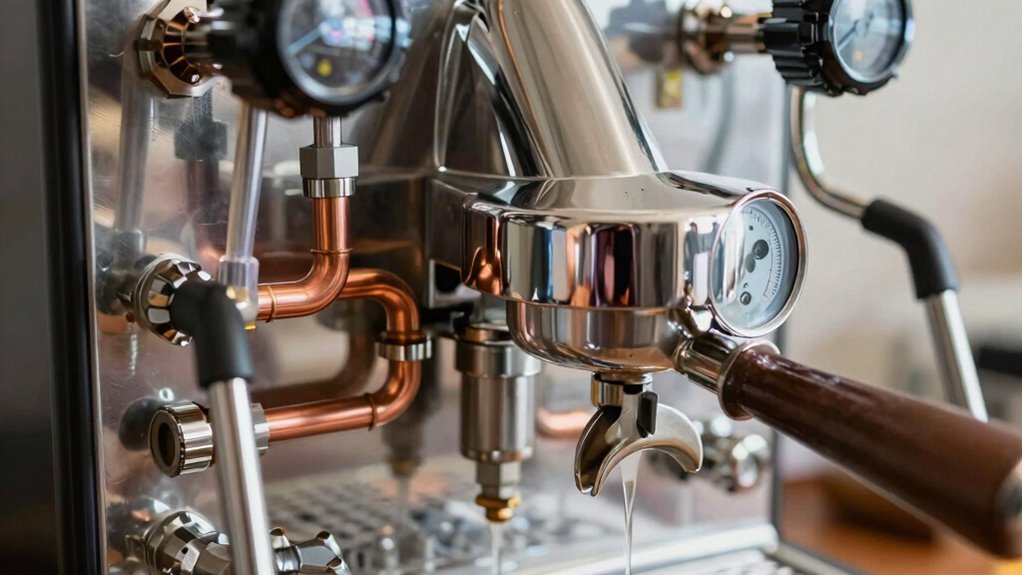
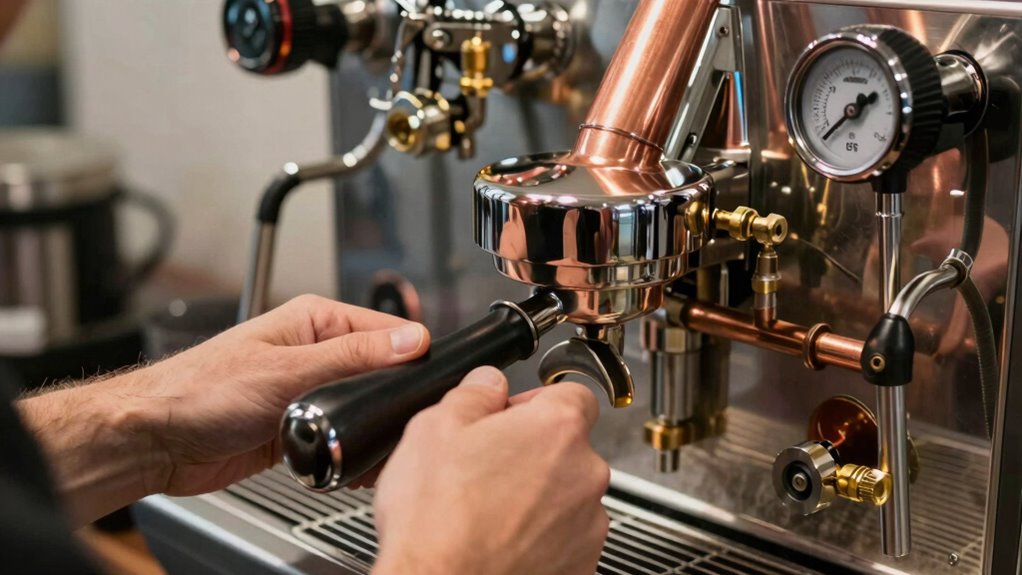
The parts you’ll need to connect your espresso machine include a sturdy water inlet valve, a pressure regulator, and flexible hoses or pipes rated for plumbing use. The inlet valve connects to your water supply line, allowing you to control when water flows into the machine. The pressure regulator attaches downstream of the valve, maintaining a steady pressure regardless of fluctuations in your water supply. Make sure the hoses are compatible with your machine’s fittings and are rated for potable water. Properly securing all connections with fittings and clamps prevents leaks and maintains safe operation.
Finally, always test your setup after installation. Turn on the water supply and observe the pressure gauge or indicator on your machine. Adjust the pressure regulator if necessary to achieve the ideal pressure. Check for leaks at every connection, and ensure the flow rate is smooth and steady. Fine-tuning these settings helps you get the perfect extraction every time, making your espresso experience truly exceptional. Proper plumbing isn’t just about safety; it’s about creating the perfect foundation for consistently delicious coffee.
Frequently Asked Questions
How Do I Prevent Leaks in My Espresso Machine Plumbing?
To prevent leaks in your espresso machine plumbing, regularly check for leak detection signs like drips or dampness. Maintain seals by cleaning and replacing worn-out gaskets and O-rings promptly. Make certain all fittings are tight but not overtightened, as this can damage seals. Using high-quality parts and performing routine inspections help keep your machine leak-free, ensuring consistent performance and avoiding water damage.
What’s the Ideal Water Pressure for Different Espresso Machines?
Think of your espresso machine like a symphony; the right water pressure sets the perfect harmony. For most machines, aim for 9 bars of pressure, but always check your model’s specs for water pressure calibration and machine compatibility. Too high or low can ruin your shot, so use a pressure gauge to fine-tune. This guarantees ideal extraction, giving you that rich, balanced flavor every time.
Can I Install a Water Filter in My Machine’s Plumbing?
Yes, you can install a water filter in your espresso machine’s plumbing. To do this, you’ll need to perform some plumbing modifications, like attaching the filter inline with your water line. Make sure the filter is compatible with your machine’s water pressure and flow rate. Proper installation helps improve water quality, enhances taste, and can extend your machine’s lifespan. Always follow manufacturer instructions for the best results.
How Often Should I Check and Replace Plumbing Parts?
They say “a stitch in time saves nine,” so you should check your plumbing parts every 3 to 6 months. Regular maintenance keeps your machine running smoothly and extends part longevity. Inspect hoses, seals, and filters for wear or buildup, replacing them if needed. Staying proactive guarantees consistent espresso quality and prevents costly repairs down the line—think of it as giving your machine the care it deserves.
What Tools Are Necessary for Plumbing an Espresso Machine?
You’ll need a few essential tools for plumbing an espresso machine. An adjustable wrench helps tighten plumbing connections securely, while a Phillips and flathead screwdriver assist with securing fittings. A wrench set ensures you can handle various sizes of fittings and connections. Additionally, plumbing tape (Teflon tape) is vital for sealing connections and preventing leaks. Keep these tools handy to guarantee proper assembly and maintenance of your espresso machine’s plumbing system.
Conclusion
Now that you know how to plumb your espresso machine, you’re basically a brewing superhero ready to conquer any coffee challenge. With the right pressure, flow, and parts, you’ll brew perfect shots that could make even the most seasoned barista jealous. Just remember, when it comes to espresso, precision is everything—so don’t let any tiny mistake turn your setup into a disaster. You’re now equipped to craft espresso greatness—go make some magic!