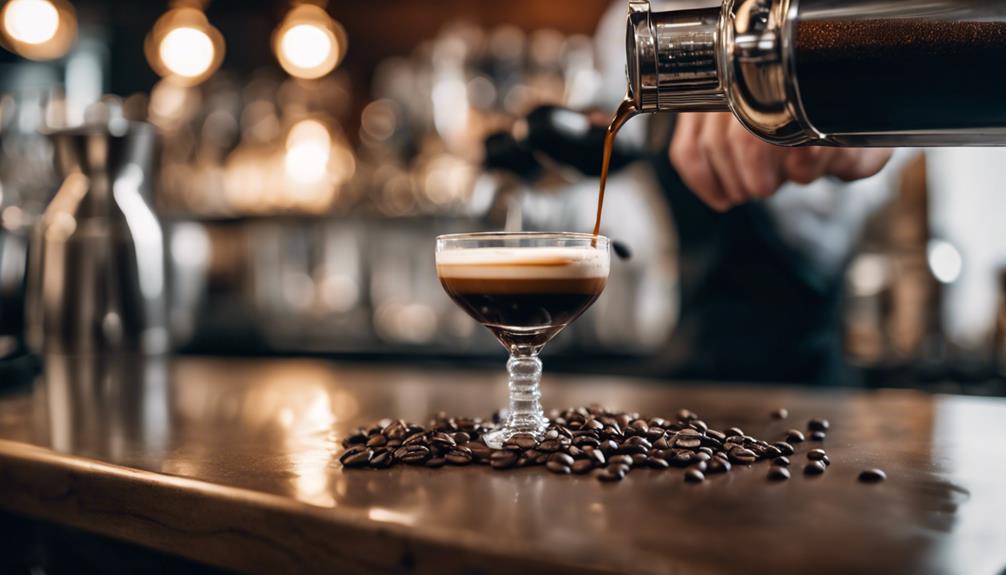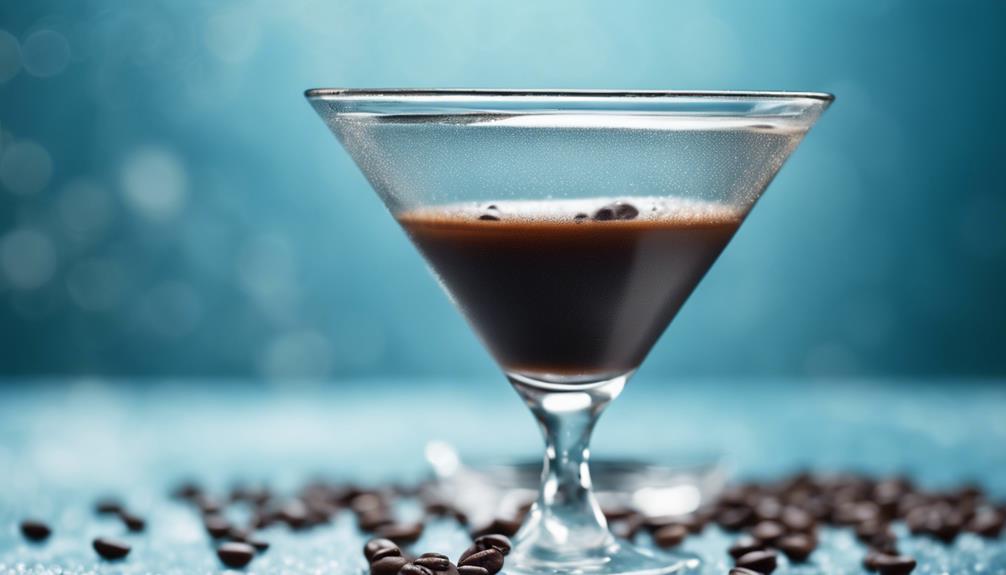
Choosing between single-origin and blended espresso depends on what you prefer. Single-origin beans highlight the unique flavors and terroir of a specific region, offering distinct notes like fruity or floral qualities. Blends combine beans from different areas for a complex, balanced taste with richer depth. If you want to explore regional nuances or enjoy consistent flavors, single-origin is your choice. For a versatile, layered experience, go for a blend. Keep exploring to discover which suits your style best.
Key Takeaways
- Single-origin espresso highlights unique regional flavors, while blends offer a balanced, layered taste profile.
- Single-origin beans provide consistent flavors over time, whereas blends can vary with sourcing changes.
- Blends are crafted for versatility and broader appeal, while single-origin showcases specific terroir characteristics.
- Proper temperature control enhances flavor clarity in single-origin espresso; blends are more forgiving.
- Choice depends on whether you prefer the distinct expressiveness of single-origin or the complexity of a well-balanced blend.
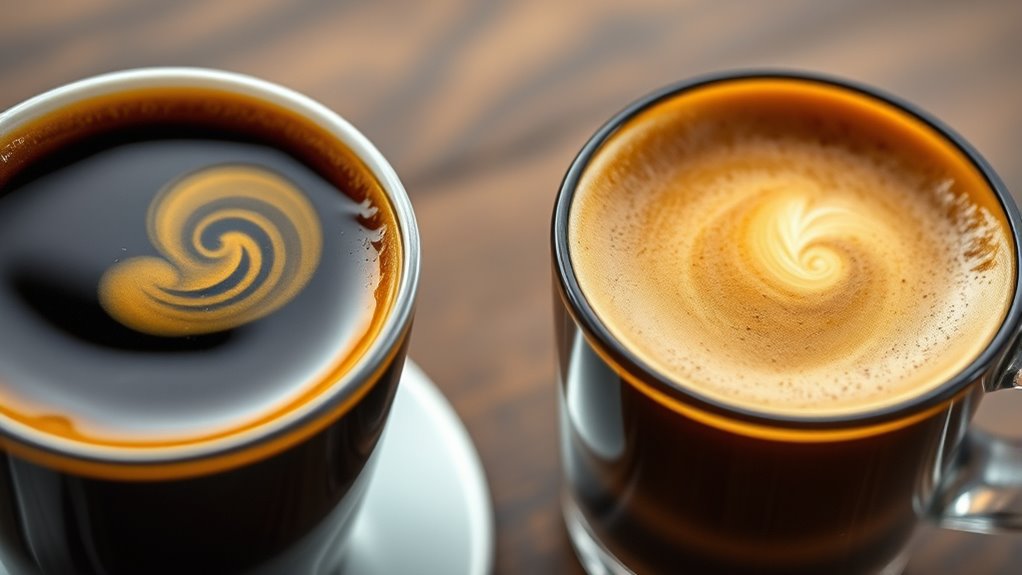
Choosing between a single-origin and a blend for espresso can substantially impact the flavor and overall experience of your brew. When you select a single-origin coffee, you’re opting for beans from a specific region, country, or even farm. This focus allows you to enjoy a unique flavor profile that reflects the terroir—those natural factors like soil, climate, and altitude—that influence the beans. Single-origin coffees often have a distinct character, showcasing specific tasting notes such as fruity, floral, or nutty nuances. Because these beans come from a consistent source, sourcing consistency is usually higher, meaning each batch tends to taste similar, giving you a reliable experience. This consistency is essential if you prefer to refine your palate or repeatedly enjoy a particular flavor profile. On the other hand, blends combine beans from multiple origins, carefully crafted to achieve a balanced, harmonious flavor. This approach offers a different kind of complexity—one built through the artful combination of various beans to create a cohesive taste profile. Blends often aim for flavor complexity by blending beans that complement each other’s strengths, such as balancing acidity with body or sweetness with bitterness. The goal is to produce an espresso with depth and richness that can appeal to a broad range of preferences. Because they incorporate beans from different sources, blends can sometimes introduce variability, especially if the supplier’s sourcing practices aren’t consistent. However, professional roasters work hard to maintain sourcing consistency across batches, ensuring that each cup remains faithful to the intended flavor profile. If you’re someone who appreciates a complex, layered taste that evolves with each sip, a blend might be your best choice. Conversely, if you want to explore the distinctive character of a particular region or farm, a single-origin is more suitable. It allows you to appreciate the subtle differences in flavor that come from specific terroirs, giving you a more focused tasting experience. Additionally, advances in geothermal heat pump technology ensure the consistent temperature control necessary for optimal extraction of single-origin beans, enhancing the clarity of their unique flavors. Ultimately, your preference hinges on whether you value the unique, expressive qualities of a single-origin or the balanced, intricate flavor complexity achieved through blending. Both options have their merits, and trying both can deepen your appreciation for espresso’s versatility. If sourcing consistency is vital for your daily routine, you might lean toward single-origin coffees from trusted sources. If you enjoy discovering new tastes and nuances, experimenting with blends could be more satisfying. Either way, understanding these differences helps you make informed choices to elevate your espresso experience.

SHARDOR Professional 64mm Burr Coffee Grinder with 100 Grind Settings and All-Metal Chamber, Coffee Bean Grinder with Adjustable Electronic Timer and LED Display, Anti-Static,Black
64mm Flat Burr: Achieves uniform grinding with minimal heat generation, enhancing the flavor profile for a superior taste...
As an affiliate, we earn on qualifying purchases.
Frequently Asked Questions
How Does Roast Level Impact Flavor in Single-Origin Versus Blended Espresso?
You’ll find that roast level substantially impacts flavor in both single-origin and blended espresso, affecting flavor complexity and roast development. A lighter roast highlights the unique origin notes, bringing out bright, intricate flavors, while a darker roast emphasizes body and roasted undertones. In blends, roast level balances flavors, creating harmony. Adjusting roast development lets you fine-tune the complexity and depth, whether you’re working with a single origin or a blend.
Can Blending Mask Defects Found in Single-Origin Beans?
Like a skilled painter, you can use blending to mask defects in single-origin beans, concealing imperfections through flavor masking and defect concealment. By carefully selecting complementary beans, you hide any flaws, creating a harmonious espresso. However, this technique can also hide true quality issues, so you must be cautious. Blending offers a way to improve overall flavor, but it shouldn’t cover up underlying problems in your beans.
Which Option Offers Better Consistency Over Time—Single-Origin or Blend?
You’ll find that blends generally offer better consistency over time because they combine beans from multiple sources, balancing flavor complexity and smoothing out variations. Single-origin beans can vary due to seasonal changes and sourcing differences, making it harder to maintain uniformity. If you prioritize consistent flavor and reliable results, a well-crafted blend is your best choice, providing stability while still delivering rich, complex espresso.
How Do Cost Differences Influence Choice Between Single-Origin and Blended Espresso?
You’ll find that blends typically cost less, offering better cost efficiency, making them appealing if you want consistent affordability. Single-origin beans often have higher prices due to limited supply and premium quality, which can influence brand perception as more artisanal. If budget is a priority, blending allows for cost savings, but if you value unique flavors and exclusivity, investing in single-origin espresso might be worth the extra expense.
Are Certain Brewing Methods Better Suited for One Over the Other?
Certain brewing techniques work better for single-origin or blended espresso because they optimize flavor extraction. For instance, pour-over and AeroPress highlight the unique nuances of single-origin beans, requiring precise control over brewing time and temperature. Conversely, espresso machines with high-pressure extraction suit blends, as they balance complex flavors and create a consistent profile. So, choose your brewing method based on the desired flavor profile and how well it complements your coffee type.
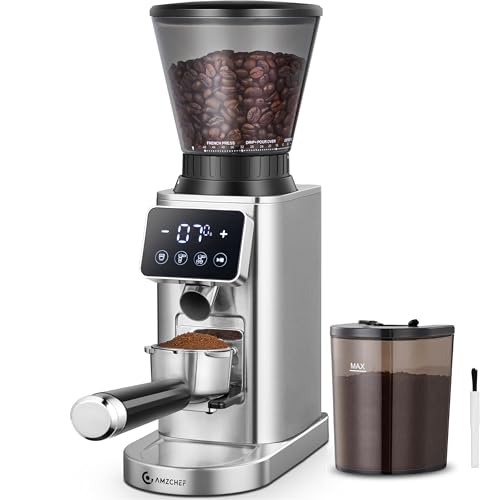
AMZCHEF Coffee Grinder, Burr Coffee Bean Grinder for Home Use with 48 Precise Grind Settings, Detachable Funnel Stand for Espresso, LED Control Panel, Anti-static Design, Silver
DESIGN FOR ESPRESSO:We provide portafilter holder ,Portafilter holder pad and photophobic coffee ground container. It is compatible with...
As an affiliate, we earn on qualifying purchases.
Conclusion
In the battle of single-origin versus blend for espresso, the choice is like picking your adventure—either a pure, unadulterated journey to a specific region’s soul or an exhilarating rollercoaster of complex flavors colliding in every sip. Whichever you choose, remember, it’s not just coffee; it’s a magic potion capable of transforming your day from mundane to extraordinary in a single, heavenly gulp. So go ahead—dive in and let your taste buds explode with delight!

Coffee Grinder, Viesimple Gen 4, Single Dose Burr Coffee Grinders with Magnetic Dosing Cup, Electric Coffee Bean Grinder with Anti-Static Design, Espresso Grinder Compact & Quiet for Home Use Black
THE DO-IT-ALL GRINDER:The electric coffee grinder is a powerful all-purpose coffee grinder featuring 5-blade of 48 mm conical...
As an affiliate, we earn on qualifying purchases.

Neretva Espresso Grinder, 2 in 1 Professional Coffee Bean Grinder Stainless Steel Suit 51~58mm Portafilter Burr Coffee Grinder 30 Precise Setting&Anti-Static for Espresso/French Press/Drip/Moka-Silver
PROFESSIONAL CONICAL BURR COFFEE GRINDER- WIth new upgraded 3.0 conical burr grinding technoloy, the coffee grinder ensures that...
As an affiliate, we earn on qualifying purchases.