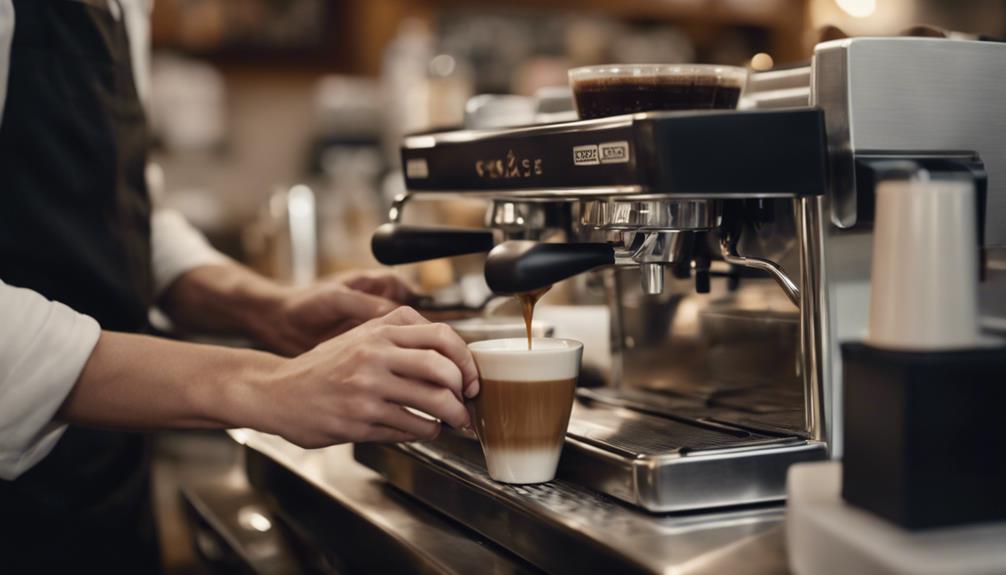

Many believe tamping force, brewing time, and crema define a good espresso, but that’s a myth. Proper calibration of your grinder and controlling temperature are far more important for consistent, great flavor. Tamping should level the coffee bed without crushing it, and brewing time varies based on temperature and grind size. Crema alone doesn’t guarantee quality—focused extraction makes the difference. Want to know how these factors work together for perfect espresso? Keep exploring.
Key Takeaways
- Proper grinder calibration ensures consistent extraction and reduces reliance on tamping force to improve espresso quality.
- Tamping should create a level, compact surface without excessive pressure; over-tamping can harm extraction.
- A brewing time of 25-30 seconds is a guideline; temperature critically affects flavor more than duration.
- Maintaining correct brewing temperature is essential for balanced flavor, regardless of shot timing.
- Crema quality reflects overall extraction and proper technique, not just tamping force or shot duration.

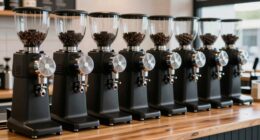
Have you ever wondered if everything you’ve heard about espresso is true? There’s a lot of advice out there, and some of it can be misleading. One common myth revolves around tamping force. Many believe that pressing down with maximum pressure guarantees better extraction, but that’s not entirely accurate. Instead, focus on proper grinder calibration. When your grinder is well-calibrated, it produces consistent, uniform grounds, which are essential for a good shot. If your grind is too fine or too coarse, no amount of tamping force will fix the resulting espresso. Proper grinder calibration ensures the coffee bed is evenly packed, allowing water to flow through at the right rate. This makes the tamping force less critical; the goal is to apply enough pressure to create a level, compact surface, but not so much that you crush the grounds unevenly. A balanced tamp combined with the right grind size and calibration produces better extraction and a richer flavor profile. Additionally, understanding the extraction process can help you fine-tune your technique for optimal results.
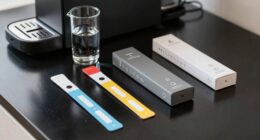
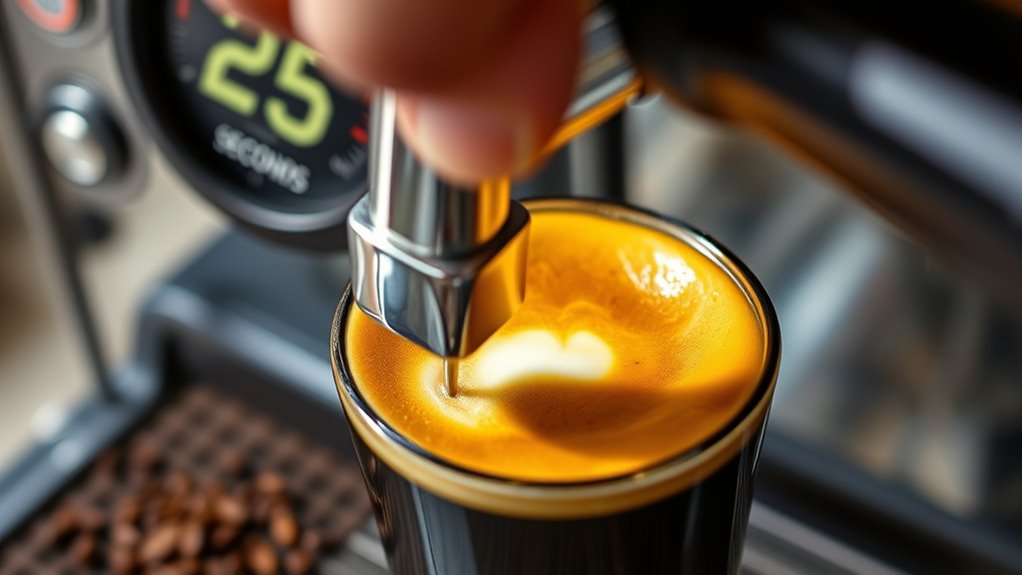
Another myth concerns brewing time, often simplified as “pull the shot for about 25 to 30 seconds.” While timing can be a useful guideline, it’s not the ultimate rule. Instead, paying attention to brewing temperature is vital. Brewing temperature influences extraction more than just timing. If your machine’s brewing temperature is too low, the espresso will taste flat and underdeveloped; too high, and it can become bitter and over-extracted. Achieving the right brewing temperature means your espresso pulls correctly, regardless of whether it takes 25 seconds or slightly longer. Proper temperature control ensures your coffee’s flavors are fully expressed without bitterness or sourness. Regularly checking and adjusting your machine’s temperature settings can make a significant difference, especially if your machine allows for precise calibration.
Many believe that crema is a sign of a perfect shot, but that’s another myth. Crema is important, but its presence alone doesn’t determine quality. Instead, focus on consistency in your extraction process—proper grinder calibration, correct brewing temperature, and proper tamping. These factors influence crema’s thickness, richness, and stability. When your equipment is well-tuned, and you follow good extraction practices, you’ll naturally produce a crema that enhances the overall experience. Remember, espresso is a delicate balance of variables, not just a matter of hitting specific numbers or applying brute force. Understanding the importance of grinder calibration and brewing temperature can help you move past myths and truly master making excellent espresso.
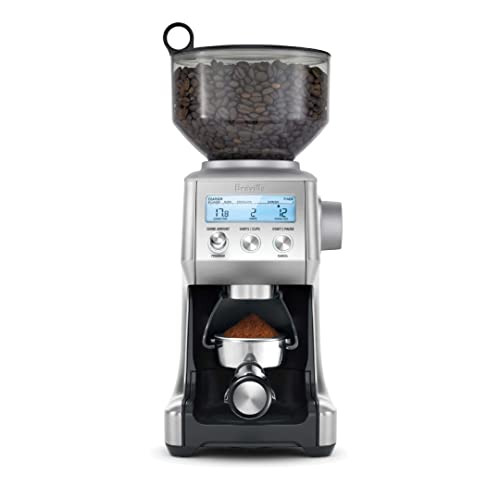
Breville BCG820BSS Smart Grinder Pro for Coffee and Espresso, Brushed Stainless Steel
The Breville Smart Grinder Pro includes 60 unique settings – this programmable conical burr grinder offers a wide...
As an affiliate, we earn on qualifying purchases.
Frequently Asked Questions
How Does Water Temperature Affect Espresso Quality?
Water temperature directly impacts your espresso’s quality by influencing water chemistry and brewing temperature. If your water’s too hot, it can over-extract, resulting in bitterness; too cool, and you get under-extraction, leading to sourness. Maintaining a proper brewing temperature, typically around 195-205°F (90-96°C), guarantees maximum extraction of flavors and balanced acidity. Adjusting your water temperature helps you craft a richer, more flavorful espresso every time.
Can Different Coffee Beans Impact Crema Thickness?
Yes, different coffee bean varieties and roasting levels can impact crema thickness. Light roasts often produce a more delicate crema, while darker roasts tend to yield thicker, richer crema due to their oils and solubility. Some bean varieties, like Arabica or Robusta, also influence crema quality—Robusta beans generally create thicker, more stable crema because of their higher oil content. So, your choice of beans and roast directly affects your espresso’s crema.
Is It Better to Use Fresh or Aged Coffee for Espresso?
You should use fresh coffee beans for the best espresso, as coffee freshness greatly impacts flavor and crema quality. Bean aging causes a loss of aromatic oils, resulting in a duller taste and thinner crema. When beans are aged, they become less vibrant, so sticking with recently roasted, fresh beans ensures a richer, more flavorful espresso with a better crema. Always prioritize coffee freshness for ideal results.
How Does Grind Size Influence Extraction Time?
Grind size considerably influences extraction time because it affects grind uniformity and particle size. When you use a fine grind, the smaller particles increase resistance, leading to longer extraction, while coarser grinds allow water to flow faster, shortening it. Ensuring uniformity in your grind prevents uneven extraction, helping you achieve a balanced flavor. Adjusting grind size based on your espresso machine and beans is key to controlling extraction time effectively.
Do Ambient Room Conditions Affect Espresso Brewing?
Imagine a warm, humid room where your espresso’s aroma lingers, contrasting sharply with a cool, dry space that leaves your brew flat. Ambient humidity and room lighting influence brewing by affecting grind consistency and extraction. High humidity can make coffee grounds clump, slowing extraction, while poor lighting might cause measurement errors. So, yes, your environment plays a significant role, subtly shaping the flavor and quality of your espresso.

Neretva Espresso Grinder, 2 in 1 Professional Coffee Bean Grinder Stainless Steel Suit 51~58mm Portafilter Burr Coffee Grinder 30 Precise Setting&Anti-Static for Espresso/French Press/Drip/Moka-Silver
PROFESSIONAL CONICAL BURR COFFEE GRINDER- WIth new upgraded 3.0 conical burr grinding technoloy, the coffee grinder ensures that...
As an affiliate, we earn on qualifying purchases.
Conclusion
Did you know that over 60% of espresso enthusiasts believe tamping pressure is the only key to perfect shots? But the truth is, myths like timing and crema often overshadow the real factors that matter. By understanding the science behind brewing, you can elevate your espresso game. Don’t get caught up in myths—experiment and learn what truly works for your taste. Your perfect shot is just a few adjustments away!

SHARDOR Professional 64mm Burr Coffee Grinder with 100 Grind Settings and All-Metal Chamber, Coffee Bean Grinder with Adjustable Electronic Timer and LED Display, Anti-Static,Black
64mm Flat Burr: Achieves uniform grinding with minimal heat generation, enhancing the flavor profile for a superior taste...
As an affiliate, we earn on qualifying purchases.

SHARDOR Conical Burr Espresso Coffee Grinder Electric with Precision Timer 2.0, Touchscreen Adjustable Burr Mill with 51 Precise Settings for Home Use, Anti-static, Stainless Steel
Premium 40 Millimeter Stainless Steel Conical Burr: Designed to minimize grinding heat and protect the essential oils in...
As an affiliate, we earn on qualifying purchases.