Decaf espresso offers a bold, flavorful experience without the caffeine jitters or sleep issues. Expect rich notes like chocolate, caramel, or nuts, though the decaffeination process may alter some delicate flavors. To get the most out of your decaf, try different brewing methods and adjust grind size, pressure, and time — small tweaks make a big difference. Keep exploring these techniques, and you’ll discover how satisfying decaf espresso can truly be.
Key Takeaways
- Decaf espresso offers rich flavor without caffeine, suitable for sensitive or sleep-conscious drinkers.
- Proper brewing techniques, including grind size and extraction time, are essential to maximize flavor in decaf espresso.
- Different brewing methods like espresso machines, AeroPress, or Moka pot produce varied flavor profiles in decaf espresso.
- Selecting beans with complex, natural flavors enhances the overall taste of decaf espresso.
- Adjusting brewing parameters helps compensate for decaffeination effects, ensuring a full-bodied and satisfying shot.
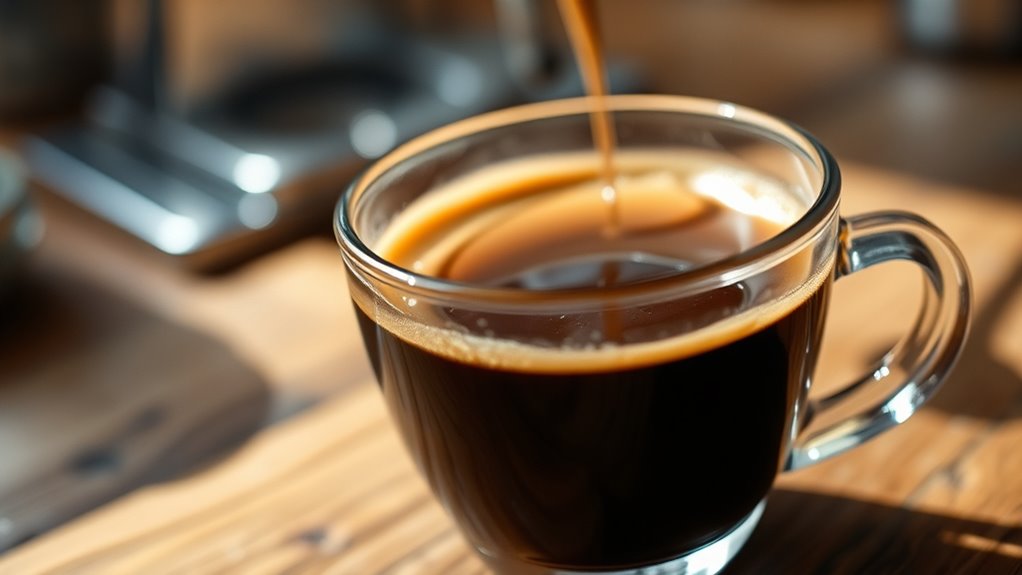
Have you ever wondered if you can enjoy the rich, bold flavor of espresso without the caffeine kick? The good news is, you definitely can. Decaf espresso offers a satisfying experience for those who crave the taste but want to avoid the jitters or sleep disruption associated with caffeine. But to truly appreciate it, you need to understand the nuances of its flavor profiles and how different brewing methods influence those flavors. Unlike regular espresso, which often boasts complex, layered notes, decaf espresso can sometimes seem milder or less vibrant. However, with the right approach, you can unlock a depth of flavor that rivals its caffeinated counterpart.
Decaf espresso can deliver rich, bold flavors without the caffeine jitters.
When exploring decaf espresso, pay close attention to flavor profiles. These include hints of chocolate, caramel, nuts, fruit, or even spicy undertones. The decaffeination process can slightly alter these notes, sometimes stripping away some of the brighter, more delicate flavors. But skilled roasters and baristas know how to select beans and roasting techniques that preserve or enhance the desired taste. The key is choosing beans that have naturally rich, complex flavor characteristics, so your decaf shot still delivers a satisfying punch. You might find that certain beans or roasts lend themselves better to decaffeination, offering a more authentic espresso experience.
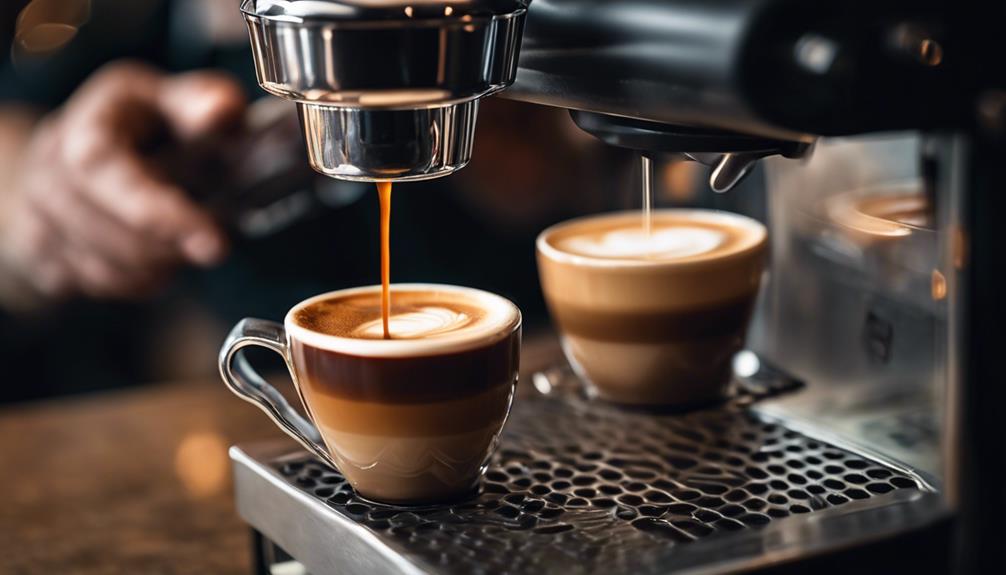
Brewing methods play an essential role in shaping what your decaf espresso will taste like. Traditional espresso machines, which use high pressure and fine grounds, can produce a concentrated shot with a thick crema and robust flavor. Using a well-calibrated machine allows you to extract the maximum flavor from decaf beans, highlighting their richness and depth. Alternatively, methods like AeroPress or Moka pots can also work well, providing different flavor nuances depending on how they extract the coffee. For example, AeroPress can produce a clean, bright shot, emphasizing fruitier notes, while a Moka pot may yield a more intense, chocolatey profile. Experimenting with different brewing methods helps you discover what best captures the essence of decaf espresso for your palate.
Ultimately, making decaf espresso at home or ordering it at your favorite café requires understanding that the process impacts flavor profiles. Adjusting grind size, brewing time, and pressure can enhance your experience, ensuring that your decaf shot is full of character. It’s about finding the right balance and technique to maximize flavor, even without caffeine. So, yes, you can enjoy a bold, aromatic espresso without the caffeine jitters—just pay attention to your beans, brewing method, and how you pull that shot. With a little practice, you’ll find decaf espresso that satisfies your craving for rich, intense coffee, minus the stimulant.
Frequently Asked Questions
Does Decaf Espresso Taste Similar to Regular Espresso?
Decaf espresso doesn’t taste exactly like regular espresso, but it offers a similar flavor profile. You might notice subtle differences due to the decaffeination process, which can slightly alter the flavor comparison. Since decaf has lower caffeine content, it usually lacks the same energizing punch, but the rich, robust taste remains. Overall, if you enjoy espresso’s flavor, you’ll likely find decaf a satisfying alternative, even with its caffeine differences.
What Is the Best Grind Size for Decaf Espresso?
You should use a fine grind size for decaf espresso to guarantee proper extraction. Focus on maintaining grind consistency, as it affects flavor and extraction quality. Keep your brew temperature around 195-205°F, which helps compensate for decaf’s different solubility. Adjust the grind size slightly if your shots are too bitter or sour, and always aim for uniformity to get the best flavor from your decaf espresso.
How Long Should Decaf Espresso Shots Be Pulled?
You should aim for an extraction time of about 25-30 seconds for your decaf espresso shot. The shot duration influences the flavor and strength, so monitor closely. If your shot pulls too quickly, it may be under-extracted, leading to sour flavors. Conversely, a longer shot might become bitter. Adjust grind size or tamping to achieve the ideal balance, ensuring you get a rich, well-rounded decaf espresso.
Can Decaf Espresso Be Used in Specialty Coffee Recipes?
Yes, you can definitely use decaf espresso in specialty coffee recipes. It offers a versatile base for creative decaf espresso recipes, allowing you to explore unique flavor pairing options without the caffeine boost. You might try blending it with flavored syrups, spices, or milk alternatives to enhance its profile. Decaf espresso adds richness and depth, making your specialty drinks just as satisfying while catering to those who prefer or need decaffeinated options.
Are There Any Health Benefits Unique to Decaf Espresso?
Imagine a knight’s shield protecting you—decaf espresso offers unique health benefits, mainly through its antioxidant properties. While it has less caffeine, it still provides these antioxidants that may help reduce inflammation and combat free radicals. You can enjoy the rich flavor without the jitters, making it a healthier choice for your daily routine. So, yes, decaf espresso offers health benefits that support your overall well-being.
Conclusion
Decaf espresso might not pack the caffeine punch, but it’s just as rich and satisfying when brewed right. With the right beans, grind, and technique, you can craft a cup that rivals its caffeinated cousin. Think of it as a symphony where every note matters—you hold the conductor’s baton. So, don’t shy away from exploring decaf; it’s a hidden treasure waiting to be uncovered in your coffee journey.