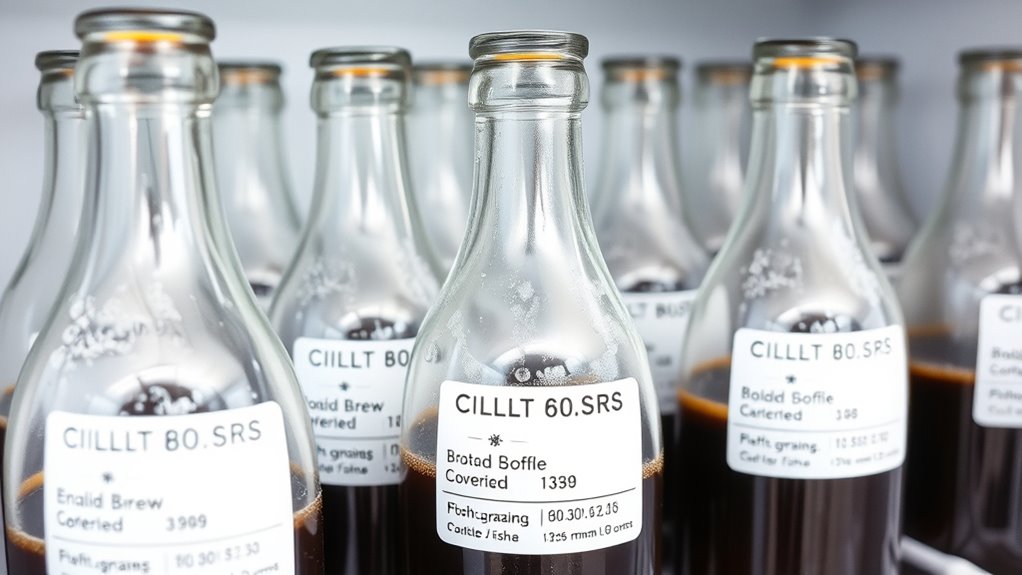

To keep your cold brew safe, store it in a clean, airtight container in the fridge at or below 40°F. Refrigeration slows bacteria growth and helps prevent spoilage, so you should consume it within 7 to 10 days. Always cover your cold brew to avoid contamination from airborne germs, and check for any signs of spoilage like off smells, cloudiness, or mold. Continuing will help you master the best safety tips for enjoying your cold brew safely.
Key Takeaways
- Store cold brew in airtight, sanitized containers in the refrigerator at or below 40°F (4°C).
- Refrigerate promptly after brewing or serving to slow bacterial growth.
- Consume within 7 to 10 days and monitor for signs of spoilage, such as off smell or cloudiness.
- Keep cold brew covered and minimize exposure to air and contaminants during storage.
- Use clean utensils and avoid cross-contamination to ensure safety and prevent bacteria introduction.

Cold brew coffee has become a popular beverage for many, but ensuring its safety is essential. When you prepare and store cold brew, you’re responsible for preventing bacteria growth that could lead to spoilage or health issues. Proper storage practices help you avoid contamination and keep your cold brew fresh and safe to drink.
One of the most critical steps in food safety is understanding how bacteria grow in brewed coffee. If you leave cold brew at room temperature for too long, bacteria can multiply rapidly, increasing the risk of foodborne illnesses. To prevent this, you should always refrigerate your cold brew promptly after brewing or serving. Keeping it at or below 40°F (4°C) considerably slows down bacteria growth, ensuring the beverage remains safe for consumption over several days.
Prompted to refrigerate cold brew promptly to slow bacteria growth and keep it safe for several days.
Contamination prevention is another key aspect of cold brew food safety. Always use clean, sanitized containers and utensils when handling your cold brew. Cross-contamination from dirty equipment or unwashed hands can introduce harmful bacteria, which may not be visible but can cause health issues. Make sure your storage bottles are thoroughly cleaned and dried before filling them with cold brew. Additionally, avoid leaving the beverage exposed to open air for extended periods, as airborne germs can settle and contaminate your drink.
When storing cold brew in the fridge, it’s best to keep it in airtight containers. This minimizes exposure to airborne bacteria and prevents the absorption of other fridge odors. Labeling your containers with the date of brewing helps you keep track of how long the cold brew has been stored. Remember, even refrigerated cold brew is best consumed within 7 to 10 days to enjoy maximum quality and safety. After this period, bacteria can still multiply slowly, and the taste may deteriorate.
Always check your cold brew before drinking. If it develops an off smell, strange taste, or appears cloudy or slimy, discard it immediately. These are signs that bacteria or mold may have grown, compromising safety. Additionally, avoid reheating cold brew, as doing so can create a favorable environment for bacteria if not heated thoroughly. Staying informed about food safety practices is essential for maintaining the quality and healthfulness of your beverages.
Frequently Asked Questions
How Long Can Cold Brew Coffee Stay Safe at Room Temperature?
You should avoid leaving cold brew coffee at room temperature for more than 2 hours. Bacteria and mold can grow rapidly at room temperature, increasing the risk of microbial growth. After this time, the coffee becomes unsafe to drink and may cause foodborne illnesses. Always refrigerate your cold brew promptly to keep it fresh and safe for up to two weeks, preventing microbial growth and ensuring quality.
Does Storing Cold Brew in Plastic Affect Its Safety?
Storing cold brew in plastic containers is generally safe, but be aware that some plastics may cause chemical leaching over time. This can affect the flavor and potentially introduce unwanted chemicals into your coffee. To minimize risks, use BPA-free, food-grade plastics and avoid storing cold brew in containers that aren’t designed for liquids. Always check for signs of deterioration, and consider glass containers for safer, long-term storage.
Can I Freeze Leftover Cold Brew for Later Use?
Freezing cold brew is like trapping a summer breeze—you can store leftovers for later, but it may change the flavor and texture. Yes, you can freeze leftover cold brew in an airtight container to extend its life. Just remember, freezing cold brew may dilute it when thawed, so it’s best for iced drinks or recipes. Use it within a month for the best taste.
What Are Signs Cold Cold Brew Has Spoiled?
If your cold brew has spoiled, you’ll notice mold growth on the surface or a sour smell that’s off-putting. It may also taste tangy or rancid. Always trust these signs; if you see mold or detect a sour odor, discard it immediately. Don’t risk consuming spoiled cold brew, as mold and sourness indicate bacteria or fungi that could cause health issues. When in doubt, throw it out.
Is It Safe to Consume Cold Brew After Its Expiration Date?
You shouldn’t consume cold brew after its expiration date, as expiration concerns can affect its safety and quality. Even if it smells or tastes okay, the freshness indicators might be misleading, and harmful bacteria could have developed. Always check the date before drinking, and trust your senses. If anything seems off—sour smell, strange color, or unusual taste—discard it to stay safe.
Conclusion
Now that you know how to store your cold brew safely, imagine the unexpected twist—what if you forget to check it after a week? Could that perfect, invigorating drink turn into something harmful? Stay vigilant and follow these guidelines closely. Your health depends on it. Don’t let a simple oversight ruin your enjoyment. Keep your cold brew fresh and safe, but remember—sometimes the biggest surprises happen when you least expect them.