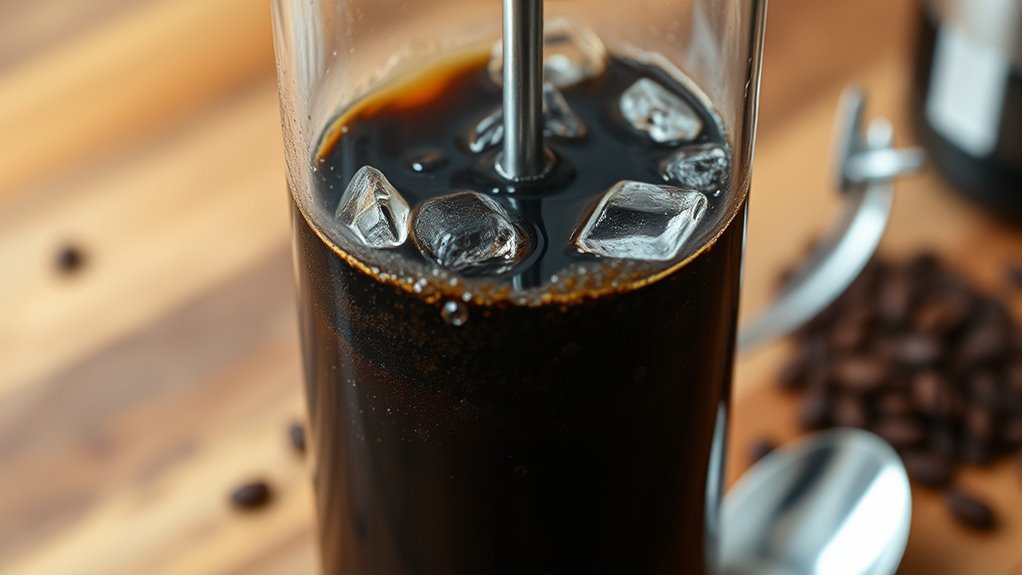

To make cold brew with a French press, start by using a coarse grind, about chunky sea salt, and add 1 ounce of coffee to 4 ounces of filtered cold water. Stir gently to guarantee all grounds are saturated, then cover and steep at room temperature or in the fridge for 12 to 24 hours. After steeping, slowly press the plunger down and enjoy or store. For detailed tips on perfecting your brew, continue exploring this process.
Key Takeaways
- Use a coarse grind, similar to chunky sea salt, to prevent over-extraction and cloudiness.
- Measure about 1 oz (28 g) coffee per 4 oz (120 ml) water, then add to the French press.
- Pour cold, filtered water over grounds, stir gently, and steep for 12–24 hours at room temperature or in the fridge.
- Press the plunger down slowly after steeping to separate grounds and achieve a smooth brew.
- Dilute with water or milk, add preferred flavorings, and serve over ice or store in the fridge up to two weeks.
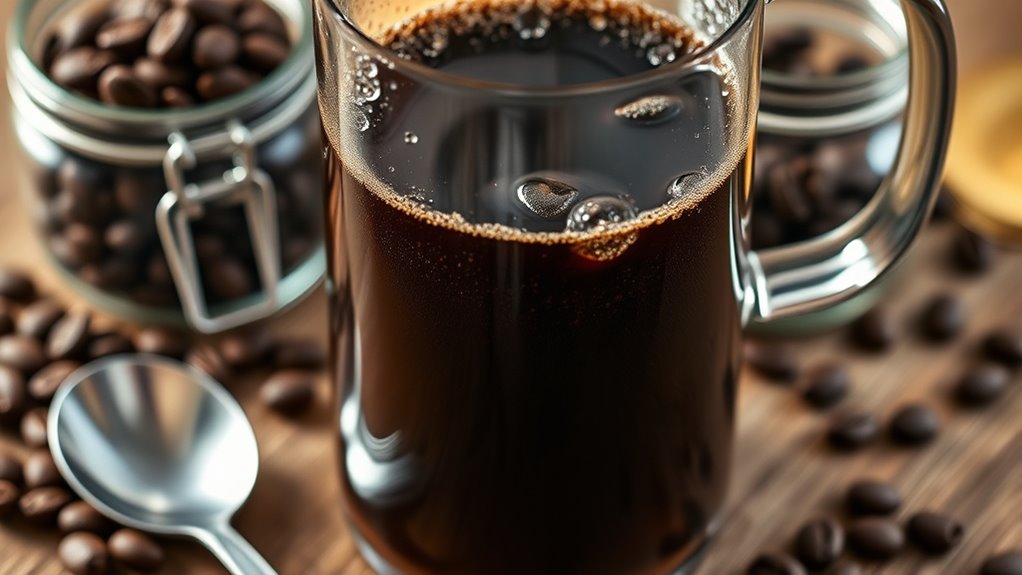
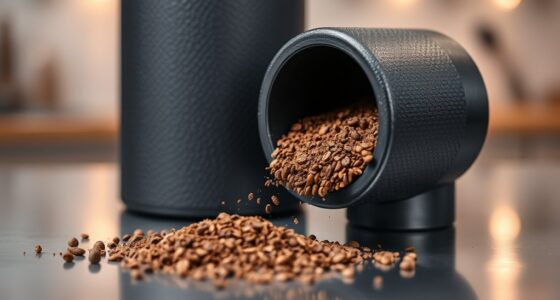
Making cold brew with a French press is an easy and cost-effective way to enjoy smooth, rich coffee at home. The key to a great cold brew starts with choosing the right coffee grind. For this method, you want a coarse grind—think chunky sea salt or peppercorns. A grind that’s too fine can lead to over-extraction and a cloudy, bitter brew, while a grind that’s too coarse might result in weak flavor. Aim for a consistent, coarse texture to guarantee maximum extraction during steeping. The grind size helps control how the water interacts with the coffee, making your brew smooth and balanced.
Next, measure your coffee and water. A common ratio is about 1 ounce (roughly 28 grams) of coffee to 4 ounces (roughly 120 ml) of water, but you can adjust to taste. Once you’ve added your coffee to the French press, pour cold, filtered water over it, making sure all grounds are saturated. Stir gently to break up any clumps and encourage even extraction. The steeping time is vital here. Typically, you’ll want to let the mixture sit at room temperature or in the fridge for about 12 to 24 hours. The longer you steep, the stronger and more concentrated your cold brew will be. You might prefer a shorter steep if you want a lighter flavor or a longer one for a more robust taste. Keep in mind, a steeping time that’s too short may produce a weak brew, while over-steeping can result in bitterness.
After the steeping period, press down the plunger slowly and steadily. This separates the coffee grounds from the liquid, leaving you with a smooth, rich brew. If you notice any sediment, you can strain your cold brew through a fine mesh sieve or cheesecloth for an even cleaner drink. The resulting cold brew can be enjoyed immediately over ice or stored in the fridge for up to two weeks. When serving, dilute it with water, milk, or a milk alternative if you prefer a lighter drink. You can also add sweeteners or flavorings to customize your brew. Remember, the quality of your coffee grind and the steeping time directly influence the flavor and strength of your cold brew. Experiment with these variables until you find the perfect balance for your taste buds. Making cold brew with a French press allows you to control every step, guaranteeing you get a delicious, smooth coffee every time.
Frequently Asked Questions
Can I Use Any Type of Coffee Beans for Cold Brew?
You can use any coffee bean types for cold brew, but your choice affects flavor. Opt for medium or dark roasts for richer, smoother taste, while light roasts offer brighter, more acidic notes. Pay attention to grinding techniques—coarse grind works best for cold brew to prevent over-extraction. Experiment with different beans and grind sizes to find your perfect balance of flavor and strength in your cold brew.
How Long Does Homemade Cold Brew Stay Fresh?
You can expect your homemade cold brew to stay fresh for about 1 to 2 weeks if stored properly. To preserve its freshness, keep it in an airtight container in the refrigerator. Proper storage duration ensures you enjoy the best flavor and aroma without it becoming stale or bitter. Always give it a quick stir before serving, and if it develops an off smell or taste, it’s best to discard it.
Is It Necessary to Filter the Coffee After Brewing?
You don’t need to filter your cold brew after brewing if you want a more robust, full-bodied flavor, but for better coffee filtration and Cold brew clarity, it’s recommended. Filtering removes fine grounds, giving you a smoother, cleaner drink. Use a fine mesh sieve or coffee filter to strain out particles. This step enhances the clarity of your cold brew, making it more enjoyable and visually appealing.
What Is the Best Coffee-To-Water Ratio for French Press Cold Brew?
You should aim for a coffee-to-water ratio of about 1:4 or 1:5 for French press cold brew. This ratio allows ideal coffee extraction without over-extracting, which can lead to bitterness. Use cold or room temperature water to control brewing temperature and guarantee smooth flavor development. Adjust the ratio slightly based on your taste preferences, but starting with this range helps achieve a balanced, delicious cold brew.
Can I Reuse Coffee Grounds for Multiple Brews?
Like a seasoned painter reusing a canvas, you can reuse coffee grounds for multiple brews, but don’t expect the same rich flavor each time. Reusing grounds reduces coffee waste, but the second brew tends to be weaker and less aromatic. To get the best flavor, use fresh grounds for each batch. Reusing grounds works best if you’re okay with a milder taste and want to minimize waste.
Conclusion
Now that you know how to make cold brew with a French press, you’re all set to enjoy a smooth, invigorating coffee anytime. Imagine waking up on a hot summer morning, pouring your homemade cold brew over ice, and savoring every sip. Just like Sarah, who started making her own cold brew and now saves money while impressing friends with her barista skills. Give it a try and transform your coffee routine today!