To prevent your hot plate from overcooking your coffee, use one with adjustable temperature control to set it at a lower, safer level. Switch to a thermal carafe to keep your coffee warm without constant heat, reducing the risk of burnt flavors. Alternatively, consider brewing with methods that let you control the temperature from the start, like pour-over or AeroPress. If you want to keep your coffee fresh and flavorful longer, there’s more to try beyond just adjusting your hot plate.
Key Takeaways
- Use a hot plate with adjustable temperature controls to prevent overheating.
- Switch to thermal carafes or insulated containers to avoid continuous heat exposure.
- Opt for brewing methods like pour-over or AeroPress that don’t rely on hot plates.
- Set the hot plate to a low or medium temperature to maintain warmth without cooking the coffee.
- Remove coffee from the hot plate promptly after brewing to preserve flavor and freshness.

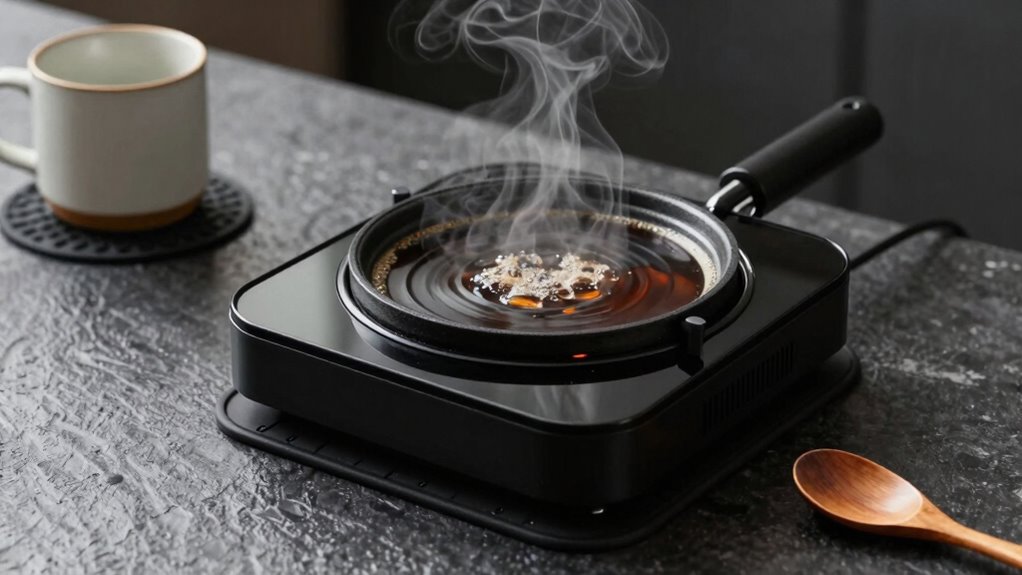
If you’ve ever found your coffee tasting burnt or bitter after sitting on a hot plate, you know how frustrating it can be. The problem often comes down to poor temperature control. Hot plates are designed to keep coffee warm, but many models don’t adjust their heat, causing your brew to cook and become over-extracted. This overexposure to heat not only ruins the flavor but can also make your coffee taste stale or burnt. To prevent this, you need to manage the temperature better, either by adjusting the hot plate’s settings if possible or switching to alternative brewing methods that offer more precise control over temperature.
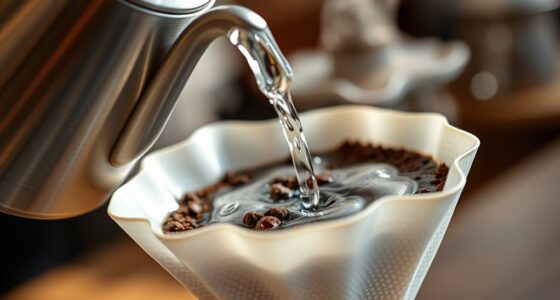
One effective way to stop your coffee from cooking itself is to invest in a hot plate with adjustable temperature controls. These models allow you to set a specific heat level, preventing the coffee from getting too hot and developing that burnt taste. If your current hot plate lacks this feature, consider replacing it or using a temperature-controlled coffee warmer. Alternatively, you can switch to brewing methods that inherently give you more control over heat. For example, pour-over or AeroPress brewing involves manual temperature adjustments, so you can heat water to the ideal temperature and avoid over-extraction. These methods also allow you to serve fresh coffee without the risk of it sitting on a hot surface too long.
Another tip is to use a thermal carafe instead of a traditional thermal mug or glass pot on a hot plate. A good-quality thermal carafe keeps your coffee warm without continuous heat, maintaining flavor without risking overcooking. When you pour coffee into a thermal container, you eliminate the need for the hot plate altogether, so you don’t have to worry about it cooking your brew past its prime. Additionally, brewing directly into a thermal carafe with a pour-over or drip coffee maker can help you control the brewing temperature from the start, ensuring you extract the best flavors without damaging the coffee. High contrast ratios in coffee brewing equipment can also influence how well flavors are preserved during warming.
Ultimately, controlling the temperature is key to preserving your coffee’s flavor and avoiding that burnt or bitter taste. By adjusting your hot plate’s temperature settings or switching to alternative brewing methods, you gain better control over how hot your coffee gets and how long it stays warm. This way, you can enjoy fresh, flavorful coffee every time, free from the frustration of burnt notes and over-extraction. Remember, the goal is to keep your coffee hot enough to enjoy but not so hot that it cooks itself into a less-than-delicious mess.
Frequently Asked Questions
Can I Use a Timer to Prevent Overcooking Coffee on a Hot Plate?
Yes, you can use a timer to prevent overcooking your coffee. Hot plate timers are effective tools for coffee preservation, as they automatically turn off the hot plate after a set period. By setting a hot plate timer, you guarantee your coffee stays fresh without overcooking or burning. This simple solution helps maintain ideal temperature and flavor, making your coffee experience more enjoyable and less wasteful.
What Alternative Methods Exist for Keeping Coffee Warm Without Cooking It?
To keep your coffee warm without cooking it, try using thermal insulation like a cozy mug sleeve or wrap, which gently preserves heat. Beverage warmers are also a gentle touch, maintaining ideal temperature without overdoing it. These methods offer a warm embrace for your coffee, ensuring each sip remains delightful without the risk of overcooking. Enjoy your coffee’s warmth without worry, thanks to simple insulation and warming solutions.
How Does the Type of Hot Plate Material Affect Coffee Heating?
The type of hot plate material profoundly impacts how your coffee heats. Materials with high heat conduction, like aluminum or copper, heat quickly but may cause uneven warming, risking overcooking. Ceramic or glass hot plates offer gentle, consistent heat, helping preserve flavor. Durability varies; stainless steel hot plates tend to last longer, resisting scratches and corrosion. Choosing a hot plate with the right material guarantees better control over your coffee’s temperature and longevity.
Are There Safe, Automatic Shut-Off Devices for Hot Plates?
Think of automatic shut-off devices as the guardian angels for your hot plate. Yes, there are safe, reliable safety devices available that automatically turn off your hot plate when it gets too hot or if it’s left unattended. These devices provide peace of mind, preventing overcooking or accidents. Look for models with built-in automatic shut-off features, ensuring your coffee stays warm without risking a kitchen mishap.
How Long Can Coffee Stay Warm Without Becoming Bitter or Burnt?
You can keep coffee warm for about two hours without risking bitterness or burnt flavor, thanks to proper heat retention. After that, the Coffee flavor starts to deteriorate as the heat causes over-extraction, making it taste flat or bitter. To maintain ideal taste, use a thermal carafe or an insulated mug instead of a hot plate. These options help preserve the coffee’s flavor without risking overexposure to heat.
Conclusion
To keep your coffee fresh and flavorful, make sure you turn off the hot plate once your brew is ready. Think of it like a gentle hand guiding a delicate flower—too much heat can quickly wither it away. By staying attentive and adjusting your settings, you prevent your coffee from overcooking, ensuring every sip tastes just right. Remember, a little care goes a long way in preserving that perfect cup of joe.