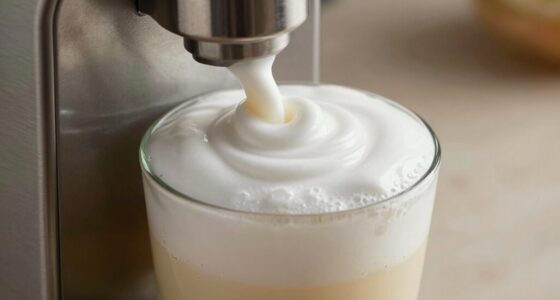
A cappuccino’s style mainly varies between wet and dry, depending on milk-to-foam ratio. A wet cappuccino has more steamed milk and less foam, resulting in a creamier, smoother texture, while a dry cappuccino emphasizes a thick layer of velvety foam for a bolder espresso flavor. Between these extremes, you can customize the amount of foam and milk to suit your taste. If you’re curious about mastering these styles and creating the perfect balance, there’s more to explore below.

Get coffee and tea gear delivered free with Prime
- Fast, free delivery on millions of items
- Prime Video, Amazon Music and more included
- Member-only deals all year
Key Takeaways
- Wet cappuccinos have more steamed milk and less foam, resulting in a creamier texture, while dry cappuccinos feature thicker foam and less milk.
- The ratio of milk to foam determines whether a cappuccino is wet (more milk) or dry (more foam).
- Proper milk frothing techniques influence the foam’s microtexture, affecting the cappuccino’s final style.
- Adjusting the milk-to-foam ratio allows customization between wet and dry cappuccinos.
- Mastering extraction and frothing ensures the desired balance and presentation of any cappuccino style.

Have you ever wondered what makes a perfect cappuccino? It’s not just about grabbing a shot of espresso and adding some milk; it’s about mastering the art of milk frothing techniques and understanding espresso extraction methods. When you get these right, you can craft a cappuccino that’s perfectly balanced, with velvety milk and rich, aromatic espresso. The process begins with your espresso extraction methods—how you brew your coffee can make or break your drink. Using the right grind size, tamping pressure, and water temperature ensures you extract the full flavor from your beans. Ideally, you want a shot that’s smooth, with a rich crema on top, signaling proper extraction. If your espresso is under-extracted, it’ll taste sour or weak; over-extracted, and it might be bitter. Paying close attention to these details is vital because the espresso forms the foundation of your cappuccino. Additionally, the type of equipment you use can significantly influence the quality of your brew, making proper maintenance essential for consistent results.
Once you have your espresso ready, it’s time to focus on milk frothing techniques. The goal is to create a silky, microfoam that blends seamlessly with your espresso. Start with cold, fresh milk—whole milk works best for its creaminess, but you can use alternatives if you prefer. Position your steam wand just below the surface of the milk, and turn it on to introduce air, creating tiny bubbles. As the milk heats up, slowly lower the pitcher to keep the wand near the surface, allowing the milk to expand and develop that smooth microfoam. A key to success here is controlling the temperature—aim for around 150°F (65°C)—so the milk is hot but not scalded. Proper milk frothing techniques involve patience and practice; too much foam or large bubbles will spoil the texture, making the cappuccino look frothy rather than velvety. Once you’ve frothed your milk, give it a gentle swirl to integrate the foam and liquid, ensuring a creamy consistency.
When combining your espresso and frothed milk, the balance is everything. Pour the milk slowly into the espresso, starting in the center and then moving outward to create those classic latte art patterns, if you’re skilled enough. A wet cappuccino features more milk and less foam, resulting in a creamier, less frothy drink, while a dry cappuccino has a thicker foam layer, emphasizing the espresso’s strength. Between these extremes, you can experiment with ratios to find your perfect cup. Mastering both espresso extraction methods and milk frothing techniques allows you to customize your cappuccino to your taste and impress friends with your barista skills. Remember, consistency and attention to detail turn a simple coffee into a truly exceptional beverage.
espresso machine with steam wand
As an affiliate, we earn on qualifying purchases.
As an affiliate, we earn on qualifying purchases.
Frequently Asked Questions
What Are the Origins of Cappuccino?
You might be surprised to learn that cappuccino’s origins date back to the 1700s in Austria, influenced by Italian coffee culture. Its evolution reflects cultural influences from Italy, where it gained popularity in the 20th century. The history of cappuccino shows how it transformed from a simple coffee blend to a beloved beverage worldwide. You can see its rich cultural roots in every frothy sip, connecting past traditions with modern coffee artistry.
How Does Milk Temperature Affect Foam Quality?
You’ll notice that milk temperature considerably impacts foam quality during milk frothing. When you control the temperature carefully, ideally around 150°F (65°C), the foam becomes silky and stable. Too hot, and the milk scalds, ruining the foam’s texture; too cold, and it won’t froth well. Precise temperature control helps you achieve perfect foam, ensuring your cappuccino has that creamy, velvety consistency everyone loves.
Can I Make a Dry Cappuccino at Home?
Imagine pouring a thick, velvety layer of milk froth on your espresso. Yes, you can make a dry cappuccino at home! To do so, focus on creating more milk froth with less liquid milk, increasing the foam’s density. Use a higher coffee-to-milk ratio, and guarantee your milk is properly steamed to achieve the desired dry texture. It’s all about controlling milk froth for that perfect dry cappuccino.
What Are Alternative Milk Options for Cappuccino?
You can try various plant-based milks like almond, oat, soy, or coconut for your cappuccino. Dairy alternatives often froth well and add unique flavors, making your drink customizable. Experiment with different options to find the one that best suits your taste and texture preferences. Keep in mind that some plant-based milks foam better than others, so don’t hesitate to try a few to achieve that perfect creamy cappuccino.
How Do Regional Preferences Influence Cappuccino Styles?
Did you know that Italy prefers a dry cappuccino, while Australia favors a creamier, wetter style? Regional influences and cultural variations shape your cappuccino experience, from the foam thickness to serving techniques. These preferences reflect local tastes and traditions, making each cappuccino unique. So, when you’re ordering, consider regional influences—your ideal cup might differ based on where you are, and embracing these differences can elevate your coffee game.
Conclusion
So, now you’re officially a cappuccino connoisseur—welcome to the caffeinated elite. Whether you prefer a wet, milk-drenched masterpiece or a dry, espresso-heavy punch, remember, it’s all about what makes your mornings bearable. Don’t stress the details; just sip and pretend you’re in a fancy café. After all, in the end, a good cappuccino is just a warm hug in a cup—so go ahead, indulge and make your taste buds happy!
Fall Picks
fall essentials
As an affiliate, we earn on qualifying purchases.