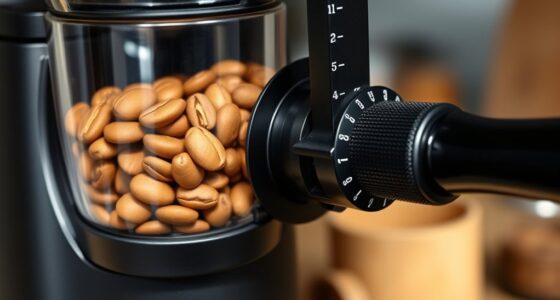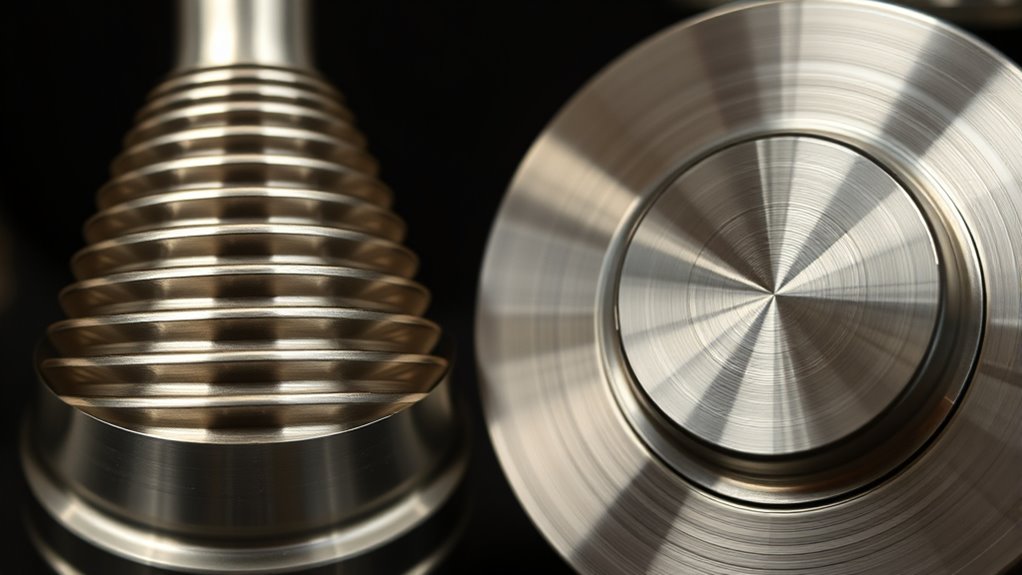

Conical and flat burrs each grind coffee differently, affecting flavor, consistency, and maintenance. Conical burrs produce a wider particle size at coarser settings, are gentler with heat, and need less frequent cleaning, making them versatile for home use. Flat burrs create a very uniform grind, ideal for espresso and commercial settings but may generate more heat and require more upkeep. To truly understand which suits your brewing style, explore these differences further.
Key Takeaways
- Conical burrs produce a more uniform grind at coarser settings and generate less heat, preserving aroma.
- Flat burrs offer highly consistent particle size across a wide range of settings, ideal for espresso.
- Conical burrs tend to require less maintenance and cleaning due to design, while flat burrs may trap more grounds.
- Conical burrs are more forgiving for home brewers and versatile methods; flat burrs excel in commercial and precision brewing.
- Flat burrs create very uniform particles, enhancing extraction and flavor clarity, especially in espresso.
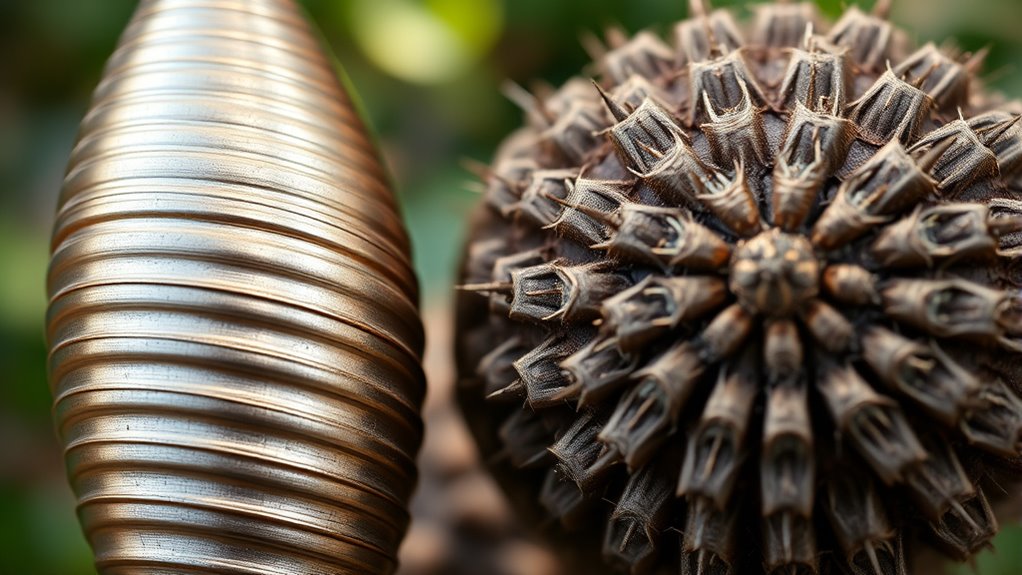
When choosing a coffee grinder, understanding the differences between conical and flat burrs can substantially impact your brewing experience. One of the key factors to consider is grind consistency. Conical burrs tend to produce a more uniform grind, especially at coarser settings, which helps ensure each shot or brew has a balanced flavor profile. Their design naturally reduces heat buildup, which preserves the coffee’s aroma and prevents uneven extraction. Flat burrs, on the other hand, excel at producing very consistent grinds across a wide range of settings, making them particularly popular among espresso enthusiasts. Their flat surface allows for precise control over grind size, resulting in uniform particles that enhance extraction and flavor clarity.
Maintenance ease is another important aspect. Conical burr grinders generally require less frequent cleaning because their design minimizes coffee retention inside the burrs. Since the coffee flows smoothly through the conical shape, you’re less likely to encounter clogs or build-up, making maintenance simpler and quicker. Conversely, flat burr grinders often retain more grounds due to their horizontal grinding surface. This can make cleaning more involved, as residual coffee particles can get trapped between the flat burrs and the casing. Regular maintenance is essential to keep flat burr grinders performing at their best, especially if you switch between grind sizes often or grind frequently.
When considering grind consistency, conical burrs are typically more forgiving for home use, particularly if you’re just starting out or prefer a variety of brewing methods. They tend to produce a slightly wider particle size distribution at finer settings, which can be advantageous for brewing methods like French press or drip. Flat burrs are often preferred in commercial settings or by serious espresso makers because their precise, uniform grind can substantially improve shot quality. However, they demand more attentive cleaning and calibration to maintain their performance and prevent uneven grinds over time.
In terms of durability, both types are built to last, but conical burrs often experience less wear due to their design and lower operational speeds. This can translate into less frequent replacements or repairs. If you prioritize ease of maintenance and consistent results with minimal fuss, conical burrs might be the better choice. On the other hand, if you’re willing to dedicate time to cleaning and calibration for the sake of ultra-precise grinding, flat burrs can deliver exceptional consistency that elevates your coffee experience. Ultimately, your choice depends on your brewing style, maintenance preferences, and the level of grind precision you desire.
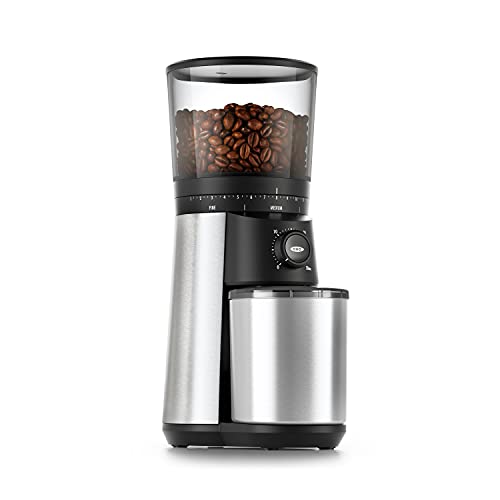
OXO Brew Conical Burr Coffee Grinder – Silver, Stainless Steel Burrs, One-Touch Automatic Smart Grind
Stainless steel conical burrs: Precision grinding system produces uniform coffee grounds for rich, balanced flavor in every cup.
As an affiliate, we earn on qualifying purchases.
As an affiliate, we earn on qualifying purchases.
Frequently Asked Questions
Which Type of Burrs Is Easier to Clean and Maintain?
You’ll find conical burrs easier to clean and maintain because they have simpler designs with fewer parts, making cleaning simplicity a breeze. Their shape minimizes coffee retention, reducing buildup and the need for frequent deep cleaning. With maintenance ease in mind, conical burrs typically require less effort to keep in good condition, saving you time and effort. Overall, they’re more user-friendly for regular cleaning and upkeep.
Do Conical or Flat Burrs Produce More Consistent Grind Sizes?
You’ll find that flat burrs generally produce more consistent grind sizes, offering better particle consistency and improved grind uniformity. Their design keeps the particles even, making them ideal for espresso and other precision brewing methods. Conical burrs, while still effective, tend to have slightly less uniformity but are often quieter and easier to clean. Overall, if grind consistency is your priority, flat burrs are usually the better choice.
Which Burr Type Is Better for Espresso Versus French Press?
Choosing between conical and flat burrs is like picking between a smooth jazz tune and a lively rock beat. For espresso, you’ll want conical burrs—they produce less grind noise, stay sharper longer, and offer precise control. For French press, flat burrs excel with a consistent grind, though they might be noisier and wear out faster. Your choice depends on balance between grind quality, noise, and burr lifespan.
How Does Burr Material Impact Grinding Performance?
You’ll notice that burr material considerably impacts grinding performance. Durable materials like stainless steel or ceramic enhance burr longevity and resist corrosion, ensuring consistent grind sizes over time. High-quality burrs made from corrosion-resistant materials reduce wear and maintain sharpness, which improves grind precision. Choosing the right material means your grinder stays efficient longer, delivering better flavor extraction and fewer maintenance issues, ultimately elevating your coffee experience.
Are There Cost Differences Between Conical and Flat Burr Grinders?
You’ll find that flat burr grinders tend to be more expensive due to their grinder durability and precise grind consistency, which appeals to serious coffee enthusiasts. Conical burr grinders are usually more affordable and often feature a sleek aesthetic design, making them a popular choice for casual users. While both types can be cost-effective, your budget and desired aesthetic will influence which grinder best suits your needs.
flat burr espresso grinder
As an affiliate, we earn on qualifying purchases.
As an affiliate, we earn on qualifying purchases.
Conclusion
So, now that you know the crazy differences between conical and flat burrs, you’re practically a coffee wizard! Choosing the right burr type can turn your daily brew into a mind-blowing, barista-quality experience—like having a secret coffee superpower. Don’t settle for mediocre when you can have the best! Upgrade your grinder, pick your burrs, and prepare to be amazed every morning. Your taste buds will thank you for this epic coffee revolution!
coffee grinder maintenance kit
As an affiliate, we earn on qualifying purchases.
As an affiliate, we earn on qualifying purchases.
best burr coffee grinder for home use
As an affiliate, we earn on qualifying purchases.
As an affiliate, we earn on qualifying purchases.