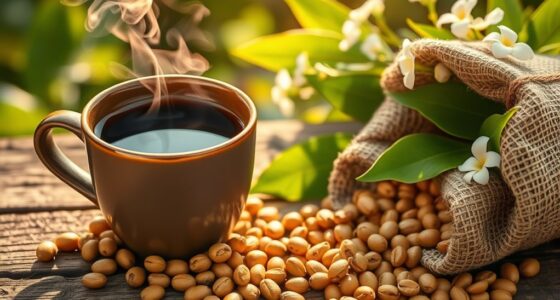
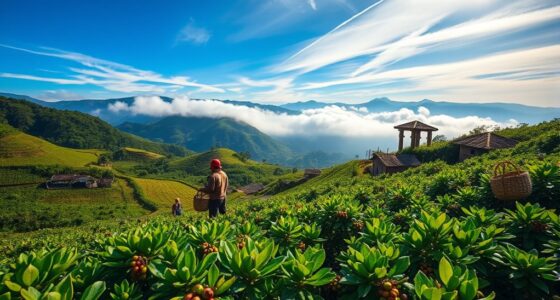
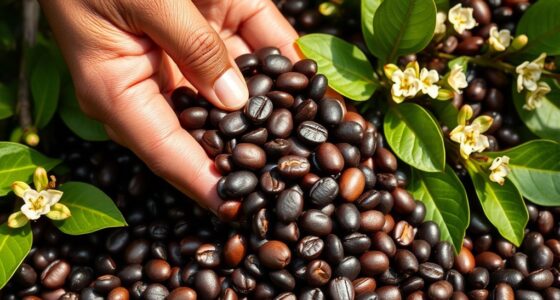
Mexico’s coffee from Chiapas, Oaxaca, and Veracruz offers vibrant flavors shaped by diverse landscapes, rich climates, and eco-friendly farming practices. Smallholder farmers carefully handpick ripe cherries, ensuring quality and tradition. These regions use sustainable methods like shade-grown cultivation and eco-conscious processing, which boost flavor complexity and support local communities. By choosing Mexican coffee from these areas, you experience the dedication to quality and sustainability that defines this unique coffee heritage—explore further to discover more about these mesmerizing regions.
Key Takeaways
- Chiapas, Oaxaca, and Veracruz produce distinct coffee flavor profiles influenced by unique microclimates and soil conditions.
- These regions prioritize sustainable, eco-friendly practices like shade-grown and organic methods to enhance quality.
- Smallholder farmers and cooperatives play a vital role in maintaining traditional harvesting and processing techniques.
- Regional specialties include traditional wet processing in Veracruz and dry processing in Oaxaca, preserving regional flavors.
- Sustainable cultivation practices in these areas support environmental health, community livelihoods, and the cultural heritage of Mexican coffee.
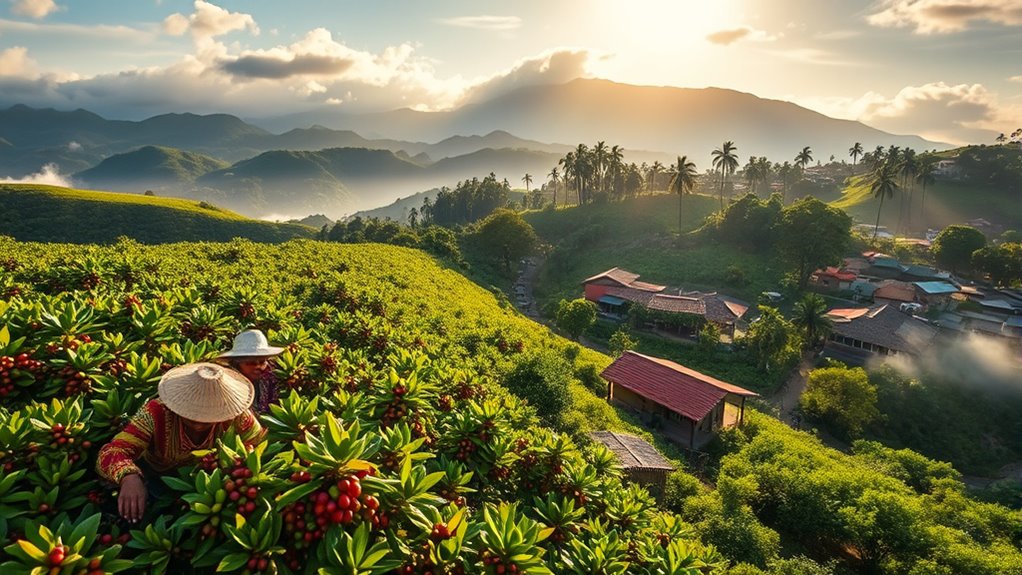
Have you ever wondered why Mexico is renowned for its exceptional coffee? The answer lies in the rich landscapes, ideal climate, and dedicated farmers who take pride in their craft. In regions like Chiapas, Oaxaca, and Veracruz, coffee harvesting is more than just a process; it’s a tradition deeply rooted in local culture. These areas produce beans with distinctive flavors, thanks to the unique microclimates and soil conditions. But beyond flavor, what truly sets Mexican coffee apart is the commitment to sustainable practices. Farmers here understand that preserving the environment is essential for maintaining high-quality beans and supporting local communities. Many adopt eco-friendly methods, such as shade-grown coffee, which protects biodiversity and conserves water. These practices not only ensure the longevity of the land but also improve the quality of the coffee, giving you a richer, more complex cup.
When you visit these regions, you’ll notice how closely coffee harvesting is tied to the local way of life. Smallholder farmers handpick ripe cherries, often working in cooperative groups that emphasize fair wages and community development. This careful picking process guarantees that only the best cherries make it into the final product, resulting in a vibrant, aromatic brew. Farmers also employ sustainable practices like composting and integrated pest management to minimize chemical use, promoting healthier soil and ecosystems. Many farms are certified by organizations dedicated to environmental stewardship, which reassures you that the coffee you’re drinking supports ethical and eco-friendly initiatives. Additionally, the use of traditional processing methods combined with innovative techniques helps preserve the unique flavors characteristic of each region.
Chiapas, Oaxaca, and Veracruz also excel in processing techniques that retain the beans’ natural qualities. Shade-grown coffee, for example, not only enhances flavor but also offers habitat for local wildlife, reinforcing the region’s commitment to sustainability. The use of traditional methods, combined with modern eco-conscious innovations, creates a balance that benefits both the environment and the economy. As a coffee lover, knowing that your cup is produced through sustainable practices adds a layer of appreciation. It’s more than just a beverage; it’s a testament to the resilience and responsibility of Mexican farmers who prioritize quality and environmental health.
In essence, the story behind Mexican coffee is one of dedication, care, and respect for nature. When you savor a cup from Chiapas, Oaxaca, or Veracruz, you’re experiencing the fruits of sustainable practices and passionate coffee harvesting. These regions show that great coffee doesn’t just happen; it’s cultivated with purpose, protecting the land for generations to come while delivering a truly exceptional taste. Embracing sustainable farming practices not only benefits the environment but also ensures the longevity of this cherished tradition.

Organic Mexican Coffee Beans – Dark Roast Whole Bean Arabica – 32oz Premium Single Origin – Smoky Aroma & Dark Chocolate Notes – Gourmet Coffee
FDA-Compliant Food Service Gloves – Meets FDA Regulation 177.1520 for direct food contact, making these professional-grade gloves ideal…
As an affiliate, we earn on qualifying purchases.
As an affiliate, we earn on qualifying purchases.
Frequently Asked Questions
What Are the Best Coffee Festivals in These Regions?
You should check out the annual coffee festivals in these regions, where you can enjoy coffee tasting sessions and plantation tours. In Chiapas, the Festival del Café highlights local beans and brewing methods. Oaxaca hosts the Feria del Café, offering immersive experiences. Veracruz’s Coffee Festival features live demonstrations and tastings. These festivals give you a chance to learn about coffee production, meet local farmers, and savor fresh, authentic Mexican coffee.
How Do Local Customs Influence Coffee Production?
Like a woven tapestry, local customs shape coffee production profoundly. You’ll notice that cultural influences and farming traditions dictate everything from harvesting methods to processing techniques. In these regions, community rituals and ancestral practices are woven into each cup, creating a unique flavor profile. By respecting and embracing these traditions, you can truly appreciate the rich heritage and authenticity that each coffee bean carries, making every sip a cultural experience.
Are There Eco-Friendly Coffee Farms to Visit?
Yes, you can visit eco-friendly coffee farms that prioritize sustainable farming and organic certification. These farms focus on environmentally friendly practices, reducing chemical use, conserving water, and supporting local ecosystems. When you tour these farms, you get to see firsthand how they maintain high-quality coffee while respecting nature. It’s a great way to enjoy ethically produced coffee and learn about sustainable agriculture directly from passionate farmers.
What Are Traditional Coffee Preparation Methods Here?
You’ll find that traditional coffee preparation here often involves coffee ceremonies, which are a cultural ritual blending hospitality and community. Brewing techniques vary, including methods like pour-over, percolation, and boiling. These ceremonies emphasize the importance of savoring each sip, often complemented by local customs and flavors. Engaging in these traditions gives you a deeper appreciation for the region’s rich coffee culture and the artistry behind each cup.
How Has Climate Change Affected Coffee Production?
Climate change hits coffee production like a storm on calm seas. You’ll notice shifts in rainfall and temperature, challenging crop resilience. To adapt, farmers implement climate adaptation strategies, such as changing planting times and diversifying crops. These efforts help strengthen coffee crop resilience, ensuring your favorite brews continue to thrive despite unpredictable weather. Staying proactive, farmers mold their practices to protect coffee’s future amid a warming world.

Tiny Footprint Coffee – Nicaragua Segovia, Dark Roast, USDA Organic Coffee – Shade Grown, Fair Trade Certified & Carbon Negative – Ground Coffee, 16 Oz
ORGANIC COFFEE: USDA Certified Organic, Fair Trade & Shade-Grown Arabica Coffee.
As an affiliate, we earn on qualifying purchases.
As an affiliate, we earn on qualifying purchases.
Conclusion
As you explore Mexico’s rich coffee regions, remember that each cup tells a story of dedication and tradition. Just like a single bean can create a bold flavor, your journey into these coffee lands reveals the passion behind every sip. Imagine sipping fresh Oaxaca coffee as the sun rises—you’re part of a vibrant tapestry woven with history and culture. Embrace each moment; your appreciation deepens with every taste.

Coffee Samples 5 Pack Gift Set Las Americas. Gourmet Organic Medium Roast whole Bean with Best Beans From Mexico, Guatemala, Peru, Colombia and Brazil
✓THE ONLY COFFEE GIFT BOX THAT CHOPS UP THE BEST BEANS: From Mexico, Guatemala, Peru, Colombia and Brazil…
As an affiliate, we earn on qualifying purchases.
As an affiliate, we earn on qualifying purchases.

Etnia 52 – Veracruz (Intenso), Mexican Whole Bean Coffee, 1 lb. or 16 oz., Kosher Certified (KMD), Made in Mexico, includes Ebook
As an affiliate, we earn on qualifying purchases.
As an affiliate, we earn on qualifying purchases.