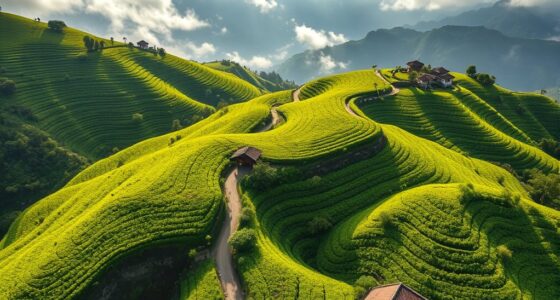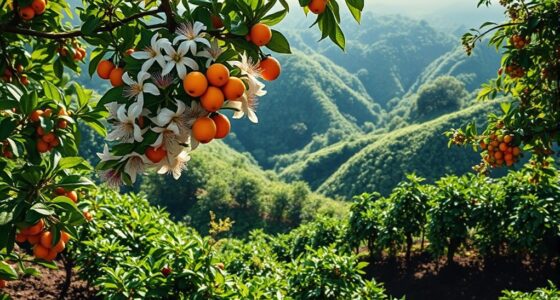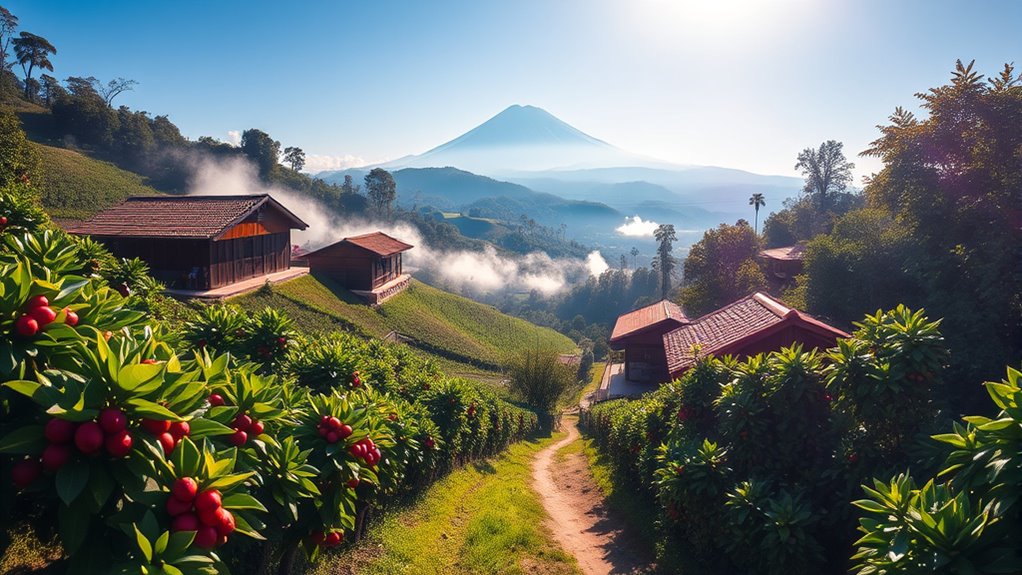

Discover the unique qualities of Guatemala’s Antigua and Huehuetenango coffees, shaped by high-altitude volcanic soils and ideal climates. Antigua’s steep slopes produce rich, complex beans with layered flavors, while Huehuetenango’s cooler, high-altitude environment offers bright acidity and fruity notes. Both regions highlight meticulous, sustainable harvesting and traditional practices that guarantee top quality. If you want to learn more about their distinct flavor profiles and cultivation secrets, keep exploring these remarkable coffee regions.
Key Takeaways
- Antigua features volcanic slopes producing rich, layered, full-bodied coffee with complex flavor profiles.
- Huehuetenango’s high-altitude, dry climate yields bright, fruity coffees with vibrant acidity.
- Both regions benefit from volcanic soils, sustainable harvesting, and traditional cultivation practices.
- Coffee quality is enhanced by handpicking ripe cherries and land management techniques like terracing.
- Unique terroirs and climate conditions create distinct flavor profiles characteristic of each region.
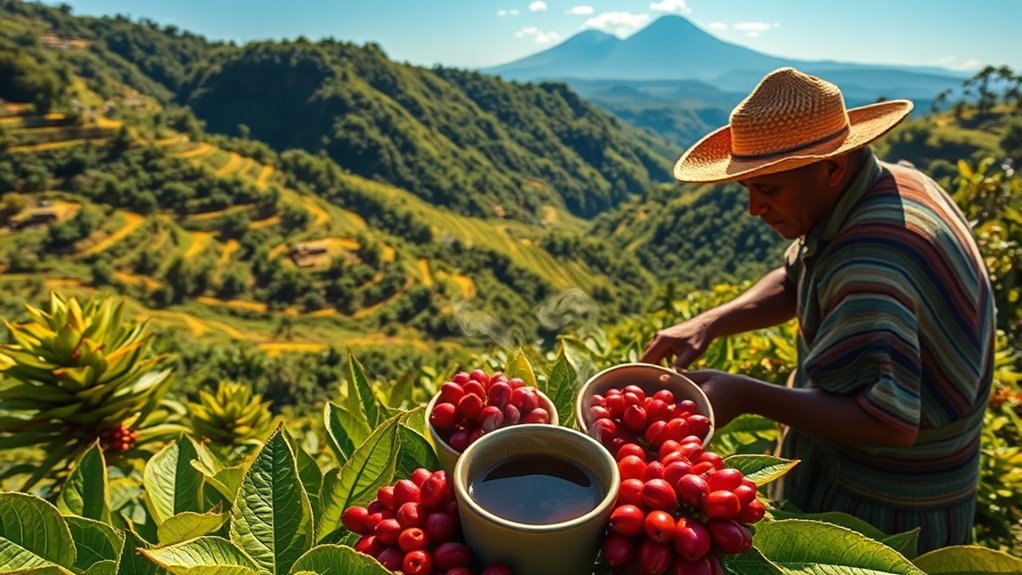
Nestled between volcanic peaks and lush rainforests, Guatemala produces some of the world’s most renowned coffees. As you explore its vibrant coffee culture, you’ll quickly discover that the country’s success hinges on meticulous coffee cultivation and a deep commitment to sustainable harvesting. The high-altitude volcanic soils and consistent climate create ideal conditions for growing coffee beans, allowing farmers to produce beans with complex flavors and vibrant acidity. When it comes to coffee cultivation, Guatemalan farmers pay close attention to every detail—from selecting the right coffee varieties to managing shade trees and soil health—ensuring each harvest reflects the land’s unique qualities.
Guatemalan coffee thrives on volcanic soils and sustainable practices, producing complex flavors and vibrant acidity.
Sustainable harvesting is at the heart of Guatemalan coffee production. You’ll notice that many farms prioritize eco-friendly practices, which not only protect the environment but also enhance the quality of the beans. Pickers are often trained to harvest only ripe cherries, reducing waste and ensuring each batch meets high standards. This careful handpicking process helps maintain the integrity of the coffee’s flavor profile and supports fair labor practices. Farmers often work within cooperatives or certification programs like Rainforest Alliance or Fair Trade, which promote environmentally conscious farming methods and improve the livelihoods of those involved in coffee production.
In Antigua, the landscape’s volcanic terrain means coffee plants grow on steep slopes, requiring precise manual labor. Here, sustainable harvesting isn’t just about the environment; it’s about preserving the cultural heritage of coffee farming. You’ll find that many local farmers take pride in their work, using traditional methods that have been passed down through generations. These methods emphasize quality over quantity, focusing on harvesting only the best cherries at their peak ripeness. This dedication results in a cup of coffee that’s rich, full-bodied, and layered with complex flavors.
Huehuetenango, on the other hand, offers a different terroir—high-altitude, dry, and with a cooler climate. Coffee cultivation here often involves terracing and other soil conservation techniques to prevent erosion and maintain land fertility. Sustainable harvesting practices are essential in this region, as they help farmers adapt to the challenging terrain while protecting the environment. You’ll notice that Huehuetenango’s coffee tends to have bright acidity and fruity notes, a reflection of the meticulous care taken during cultivation and harvest.
Frequently Asked Questions
What Are the Best Brewing Methods for Guatemalan Coffee?
You should try brewing Guatemalan coffee with a French press or pour-over for the best flavor. The French press extracts rich, full-bodied notes, highlighting the coffee’s natural sweetness and body. A pour-over method emphasizes clarity and bright acidity, bringing out the nuanced flavors typical of Guatemalan beans. Both methods allow you to control brewing variables, ensuring you enjoy a fresh, flavorful cup every time.
How Does Altitude Affect Coffee Flavor in Guatemala?
Did you know that coffee grown at higher altitudes, like in Guatemala’s Antigua and Huehuetenango regions, develops more complex flavors? Altitude influence is key; cooler temperatures slow bean maturation, allowing more time for flavor development. As you drink, notice the vibrant acidity and nuanced notes. The higher the elevation, the more your coffee’s brightness and intricate flavors shine through, offering a richer, more vibrant experience.
Are There Organic Guatemalan Coffee Options Available?
Yes, you can find organic Guatemalan coffee options. Many farmers pursue Organic certifications, ensuring their coffee is grown without synthetic chemicals. These certifications highlight their commitment to coffee sustainability, benefiting the environment and local communities. When shopping, look for labels like USDA Organic or Rainforest Alliance, which verify organic practices. Choosing organic Guatemalan coffee supports eco-friendly farming and helps promote sustainable coffee production.
How Does Weather Impact Coffee Harvests in Antigua and Huehuetenango?
Like a vintage record skipping, weather fluctuations can disrupt your coffee harvests. Rainfall variability and temperature fluctuations directly influence bean development and quality in Antigua and Huehuetenango. During droughts or heavy rains, crops suffer, leading to lower yields and inconsistent flavor. You’ll notice that stable weather conditions help guarantee a steady harvest, maintaining the rich, vibrant profiles you seek. Adaptation and monitoring become your best tools to manage these unpredictable climate impacts.
What Are Traditional Guatemalan Coffee Tasting Notes?
You’ll notice that traditional Guatemalan coffee offers rich flavor profiles like bright citrus, chocolate, and spice. When using tasting techniques, focus on aroma, acidity, body, and aftertaste to truly appreciate these notes. You might detect hints of floral or fruity elements, which add complexity. These well-balanced coffees are known for their vibrant, full-bodied qualities that make each sip memorable, showcasing the country’s unique growing conditions and meticulous processing methods.
Conclusion
As you explore Guatemala’s coffee regions, it’s no coincidence that Antigua and Huehuetenango offer such distinct flavors. Their unique climates and soils craft coffees that surprise and delight, much like stumbling upon a hidden gem. So, when you sip that perfect cup, remember—it’s no accident you found such richness and complexity. Guatemala’s coffee is a beautiful coincidence that, once discovered, keeps you coming back for more.