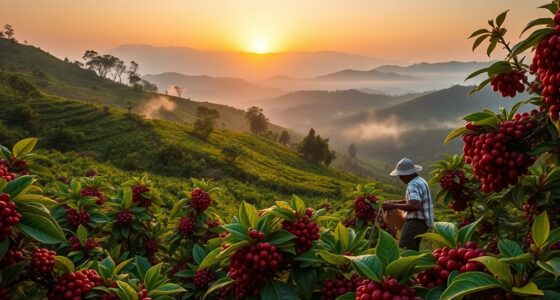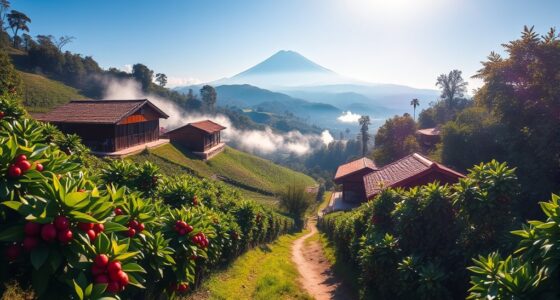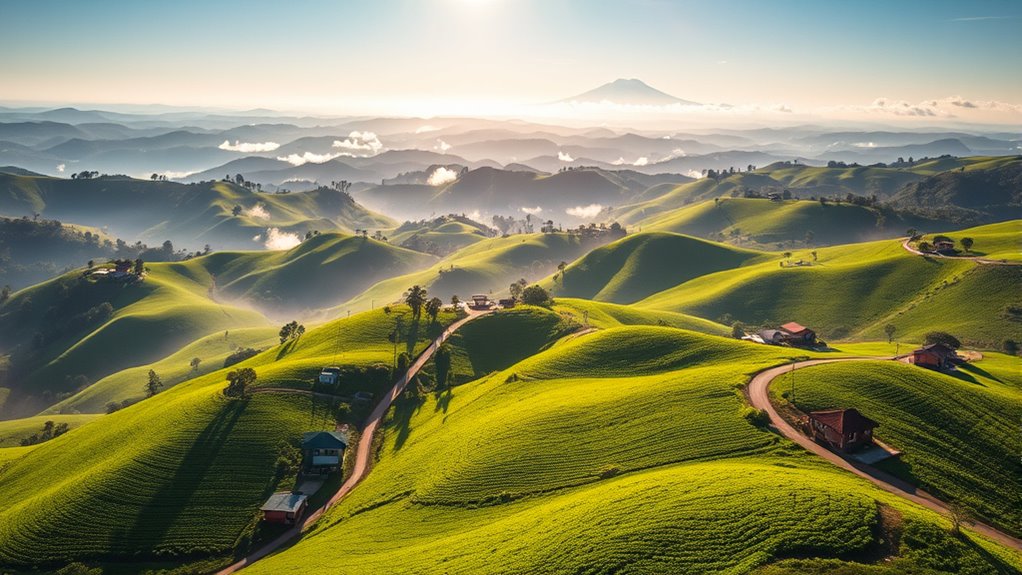

In Huila and Nariño, Colombia’s high-altitude regions, your coffee experience is enriched by the cool temperatures, abundant rainfall, and volcanic soils. These climate conditions slow cherry ripening, helping develop complex sugars and vibrant acidity, which translate into sweet, nuanced flavors. Farmers use sustainable techniques like shade-grown farming and selective harvesting to guarantee quality. If you’re curious, discovering how these unique environmental factors shape each cup will reveal even more about these exceptional coffees.

Get coffee and tea gear delivered free with Prime
- Fast, free delivery on millions of items
- Prime Video, Amazon Music and more included
- Member-only deals all year
Key Takeaways
- High-altitude growing regions in Huila and Nariño create ideal conditions for developing sweet, complex coffee flavors.
- Cool temperatures and abundant rainfall slow cherry ripening, enhancing natural sweetness and vibrant acidity.
- Shade-grown farming under native canopies preserves moisture and promotes biodiversity, enriching flavor profiles.
- Hand harvesting and selective picking ensure only ripe cherries are collected, boosting sweetness and quality.
- Unique climate and sustainable practices produce high-altitude coffees renowned for their bright, sweet, and nuanced characteristics.

Nestled in Colombia’s southwestern mountains, Huila and Nariño are renowned for producing some of the country’s most exceptional coffees. The high-altitude environment plays a pivotal role in shaping the distinctive flavors that make these regions so celebrated. You’ll notice that the climate impact here is profound—cool temperatures, abundant rainfall, and well-drained volcanic soils create ideal conditions for coffee cultivation. These factors slow down the coffee cherry ripening process, allowing beans to develop complex sugars and vibrant acidity, which are hallmarks of Nariño and Huila coffees. This unique climate not only influences flavor but also demands specific farming techniques to maximize quality.
High-altitude Colombian regions like Huila and Nariño develop rich, vibrant coffees through climate and expert farming techniques.
Farmers in these regions have adapted their techniques to work harmoniously with the environment. You’ll find that many employ shade-grown methods, where coffee plants are cultivated under a canopy of native trees. This practice helps regulate temperature, conserve moisture, and protect delicate cherry crops from extreme weather. It also promotes biodiversity, which naturally controls pests, reducing the need for chemical interventions. Additionally, farmers often practice selective harvesting—picking only ripe cherries at their peak, ensuring that each batch boasts ideal flavor and sweetness. Such meticulous attention to detail reflects a deep understanding of how climate impacts crop development and how farming techniques can mitigate adverse effects.
In Nariño, farmers frequently use hand harvesting on terraced farms to navigate steep slopes, minimizing soil erosion and maintaining soil health. This labor-intensive method ensures that only the best cherries are collected, preserving the high-quality standards associated with the region’s coffee. In Huila, you’ll see many producers embracing organic practices, emphasizing sustainable farming that respects the mountain environment. These techniques not only improve the quality of the coffee but also support long-term ecological balance, which is essential given the sensitive climate conditions. Furthermore, the high-altitude environment requires careful water management to ensure consistent moisture levels for optimal cherry development.
The interplay between climate impact and farming techniques in Huila and Nariño guarantees that each cup of coffee you enjoy is a product of both nature and human ingenuity. The high-altitude conditions demand innovative, environmentally conscious farming methods, resulting in beans that are bright, complex, and sweet. By understanding how climate influences the landscape and how farmers have tailored their practices, you gain a deeper appreciation for the exceptional coffees from these Colombian highlands. It’s a testament to how climate and farming techniques together craft the rich, nuanced flavors that make Huila and Nariño stand out in the world of specialty coffee.
high-altitude Colombian coffee beans
As an affiliate, we earn on qualifying purchases.
As an affiliate, we earn on qualifying purchases.
Frequently Asked Questions
What Are the Best Times to Visit Huila and Nariño for Coffee Tours?
You should visit Huila and Nariño during the dry seasons for the best coffee tours, typically from December to February and June to August. These months offer ideal weather, clear skies, and easier travel conditions. During these times, you’ll enjoy the lush landscapes, fresh coffee bean harvesting, and vibrant local experiences without the hassle of heavy rains. Plan your trip in these peak months for an unforgettable coffee adventure.
How Do Local Farmers Ensure Sustainable Coffee Cultivation at High Altitudes?
You see, while high-altitude coffee may seem delicate, farmers guarantee its sustainability through shade cultivation and water conservation. They plant trees to protect crops from harsh sunlight and preserve water resources, creating a balanced ecosystem. This careful approach maintains soil health, promotes biodiversity, and reduces the need for chemical inputs. By blending traditional practices with eco-friendly methods, farmers safeguard their land and produce high-quality coffee for generations.
Are There Any Unique Festivals Celebrating Coffee in These Regions?
You’ll find vibrant coffee harvest festivals and indigenous coffee celebrations in these regions. During these events, locals showcase their rich coffee culture through traditional dances, music, and tastings. You can participate in lively ceremonies that honor coffee’s significance to the community. These festivals highlight the deep-rooted connection between the people and their coffee, offering a unique glimpse into the cultural importance of coffee cultivation at high altitudes.
What Traditional Methods Are Used to Process Coffee in Huila and Nariño?
Oh, you thought coffee processing was just about pressing beans? Think again! In Huila and Nariño, they take tradition seriously. You’ll find traditional fermentation that’s slow and soulful, ensuring rich flavors. Then, they sun dry the beans, basking in sunshine like royalty. No fancy machinery here—just good old methods passed down generations, making every sip a taste of history. Fancy a cup? It’s all about authentic, handcrafted processes.
How Do Climate Changes Impact Coffee Production in These High-Altitude Areas?
Climate change affects coffee production at high altitudes by altering temperature and rainfall patterns, making it harder to maintain ideal growing conditions. You need to focus on climate adaptation strategies, such as adjusting planting times or selecting resilient coffee varieties. These altitude effects can shorten harvest seasons and reduce quality. Staying proactive helps you protect your crops and sustain the unique sweetness that high-altitude coffees are known for.
Conclusion
So, when you sip coffee from Huila and Nariño, you’re tasting more than just beans—you’re experiencing a symphony of high-altitude sweetness that rivals the finest jewels. These regions craft coffee so exceptional, it’s practically a liquid treasure. Every cup transports you to lush mountains where flavors bloom like wildflowers, promising a brewing adventure that’s as unforgettable as a sunrise over the Andes. Indulge and savor the magic in every sip.
Halloween Picks
halloween
As an affiliate, we earn on qualifying purchases.