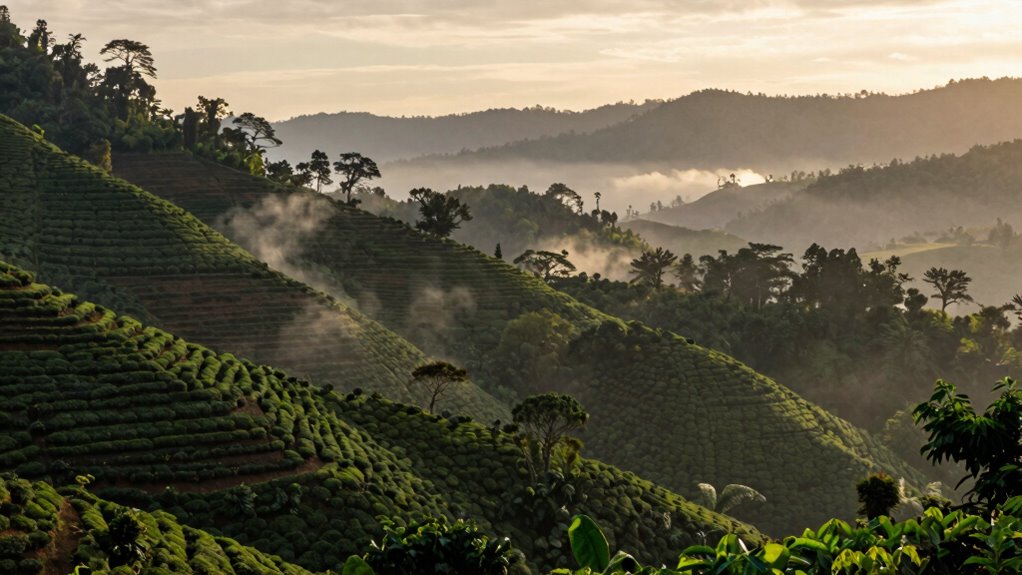

The Jamaica Blue Mountains hold much more than their famous coffee reputation. This region is rich in cultural traditions passed down through generations, reflected in lively music and storytelling. It’s also a symbol of sustainable living, with farmers practicing eco-friendly farming and communities actively protecting their land and wildlife. The mountains embody a harmony between nature and culture that shapes local life. Keep exploring to discover how this vibrant connection continues to thrive and inspire.

Get coffee and tea gear delivered free with Prime
- Fast, free delivery on millions of items
- Prime Video, Amazon Music and more included
- Member-only deals all year
Key Takeaways
- The Blue Mountains’ identity is rooted in rich cultural traditions, storytelling, music, and local crafts passed down through generations.
- Sustainable farming practices like organic and shade-grown coffee highlight the region’s commitment to ecological preservation.
- Conservation efforts emphasize protecting biodiversity, water sources, and natural beauty beyond economic interests.
- Community involvement is vital in maintaining the landscape, ensuring ecological health and cultural heritage for future generations.
- The region embodies harmony between cultural practices and environmental stewardship, reflecting a deep connection to land and identity.

Nestled in the lush, mist-covered peaks of Jamaica’s Blue Mountains, the region offers more than just renowned coffee; it embodies a rich cultural heritage and a commitment to sustainable practices. When you explore beyond the famous beans, you’ll find that local culture deeply influences every aspect of life here. The communities in these mountains have preserved traditions passed down through generations, from vibrant storytelling to lively music that echoes through the valleys. You can see this cultural richness in the way locals honor their history, celebrate their craft, and maintain strong connections to their land. This cultural identity isn’t just for show; it’s woven into their daily routines and their approach to environmental stewardship. Additionally, the region’s emphasis on biodiversity conservation highlights their recognition of the land’s intrinsic value beyond its economic importance.
The Blue Mountains’ rich culture and sustainable practices honor traditions and protect their land’s natural beauty.
As you immerse yourself in the region, you notice that the local communities actively prioritize sustainability. Farmers practicing traditional methods understand that their livelihood depends on the health of the land. They often employ environmentally friendly techniques, such as organic farming and shade-grown coffee, which help preserve the fragile ecosystem. These practices minimize the environmental impact by reducing chemical use and preventing soil erosion. You’ll observe how community-led initiatives work to protect water sources and maintain biodiversity, ensuring that the Blue Mountains remain vibrant for future generations. This dedication to sustainable practices isn’t just about conserving nature; it’s about respecting the land that sustains their culture and economy. In fact, understanding local environmental practices reveals how deeply they are rooted in their cultural identity and ecological awareness. Moreover, the region’s commitment to community involvement in conservation underscores their collective effort to sustain their environment.
While enjoying the scenery or sampling local produce, you become aware of the balance the region endeavors to maintain. The Blue Mountains’ natural beauty—its dense forests, flowing streams, and diverse wildlife—is a crucial part of local life and identity. It’s clear that environmental impact is a shared concern, with residents actively involved in conservation efforts. You might see community projects aimed at reforestation or waste reduction, reflecting a collective commitment to protecting their environment. This sense of responsibility is rooted in their understanding that the health of the land directly influences their culture and future prosperity. Additionally, the region’s emphasis on sustainable land management underscores its efforts to harmonize development with ecological preservation. These practices exemplify how environmental sustainability and cultural preservation go hand in hand in the Blue Mountains.
Ultimately, the Blue Mountains reveal that its true essence lies in the harmony between people and nature. When you look beyond the coffee label, you see a region where local culture is deeply intertwined with environmental care. It’s a tribute to how sustainable practices help preserve both the land’s natural beauty and the cultural traditions that define this extraordinary place. Visiting here isn’t just about tasting world-famous coffee; it’s about experiencing a community dedicated to honoring its roots while safeguarding its future.
Products Worth Considering

KitchenAid 28 oz Cold Brew Coffee Maker, KCM4212

Breville Smart Grinder Pro Conical Burr Coffee Grinder, Brushed Stainless Steel

Ninja Artisan 5-in-1 Portable Electric Pizza Oven, Blue & Gold
As an affiliate, we earn on qualifying purchases.
Frequently Asked Questions
How Does Altitude Affect Blue Mountain Coffee Flavor?
Altitude influence profoundly shapes the flavor profile of Blue Mountain coffee. Higher altitudes, typically above 3,000 feet, slow the coffee’s maturation, enhancing acidity, brightness, and complex floral or fruity notes. You’ll notice a smoother, more refined taste with a vibrant, clean finish. As you savor Blue Mountain coffee, appreciate how its altitude influence creates a unique, balanced flavor that’s distinct from lower-altitude beans, offering a truly premium experience.
What Are the Local Communities’ Roles in Coffee Production?
You’ll find that local communities are the backbone of coffee production, deeply rooted in their traditions and community engagement. They actively cultivate, harvest, and process the beans, ensuring quality and sustainability. Their local customs influence everything from processing methods to cultural practices, enriching the coffee’s story. It’s like a potluck, where everyone contributes; this unity and dedication truly shape the unique flavor and quality of Blue Mountain coffee.
Are There Sustainable Farming Practices Unique to the Region?
Yes, the region employs sustainable farming practices like organic certification, ensuring no harmful chemicals are used. You’ll also notice water conservation techniques, such as rainwater harvesting and efficient irrigation, which help preserve local water sources. These practices protect the environment and support community well-being. By choosing coffee from this region, you support farmers committed to maintaining these sustainable methods, ensuring the land remains healthy for future generations.
How Does Climate Change Impact Blue Mountain Agriculture?
Climate change profoundly impacts Blue Mountain agriculture by causing unpredictable weather patterns and temperature shifts. You need to focus on climate adaptation strategies to protect crops and maintain environmental resilience. Embracing sustainable practices, like diversified planting and water conservation, helps farmers respond effectively to these changes. By strengthening environmental resilience, the region can better withstand climate-related challenges, ensuring the continued production of high-quality coffee and preserving the area’s unique agricultural identity.
What Cultural Traditions Influence Blue Mountain Coffee Harvesting?
You’re influenced by Jamaica’s rich cultural heritage and farming rituals when it comes to Blue Mountain coffee harvesting. Traditional practices, passed down through generations, include precise hand-picking and specific harvesting times rooted in local customs. These rituals emphasize respect for nature and community, ensuring quality beans. By honoring these cultural traditions, you help preserve the authenticity and unique flavor profile that define Blue Mountain coffee.
Conclusion
As you savor the rich complexity of Jamaica’s Blue Mountains, remember they’re more than just a label—they’re a proof to resilience and tradition, echoing the whispered stories of those who’ve tended these slopes for generations. Like a hidden melody in a well-loved song, the region’s true essence lingers beneath the surface, inviting you to look beyond the view and discover the deeper meaning woven into its fertile soil and vibrant community.