To avoid bitterness when brewing dark roast coffee, focus on controlling your brewing temperature carefully between 195°F and 205°F. Too hot, and you’ll extract harsh, burnt flavors; too cold, and the brew might be flat or sour. Use a thermometer or equipment with temperature control, and preheat your brewer to maintain steady heat throughout. Mastering this balance will help bring out the rich, smoky notes without unwanted bitterness—discover more tips to perfect your dark roast brew.

Get coffee and tea gear delivered free with Prime
- Fast, free delivery on millions of items
- Prime Video, Amazon Music and more included
- Member-only deals all year
Key Takeaways
- Brew dark roast at a temperature between 195°F and 205°F to prevent over-extraction and bitterness.
- Use a thermometer or temperature-controlled equipment to maintain consistent brewing temperature.
- Preheat your brewing device to stabilize temperature and ensure even extraction.
- Choose brewing methods like pour-over or AeroPress for precise temperature control.
- Avoid fluctuations in temperature during brewing to prevent harsh, burnt, or flat flavors.
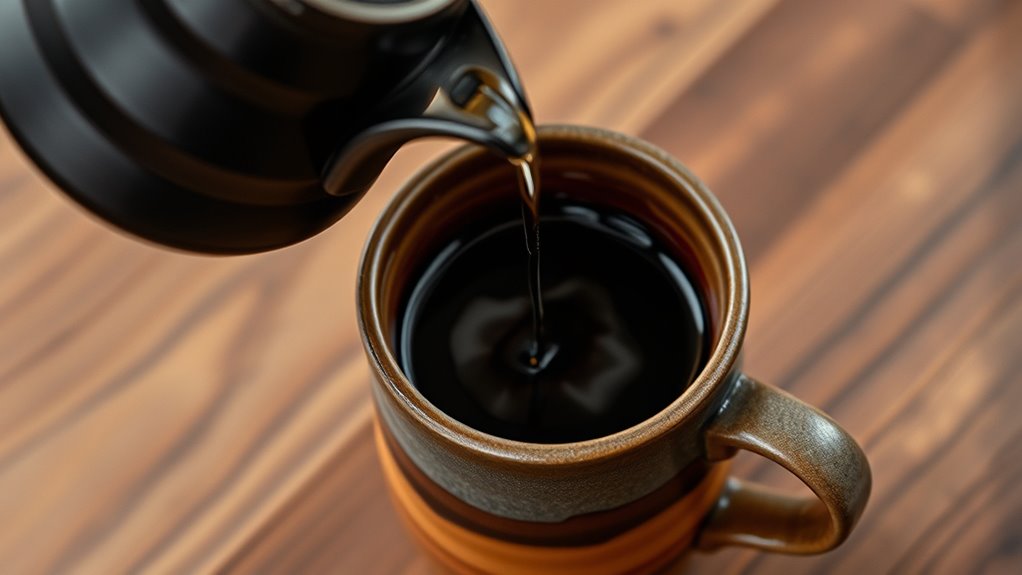
Have you ever wondered what makes dark roast coffee stand out from lighter roasts? It’s all about the flavor profiles that emerge during the roasting process. Dark roasts develop bold, smoky, and sometimes even bittersweet flavors that can delight your palate when brewed correctly. But achieving that rich taste without veering into bitterness requires paying attention to your brewing temperature. When you understand how these elements interact, you can enjoy a smooth, flavorful cup every time.
Dark roast flavor complexity depends on precise brewing temperature control.
Flavor profiles play a vital role in dark roast brewing. Unlike lighter roasts, which often highlight the beans’ inherent fruity or floral notes, dark roasts emphasize roasted, chocolaty, and smoky undertones. These profiles are intensified during roasting, but if you don’t brew at the right temperature, you risk extracting harsh, bitter compounds that overshadow the intended flavors. To preserve the richness of a dark roast, you need to control the brewing temperature carefully. Too high, and you’ll extract bitter tannins and burnt notes; too low, and your coffee might taste flat or overly sour. The sweet spot typically falls within a moderate range, allowing you to bring out the deep flavors without crossing into bitterness.
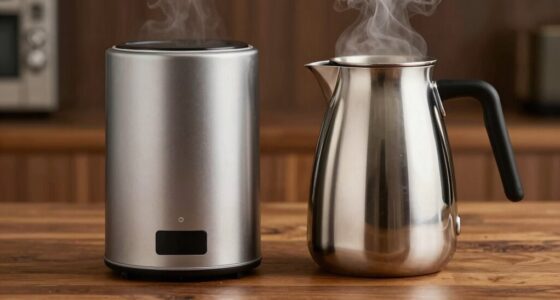
When brewing dark roast coffee, it’s best to keep the water temperature around 195°F to 205°F (90°C to 96°C). This range ensures ideal extraction of the coffee’s oils and soluble compounds that give dark roasts their signature taste. If your water is hotter than this, you risk over-extracting, which can produce a bitter, astringent brew. Conversely, if the temperature is too low, you won’t fully extract the flavors, resulting in a weak, sour cup. Using a good thermometer or a kettle with temperature control helps you dial in the perfect brewing temperature, making it easier to avoid bitterness. Additionally, the contrast ratio between extraction levels significantly influences whether your brew is smooth or bitter, making temperature control essential.
Furthermore, consider your brewing method in relation to temperature. Methods like pour-over or AeroPress allow precise control, so you can adjust the temperature accordingly. French press and drip brewers sometimes have less control over temperature, so preheating your equipment helps stabilize the brewing process. Remember, consistency is key; maintaining a steady temperature throughout extraction prevents uneven brewing, which can also lead to bitterness or flatness.
As an affiliate, we earn on qualifying purchases.
Frequently Asked Questions
How Does Grind Size Affect Dark Roast Bitterness?
Your grind size greatly affects dark roast bitterness. If your grind is inconsistent or particles vary in size, it can lead to over-extraction, making your coffee bitter. Aim for uniform grind consistency and even particle distribution to guarantee a balanced extraction. Finer grinds increase extraction, risking bitterness, while coarser grinds reduce it. Adjust your grind size carefully based on your brewing method to avoid that unwanted bitter taste.
What Brewing Methods Best Minimize Bitterness in Dark Roasts?
Imagine a gentle stream carving a smooth path—this is how you want your brewing. Opt for methods like pour-over or AeroPress, which allow control over brew time and preserve coffee acidity. Shorter brew times and precise water temperatures help minimize bitterness, highlighting the beans’ rich flavors. These methods create a balanced cup, letting the dark roast’s depth shine without overwhelming bitterness, making every sip a smooth journey.
Can Adding Milk or Sugar Reduce Dark Roast Bitterness?
Yes, adding milk or sugar can help reduce dark roast bitterness. Milk addition smooths out sharp flavors and balances acidity, making the coffee taste creamier and less bitter. Sugar addition sweetens the brew, masking some of the bitter notes and enhancing overall flavor. Experiment with small amounts of each to find your perfect balance, ensuring you enjoy a richer, more enjoyable dark roast experience.
How Does Water Temperature Influence Dark Roast Bitterness?
Think of water temperature as the maestro guiding your coffee’s symphony; too hot, and bitterness may strike like discordant notes. Using water that’s just right—around 195-205°F—helps balance extraction, especially with dark roasts. Pay attention to water mineral content and brewing time, as these factors influence bitterness too. Lower temperatures can mellow flavors, preventing that harsh, bitter edge, letting the deep, smoky notes shine instead.
Are There Specific Dark Roast Beans Less Prone to Bitterness?
You’ll find that beans from Central America or Africa are often less prone to bitterness, especially if they’ve undergone a shorter roasting duration. These beans retain more natural acidity and nuanced flavors, reducing bitterness in your brew. Opt for lighter or medium-dark roasts from these regions, and avoid overly long roasting times. This way, you enjoy a smoother, less bitter cup without sacrificing depth or complexity.
Conclusion
Brewing dark roast coffee doesn’t have to mean bitterness if you follow these tips. Remember, about 60% of coffee drinkers prefer a smoother, less bitter cup, and adjusting your brewing time can make all the difference. By controlling variables like grind size and extraction, you’ll enjoy a rich, flavorful brew without the harsh notes. So, experiment and find what works best—your perfect cup is just a few tweaks away!
Halloween Picks
halloween
As an affiliate, we earn on qualifying purchases.