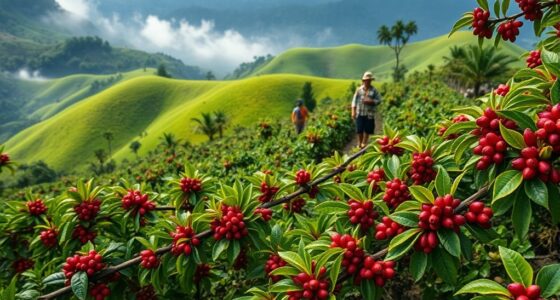
In Brazil’s Minas Gerais, you’ll find a diverse landscape that includes the expansive Cerrado and lush southern regions. You can explore vibrant colonial towns, experience rich coffee traditions, and enjoy beautiful waterfalls and wildlife in protected areas. The region’s architecture, crafts, and cuisine reflect a proud cultural heritage rooted in history. If you’re curious about how these landscapes shape local life and traditions, there’s plenty more to discover beyond the surface.

Get coffee and tea gear delivered free with Prime
- Fast, free delivery on millions of items
- Prime Video, Amazon Music and more included
- Member-only deals all year
Key Takeaways
- Minas Gerais features diverse landscapes, including expansive Cerrado and lush southern regions with rolling hills and charming towns.
- The region has a rich tradition of coffee cultivation, contributing to Brazil’s top coffee production.
- Colonial towns like Ouro Preto showcase baroque architecture and well-preserved historic streets.
- Local crafts and regional cuisine reflect deep cultural heritage and family traditions.
- Ecotourism opportunities include waterfalls, forests, and wildlife, highlighting natural beauty and outdoor activities.

Nestled in southeastern Brazil, Minas Gerais boasts diverse landscapes, including the expansive Cerrado and the lush southern regions. As you explore this vibrant state, you’ll notice how its rich terrain shapes both its economy and culture. One of the standout features here is coffee cultivation, a tradition that dates back generations. The fertile soils and favorable climate in Minas Gerais make it one of Brazil’s top coffee producers. You’ll see countless plantations dotting the landscape, where skilled workers harvest beans with care, preserving the high standards that have earned Brazilian coffee worldwide acclaim. When you visit these plantations, you’ll often learn about the intricate process from cherry to cup, gaining appreciation for the craftsmanship involved. Coffee isn’t just an economic activity; it’s woven into the cultural fabric of Minas Gerais. You’ll find local festivals celebrating coffee, where communities come together to honor this essential crop. Drinking a cup of Minas Gerais coffee becomes more than a routine—it’s a taste of the region’s history and pride.
Beyond agriculture, Minas Gerais is renowned for its cultural heritage, which you’ll find reflected in its architecture, art, and traditions. The state’s colonial towns, like Ouro Preto and Tiradentes, boast baroque churches and well-preserved buildings that tell stories of Brazil’s colonial past. Walking through these historic streets, you’ll feel transported back in time, as local artisans continue to produce traditional crafts that have been passed down through generations. Music and dance are also integral to Minas Gerais’ cultural identity. You might stumble upon lively festivals featuring folk dances, regional cuisine, and religious processions that demonstrate the deep spiritual roots of the community. These cultural expressions aren’t just preserved for tourism—they’re living traditions that connect residents to their ancestors and history. Additionally, the region’s diverse landscapes foster ecotourism opportunities, allowing visitors to explore waterfalls, forests, and wildlife in protected areas.
The southern part of Minas Gerais, with its rolling hills and charming towns, offers a different perspective on the state’s cultural heritage. Here, you might visit local markets where artisans sell handmade textiles and ceramics, reflecting a proud craftsmanship passed through families. The region’s cuisine, characterized by hearty stews and regional cheeses, showcases local flavors that have been enjoyed for centuries. Whether you’re exploring historic churches, participating in local festivals, or simply savoring the food, you’ll see how culture and tradition shape everyday life. Minas Gerais’ unique blend of natural beauty, agricultural mastery, and cultural richness makes it a enthralling destination. Each aspect—whether coffee or cultural heritage—intertwines to create a vibrant, authentic experience that stays with you long after you leave.
Brazil Minas Gerais travel guide
As an affiliate, we earn on qualifying purchases.
As an affiliate, we earn on qualifying purchases.
Frequently Asked Questions
What Are the Main Economic Activities in Cerrado and Sul De Minas?
You’ll find that agricultural practices dominate the economy in these regions, with crops like soy, coffee, and corn thriving. Mining industries also play a significant role, extracting minerals such as iron ore and gold. These activities support local communities and fuel exports. Together, agriculture and mining shape the economic landscape, providing jobs and resources that sustain the region’s development and growth.
How Do the Climates Differ Between Cerrado and Sul De Minas?
Think of the climate in Cerrado as a fiery dance, with a distinct dry season and brief rains, while Sul de Minas feels more like a gentle, rolling wave, with milder temperatures and more consistent rainfall. You adapt by implementing climate strategies suited to each, like preserving biodiversity in the Cerrado’s fragile ecosystem and promoting sustainable agriculture in Sul de Minas. Both regions focus on biodiversity conservation efforts to sustain their unique environments.
What Indigenous Cultures Historically Inhabited These Regions?
You should know that the indigenous cultures in these regions, like the Xavante and Pataxó, have rich indigenous heritage and cultural traditions. They historically inhabited the Cerrado and Sul De Minas, passing down their knowledge, rituals, and crafts through generations. Their deep connection to the land influences local practices today, and understanding their history helps you appreciate the diverse cultural tapestry of these regions.
Are There Any UNESCO World Heritage Sites in Minas Gerais?
Yes, Minas Gerais has UNESCO World Heritage sites. You’ll find remarkable heritage preservation and cultural landmarks, such as Ouro Preto and Diamantina, recognized for their colonial architecture and historical significance. These sites showcase the rich history of the region, drawing visitors interested in cultural heritage. Exploring these landmarks allows you to appreciate Brazil’s diverse history and the efforts to preserve its cultural identity for future generations.
How Do Local Cuisines Vary Between Cerrado and Sul De Minas?
You’ll notice that the cuisine in Cerrado emphasizes regional ingredients like pequi, heart of palm, and wild game, reflecting its rugged landscape and traditional culinary roots. In Sul de Minas, dairy products, especially cheese and milk, dominate, showcasing long-standing culinary traditions. The flavors differ markedly, with Cerrado offering hearty, earthy dishes, while Sul de Minas presents milder, dairy-rich specialties. Your taste buds will experience a delightful contrast between these two vibrant culinary regions.
Conclusion
Like a hidden gem nestled between the lush cerrado and the vibrant south, Minas Gerais beckons you to discover its soul. Its landscapes are a symphony of nature and culture, inviting you to explore, feel, and immerse yourself. Remember, just as a delicate flower blooms in the toughest soil, this region’s true beauty unfolds through your curiosity and heart. Embrace Minas Gerais, where every moment is a precious petal in your journey’s blossom.
Halloween Picks
halloween
As an affiliate, we earn on qualifying purchases.