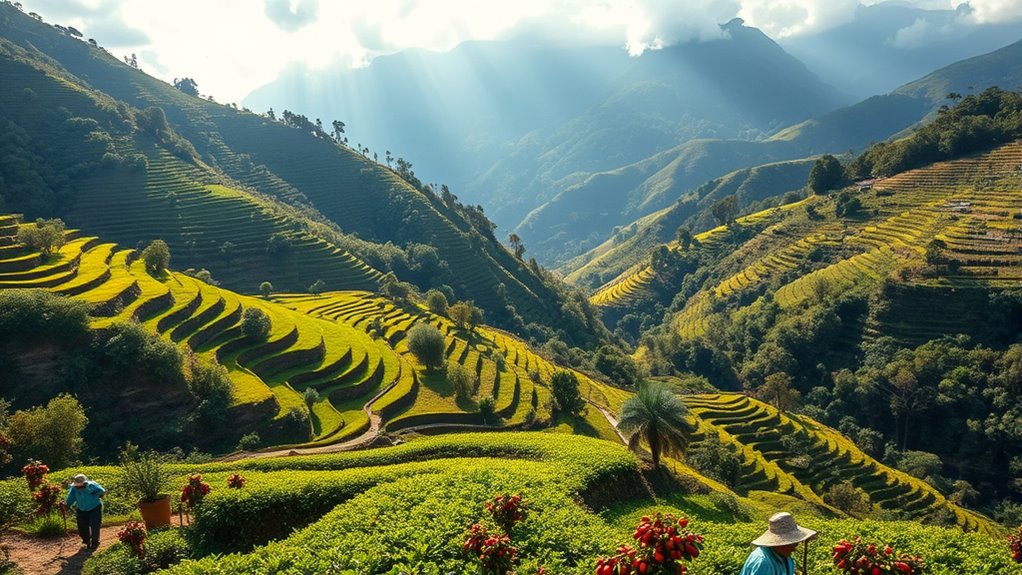

In Caranavi, smallholders play a vital role in growing high-quality, distinctive coffee by combining traditional methods with sustainable practices. You’ll find farmers who hand-harvest ripe cherries and control every step, from natural sun-drying to eco-friendly pest control. Their dedication to land, community cooperation, and preserving authenticity results in exceptional, eco-conscious coffee that boosts Bolivia’s reputation globally. Keep exploring to discover how these smallholders’ passion shapes each cup you enjoy.
Key Takeaways
- Smallholders in Caranavi employ traditional, sustainable farming methods to produce high-quality, distinctive coffee beans.
- Their practices include hand-harvesting, natural sun-drying, and organic pest control to preserve flavor and environment.
- Community cooperation and knowledge sharing enhance both quality and eco-friendly farming techniques.
- Innovation blends with tradition to maintain authentic flavors while adopting sustainable improvements.
- Caranavi coffee’s reputation for authenticity and environmental responsibility boosts Bolivia’s presence in the global market.

Have you ever wondered how smallholders in Caranavi are transforming their coffee into a symbol of quality? It’s a fascinating story of dedication, tradition, and innovation. These small-scale farmers, many of whom have inherited their land and techniques from generations past, focus on sustainable farming to produce beans that stand out in the global market. They prioritize eco-friendly practices that preserve the soil, conserve water, and protect local biodiversity. Instead of relying on chemical fertilizers or pesticides, they often use organic compost and natural pest control methods, ensuring their coffee remains pure and environmentally friendly. This approach not only benefits the land but also boosts the coffee’s flavor, which is why buyers and connoisseurs increasingly seek out Caranavi’s beans.
Smallholders in Caranavi craft eco-friendly coffee that combines tradition, sustainability, and exceptional flavor.
The farmers in Caranavi often stick to traditional practices, which have been refined over decades. They harvest their coffee by hand, selecting only the ripest cherries to ensure top quality. This meticulous process allows them to maintain control over every stage of production, from picking to processing. Many smallholders dry their coffee naturally in the sun, a method that enhances the beans’ aroma and flavor profile. These traditional practices, passed down through generations, create a sense of authenticity and connection to the land that modern mechanized methods can’t replicate. It’s this harmony between age-old techniques and a commitment to sustainable farming that elevates Caranavi’s coffee in the eyes of buyers worldwide. Additionally, their use of traditional harvesting and processing methods helps preserve the unique characteristics of their coffee, setting it apart on the international stage.
The community’s dedication to quality is evident in their cooperative efforts. Farmers share knowledge about sustainable farming and traditional practices, constantly seeking ways to improve without compromising their values. They often participate in training programs that teach them about eco-friendly pest management, soil health, and efficient harvesting techniques. These initiatives help smallholders increase productivity while maintaining the integrity of their land and traditions. As a result, their coffee gains recognition for its rich, nuanced flavors, and consistent quality.
In the end, what makes Caranavi’s smallholders exceptional isn’t just their commitment to tradition; it’s their ability to adapt and innovate within those traditions. By embracing sustainable farming practices, they protect their environment and produce coffee that’s both ethically made and delicious. When you taste a cup of coffee from Caranavi, you’re experiencing the culmination of generations of tradition, a dedication to quality, and a deep respect for the land that sustains them.
Frequently Asked Questions
What Is the History of Coffee Cultivation in Caranavi?
You should know that coffee cultivation in Caranavi started in the early 20th century, growing steadily with smallholders. During harvest, you’ll find that coffee fermentation is key to developing flavor, and bean sorting guarantees quality. Over time, farmers adopted better techniques, improving the coffee’s reputation. Today, you can see how their dedication to processing, like fermentation and sorting, helps produce high-quality beans enjoyed worldwide.
How Do Smallholders Access International Markets?
Over 60% of smallholders in Caranavi access international markets through farmer cooperatives. You can join these cooperatives to navigate complex export regulations and gain better bargaining power. They help you meet quality standards, connect with buyers, and handle logistics. By working with cooperatives, you simplify the process of exporting coffee, boosting your income and reputation worldwide. This collective approach makes international trade more accessible and manageable for small-scale farmers like you.
What Are the Main Challenges Smallholders Face Today?
You face challenges like limited access to markets and resources. Farmer cooperatives can help you pool resources, negotiate better prices, and meet international standards. Adopting sustainable practices is essential for improving quality and ensuring long-term productivity. However, you might struggle with lack of training, infrastructure, and funding. Overcoming these hurdles requires collaboration, capacity building, and commitment to sustainable development, so you can succeed in competitive global markets.
How Does Climate Change Impact Coffee Quality?
Climate change dramatically threatens coffee quality, making it nearly impossible to predict harvests and maintain flavor consistency. You need to focus on climate adaptation strategies to safeguard your crops and boost crop resilience. By implementing resilient farming techniques, you can protect your coffee beans from unpredictable weather patterns, ensuring your beans stay flavorful and high-quality despite climate chaos. Adapting now is essential to preserve your coffee’s reputation and future.
Are There Government Programs Supporting Smallholder Farmers?
Yes, government programs support smallholder farmers by providing subsidies and promoting farmer cooperatives. These initiatives help farmers access better resources, training, and markets, boosting their productivity and coffee quality. By joining cooperatives, you can share costs and knowledge, making it easier to adapt to climate challenges. These programs aim to strengthen your farming practices, ensuring sustainable growth and improving the overall quality of your coffee.
Conclusion
In Caranavi, smallholders are the roots that anchor the region’s vibrant coffee and fruit scene. Their dedication nurtures quality like a gardener tending precious blooms. By supporting these hardworking farmers, you help uphold the region’s rich flavor and tradition, turning every sip and bite into a journey of authenticity. Just as a tree needs sturdy roots to thrive, Caranavi’s smallholders ensure its flavors stay strong and true for generations to come.