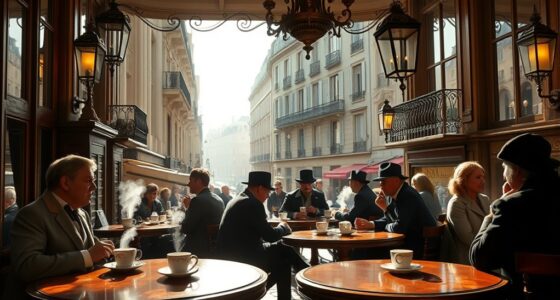
In Japanese media, cafés like kissaten are more than just places to drink coffee; they represent cultural sanctuaries filled with nostalgia, craftsmanship, and emotional meaning. You notice cozy atmospheres created by vintage furniture, warm lighting, and the aroma of freshly brewed coffee. These environments serve as settings for reflection, character development, and connections to tradition. If you keep exploring, you’ll uncover even more about how these spaces symbolize comfort and cultural heritage in film and anime.
Key Takeaways
- Japanese media depict kissaten as nostalgic, cozy spaces emphasizing craftsmanship, vintage decor, and calming atmospheres.
- Cafés symbolize emotional stability and reflection, often serving as retreats for characters to pause and contemplate.
- Visual elements like warm lighting, books, and aromatic coffee enhance the immersive, nostalgic ambiance in films and anime.
- Scenes highlight meticulous coffee brewing, emphasizing tradition and sensory experience, reinforcing the cultural significance of kissaten.
- Portrayals preserve traditional kissaten as cultural heritage spaces, contrasting modernization and maintaining historical authenticity.

Have you ever noticed how cafés are portrayed in Japanese media? They often serve as more than just places to grab a quick drink—they embody a unique cultural space that captures Japan’s deep-rooted coffee culture and a nostalgic ambiance that resonates with viewers. In films and anime, cafés are frequently depicted as tranquil havens, where time slows down and characters find comfort amid the hustle of daily life. This portrayal isn’t accidental; it reflects a longstanding appreciation for kissaten, traditional Japanese coffee shops that emphasize craftsmanship, atmosphere, and a sense of familiarity. When you step into these spaces—whether depicted on screen or in real life—you’re transported to a different era, one where the aroma of freshly brewed coffee mingles with the quiet hum of conversation and soft background music. The nostalgic ambiance is often heightened by vintage furnishings, warm lighting, and shelves lined with books or nostalgic memorabilia, creating a cozy environment that invites relaxation and reflection. These elements evoke a sense of longing for simpler times, making cafés in Japanese media symbolic of comfort and stability amid uncertain worlds. The focus on coffee culture in these scenes highlights craftsmanship, with baristas meticulously preparing drinks, emphasizing the importance of quality and tradition. It’s not just about caffeine; it’s about savoring a moment, appreciating the ritual of brewing, and connecting over a shared appreciation for the beverage. This emphasis on the sensory experience helps deepen the emotional resonance of the story, making the café feel like a character itself. Whether it’s a small, tucked-away kissaten or a bustling coffee shop in Tokyo, these spaces serve as pivotal settings for character development and storytelling. They’re places where characters can retreat, reflect, or find inspiration, often symbolizing a pause in the narrative that allows for introspection. Additionally, the preservation of these traditional kissaten spaces reflects Japan’s respect for its cultural heritage and the importance of maintaining authentic experiences in a rapidly modernizing society. Through these portrayals, Japanese media reinforces the idea that cafés are more than just commercial venues—they’re cultural sanctuaries that preserve a sense of tradition and personal connection. When you watch these scenes, you’re invited to appreciate the layered significance of each element—the aroma of coffee, the vintage decor, the quiet ambiance—that collectively evoke a nostalgic longing and a deep respect for Japan’s coffee culture. It’s this aesthetic that continues to charm audiences worldwide, reminding us that sometimes, the most meaningful moments happen in the simplest of settings.
Frequently Asked Questions
How Did Kissaten Culture Originate in Japan?
You see, kissaten culture originated during Japan’s Showa era, when coffee culture began to flourish. These traditional coffee shops emerged as cozy, stylish spaces where people could enjoy carefully brewed coffee and relax. They became popular for their unique aesthetics, blending Western influences with Japanese sensibilities. Over time, kissatens grew into cultural icons, embodying a nostalgic charm that still influences Japanese media and society today.
Are Kissaten Still Popular Among Younger Generations Today?
You might be surprised, but many younger people still find the nostalgic appeal of kissaten irresistible. Amid sleek modern cafes, these traditional spots offer a unique social dynamic—quiet conversations and a step back in time. While not as widespread, they attract those seeking authenticity and a cozy atmosphere, creating a bridge between generations. So yes, the charm of kissaten continues to resonate, even in today’s fast-paced world.
What Are the Key Design Elements of Traditional Kissaten?
You notice that traditional kissaten feature key design elements like vintage decor, including wooden furniture, glass display cases, and classic coffee machines. They create a cozy ambiance with warm lighting, nostalgic posters, and soft background music. These elements evoke a sense of timeless charm, making the space inviting and comfortable. The combination of vintage aesthetics and cozy atmosphere defines the essence of a traditional Japanese kissaten.
How Do Film and Anime Portray the Atmosphere of Kissaten?
Like a window to the past, film nostalgia and anime ambiance vividly portray the quiet charm of kissaten. Films often highlight warm lighting, vintage decor, and the soft hum of conversations to evoke a sense of comfort and timelessness. In anime, you’ll see detailed interiors with cozy furniture and subdued color palettes that immerse you in the tranquil, nostalgic atmosphere, making you feel as if you’ve stepped into a different era.
Are There Modern Cafés Inspired by Kissaten Aesthetics?
Yes, you can find modern cafés inspired by kissaten aesthetics. These retro-inspired cafes embrace vintage aesthetic trends, incorporating warm wood tones, nostalgic decor, and cozy atmospheres reminiscent of traditional kissaten. As you visit, you’ll notice a blend of old-world charm with contemporary touches, creating a unique space that celebrates Japan’s nostalgic coffee culture while appealing to today’s design sensibilities.
Conclusion
As you step back, you see the café as a gentle heartbeat in Japanese media—its warm glow a lighthouse guiding characters through life’s storms. These kissaten aren’t just shops; they’re cozy havens where stories unfold like delicate brushstrokes on a canvas. In film and anime, they become timeless gardens of nostalgia, inviting you to pause, breathe, and savor the quiet magic of everyday moments. The café’s charm forever whispers, “Stay a little longer.”