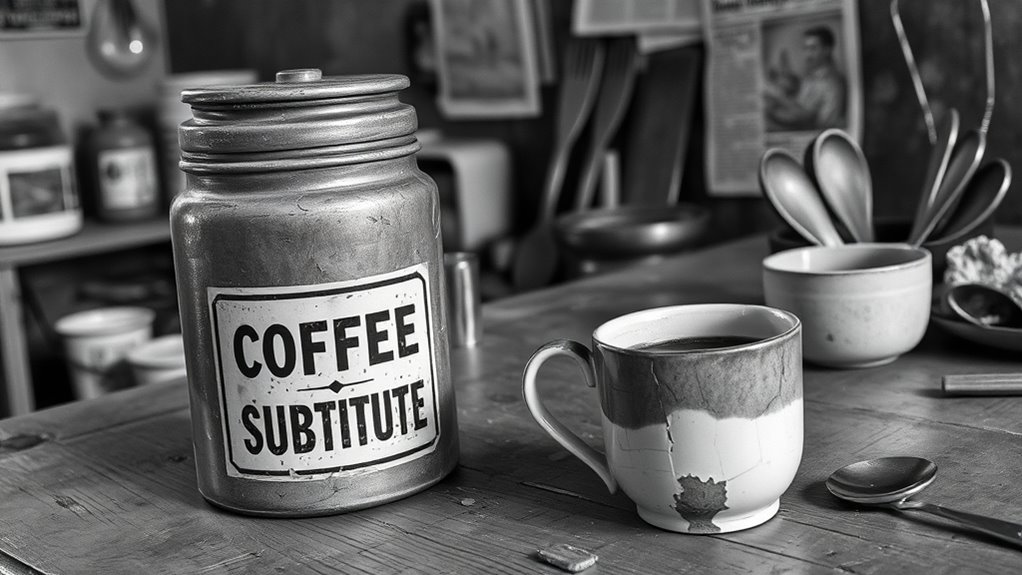

During wartime, coffee shifts from a daily comfort to a symbol of resilience as shortages and rationing limit your supply. People turn to substitutes like roasted chicory, barley, or rye, blending small amounts to stretch supplies. Instant coffee becomes essential for its long shelf life, while rituals of brewing remain crucial for morale. If you keep exploring, you’ll discover how people creatively maintained normalcy and the emotional power coffee held during tough times.

Get coffee and tea gear delivered free with Prime
- Fast, free delivery on millions of items
- Prime Video, Amazon Music and more included
- Member-only deals all year
Key Takeaways
- Coffee became a vital morale booster, maintaining normalcy and comfort during wartime hardships.
- Rationing policies limited coffee consumption, leading to creative substitutes and small, treasured servings.
- Instant coffee and roasted chicory were widely used as affordable, long-lasting alternatives to fresh coffee.
- Blending coffee with substitutes helped stretch limited supplies while preserving the ritual’s emotional significance.
- Despite shortages, coffee’s cultural importance persisted, symbolizing resilience and resourcefulness during challenging times.
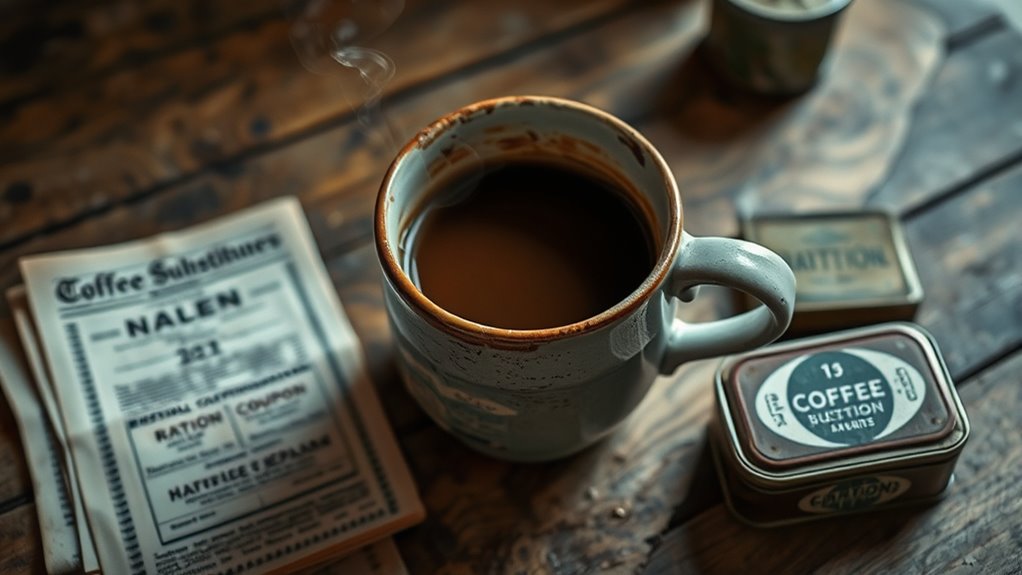
During wartime, coffee becomes more than just a morning pick-me-up; it transforms into an essential morale booster and a symbol of normalcy amid chaos. As global conflicts intensify, the supply chains that once kept your coffee cups full become strained or disrupted altogether. The war affects coffee cultivation in many producing regions, with farms often damaged or neglected due to economic hardship, labor shortages, or military activity. This decline in coffee cultivation leads to wartime shortages, making your daily caffeine routine harder to maintain. Governments recognize the importance of coffee for both morale and productivity, but they struggle to keep supplies steady. Rationing becomes a common strategy to stretch limited stocks, and you find yourself needing to adapt to new rules about how much coffee you can buy or consume.
With coffee shortages, people turn to substitutes and creative solutions to satisfy their craving. Instant coffee, which had been a convenience before the war, becomes a crucial alternative. Its long shelf life and ease of production make it a popular choice during shortages. However, the taste and aroma aren’t quite the same, and many find themselves longing for the real thing. Some turn to roasted chicory, which is widely used as a coffee substitute or additive, adding a similar dark, rich flavor without relying on scarce coffee beans. Others experiment with roasted grains, such as barley or rye, brewing them in ways that mimic coffee’s robust profile. These substitutes become more than just replacements—they serve as symbols of resilience, allowing you to maintain a sense of normalcy despite scarcity. Additionally, the use of coffee substitutes became widespread, helping communities adapt to the shortages and preserve their daily routines.
The scarcity also sparks ingenuity on farms and in homes. You might find yourself blending small amounts of coffee with chicory or other substitutes to stretch your supplies further. Rationing policies enforce strict limits on your coffee consumption, pushing you to appreciate each cup more deeply. Coffee’s cultural significance remains intact, and even in shortages, people cling to rituals—whether it’s a morning brew or an afternoon break—to sustain morale. Sometimes, the war’s impact on coffee cultivation means you only get a sip or two, but that sip becomes a small act of defiance and hope. In this way, wartime shortages don’t just threaten your caffeine fix; they challenge your resilience and resourcefulness, reminding you that even in dark times, a simple cup of coffee can provide comfort and a sense of continuity.
As an affiliate, we earn on qualifying purchases.
Frequently Asked Questions
How Did Wartime Coffee Rationing Affect Global Coffee Trade?
Wartime coffee rationing disrupted the global coffee trade by imposing strict trade restrictions, reducing exports from major coffee-producing countries. You’d notice shortages and increased prices, prompting international cooperation to find substitutes. Governments collaborated to allocate supplies efficiently, which shifted demand to alternative beverages. This upheaval transformed trade dynamics, emphasizing resource conservation and fostering new relationships among nations to manage limited coffee supplies during wartime.
Were There Any Health Risks Associated With Coffee Substitutes?
You should know that some coffee substitutes posed health risks, with reports indicating potential toxicity from certain ingredients. For example, during wartime, nearly 40% of homemade substitutes contained harmful additives. While substitute safety improved over time, consuming untested or contaminated alternatives could lead to health issues like gastrointestinal problems or allergic reactions. It’s essential to verify the safety of any substitute before drinking to protect your health.
How Did Soldiers Access Coffee During Wartime?
During wartime, soldiers accessed coffee through rationed supplies and substitutes. Because of coffee bean shortages, military rations included small portions of actual coffee or substitutes like chicory and barley. You’d find soldiers brewing these in makeshift setups, often sharing limited amounts. Despite shortages, the craving for coffee kept morale up, so troops made do with whatever coffee-like substances they could get, ensuring some comfort amid the chaos.
Did Coffee Rationing Influence Consumer Habits After the War?
Imagine the aroma of freshly brewed coffee filling your home, a symbol of resilience. Coffee rationing during wartime fueled post-war coffee revival, shaping consumer adaptation. People cherished their brews more deeply, valuing every sip. This shift led to a lasting appreciation for coffee, encouraging new habits like savoring smaller portions and exploring diverse blends. Rationing transformed coffee from a daily routine into a treasured ritual, influencing habits long after the war ended.
Were Any Alternative Beverages Officially Promoted During Shortages?
During shortages, officials actively promoted tea alternatives and herbal infusions to help people cope with coffee scarcity. You might have been encouraged to try these beverages as a warm, comforting substitute. These promotions aimed to reduce coffee demand and ensure people still enjoyed a hot drink. By advocating for herbal infusions and tea alternatives, authorities supported your ability to adapt to rationing while maintaining some semblance of daily routine and comfort.
Conclusion
You might think that wartime rationing only meant giving up luxury items like coffee, but it also forced innovation and resilience. The theory that scarcity sparks creativity holds true here—you find new substitutes and ways to enjoy familiar comforts. So, next time you sip your coffee, remember how even in hardship, people adapt and persevere. It’s proof that, with a bit of ingenuity, you can turn limitations into opportunities for growth.
Halloween Picks
halloween
As an affiliate, we earn on qualifying purchases.