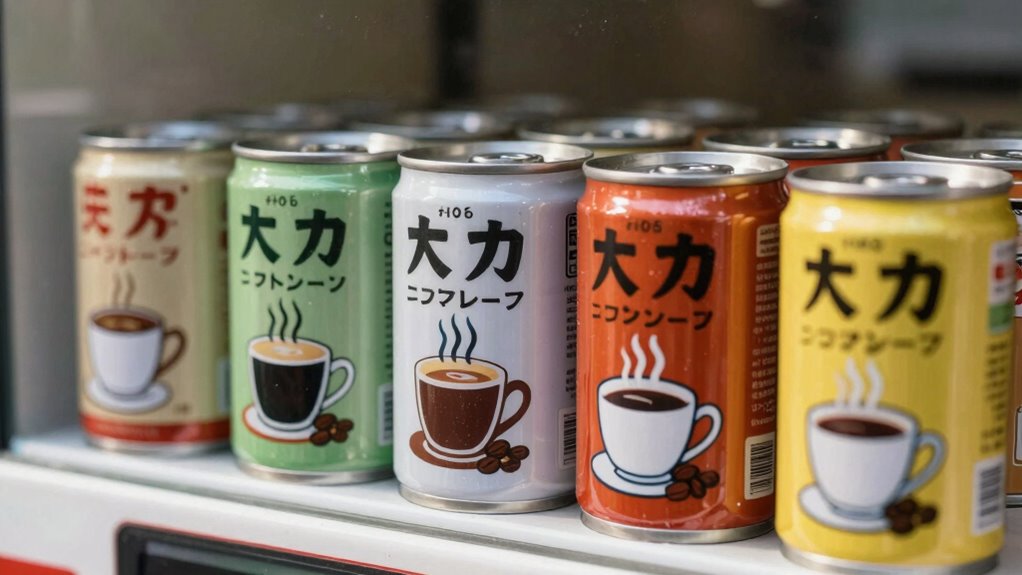
Canned coffee in Japan has a long history dating back to the 1960s, when vending machines first appeared as a quick, convenient caffeine source for busy lives. Today, it’s found everywhere—from train platforms to street corners—making it easy to grab a hot or cold drink anytime. Innovations in flavors and packaging keep it fresh and appealing, reflecting Japan’s fast-paced culture. Keep exploring to discover how this daily ritual became a cultural icon.

Get coffee and tea gear delivered free with Prime
- Fast, free delivery on millions of items
- Prime Video, Amazon Music and more included
- Member-only deals all year
Key Takeaways
- Canned coffee in Japan dates back to the 1960s, introduced via vending machines for quick caffeine access.
- It became popular due to Japan’s fast-paced lifestyle emphasizing convenience and instant energy.
- Major brands like Boss, Georgia, and UCC pioneered diverse flavors and modern packaging.
- Technological advancements enabled vending machines to serve freshly brewed, heated, and cold coffee options.
- Canned coffee has become a cultural symbol of Japan’s innovative, efficient, and on-the-go lifestyle.
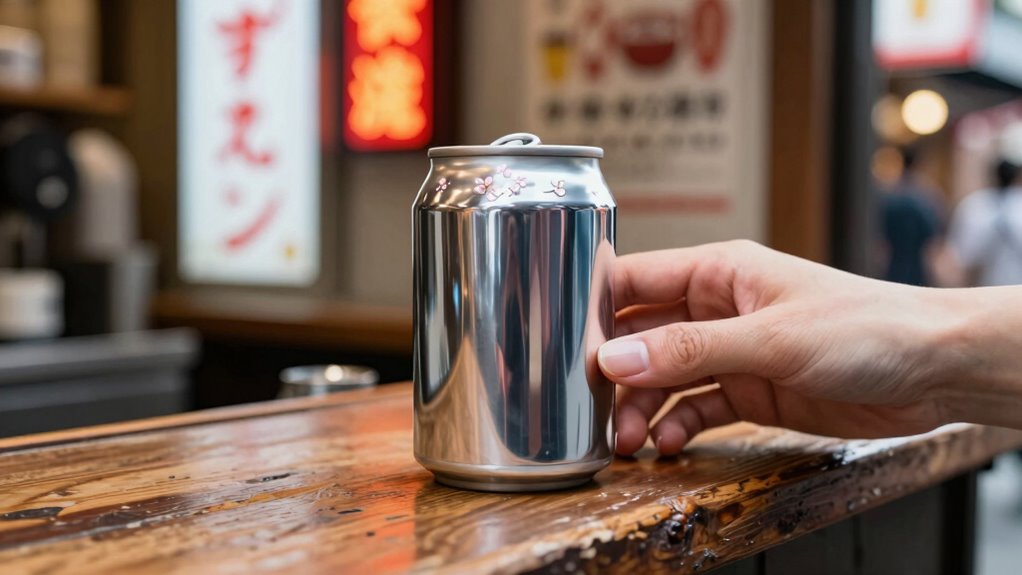
Canned coffee is a ubiquitous part of daily life in Japan, seamlessly blending convenience with a wide variety of flavors and brands. It’s easy to find in vending machines, convenience stores, and even on street corners, making it an essential element of many people’s morning routines. For many, grabbing a can from a vending machine is the first act of the day, a quick way to energize before heading to work or school. You might notice that these coffee vending machines are almost everywhere—on train platforms, outside offices, and along busy streets—offering an instant pick-me-up at any hour. This widespread availability means you can rely on canned coffee to start your day smoothly, fitting seamlessly into your busy schedule.
The history of coffee on the go in Japan dates back to the 1960s, when companies began experimenting with vending machines as a way to provide quick, accessible caffeine. Initially, canned coffee was seen as a novelty, but it quickly grew in popularity. The success of coffee vending machines was driven by Japan’s fast-paced lifestyle, where convenience often takes precedence over traditional brewing. Over the years, brands like Boss, Georgia, and UCC have emerged, each offering a range of flavors—from sweetened, creamy options to black, unsweetened varieties. These brands continually innovate, introducing new flavors and packaging to attract a broad audience.
Coffee vending machines in Japan began in the 1960s, revolutionizing quick, accessible caffeine for busy lifestyles.
Your morning routine might involve stopping at a vending machine, selecting your preferred coffee, and taking a sip on your way to work or while commuting. This simple act has become a ritual for many, providing a moment of comfort and familiarity in a hectic day. The convenience of canned coffee means you don’t have to stop at cafes or brew your own; you just reach out, grab a can, and enjoy. The variety of options allows you to customize your experience—whether you want something rich and bold or crisp and invigorating. Thanks to the evolution of coffee vending technology, many machines now offer heated or cold drinks, catering to your seasonal preferences. Additionally, the development of vending machine technology has made it possible to serve freshly brewed coffee in minutes, further enhancing its appeal. This advancement in coffee-serving technology is driven by the desire to meet consumer demands for freshly brewed coffee, which continues to evolve with technological progress.
Furthermore, the innovation in vending machines has contributed significantly to the growth of canned coffee consumption, making it more convenient and appealing for people on the go.
In essence, canned coffee has transformed the way people in Japan approach their mornings. It embodies the spirit of convenience that defines modern life, turning a simple act—buying a cup of coffee—into an effortless part of your daily routine. From its humble beginnings in vending machines to its status as a cultural staple, canned coffee remains a symbol of Japan’s innovative, fast-paced lifestyle.
Japanese canned coffee variety pack
As an affiliate, we earn on qualifying purchases.
As an affiliate, we earn on qualifying purchases.
Frequently Asked Questions
How Is Canned Coffee Typically Stored and Preserved?
You store canned coffee in a cool, dry place to maintain freshness and prevent spoilage. The preservation methods involve sealing the coffee in airtight cans to keep out oxygen and light, which can degrade quality. Typically, refrigeration isn’t necessary unless the can is opened. Proper storage techniques help preserve flavor and extend shelf life, ensuring you enjoy your coffee at its best whenever you need a quick caffeine boost.
Are There Regional Variations in Canned Coffee Flavors Across Japan?
You’ll discover that regional flavors of canned coffee in Japan are as diverse as the country itself, reflecting local cultural preferences with remarkable precision. From the rich, robust brews in Hokkaido to the sweet, milky varieties in Kyushu, each area offers unique tastes. These regional variations often incorporate local ingredients, making canned coffee a fascinating reflection of Japan’s culinary diversity and regional pride, truly a beverage landscape like no other.
What Are the Environmental Impacts of Canned Coffee Packaging?
You might not realize it, but canned coffee packaging impacts the environment through recycling challenges and plastic waste management. Metal cans are recyclable, but contamination and improper disposal hinder effective recycling. Plastic components, like lids or coatings, add to waste, complicating waste management efforts. To minimize environmental impacts, you can support brands that use eco-friendly materials, recycle cans properly, and advocate for better recycling systems.
How Has Canned Coffee Influenced Japanese Coffee Culture?
You might be surprised to learn that over 70% of canned coffee sales in Japan come from vending machines and convenience stores. This shift has made coffee more accessible and casual, shaping a unique coffee culture that values speed and convenience. It encourages daily consumption and integrates coffee into everyday routines, transforming how Japanese people enjoy coffee, making it a quick, on-the-go experience rather than a sit-down luxury.
Are There Health Differences Between Canned Coffee and Brewed Coffee?
Yes, there are health differences between canned coffee and brewed coffee. Canned coffee often has higher caffeine content, which can boost your energy but might cause jitters if consumed excessively. It also tends to contain more sugar, increasing calorie intake and affecting your health over time. Brewed coffee usually has lower sugar levels and allows you to control caffeine intake more easily, making it a healthier choice if consumed in moderation.
Conclusion
You might be surprised to learn that Japan consumes over 2 billion cans of coffee annually, showcasing how deeply embedded canned coffee is in daily life. This statistic highlights not just convenience, but a cultural phenomenon that keeps millions energized on the go. As you’ve seen, the history behind it reflects innovation and adaptation. So next time you grab a can, remember you’re part of a tradition that’s shaped Japan’s fast-paced lifestyle for decades.
Halloween Picks
halloween
As an affiliate, we earn on qualifying purchases.