
Acidity refers to the chemical property of a substance, measured by pH, indicating how many hydrogen ions it contains. Sourness, however, is the sensory experience you feel as a tangy or sharp taste on your palate. While higher acidity often means more sourness, they’re not always the same — factors like acid type and concentration also matter. If you want to understand how these differences impact flavor, there’s more to explore below.
Key Takeaways
- Acidity is a chemical property measuring hydrogen ion concentration, while sourness is the sensory perception of tangy taste.
- pH levels quantify acidity objectively; lower pH indicates higher acidity but doesn’t always mean more sourness.
- Sourness results from taste buds sensing acids, which can vary depending on acid type and concentration.
- A food’s pH does not directly correlate with perceived sourness due to factors like flavor compounds and acid interactions.
- Understanding both acidity and sourness helps in balancing flavors and adjusting recipes effectively.
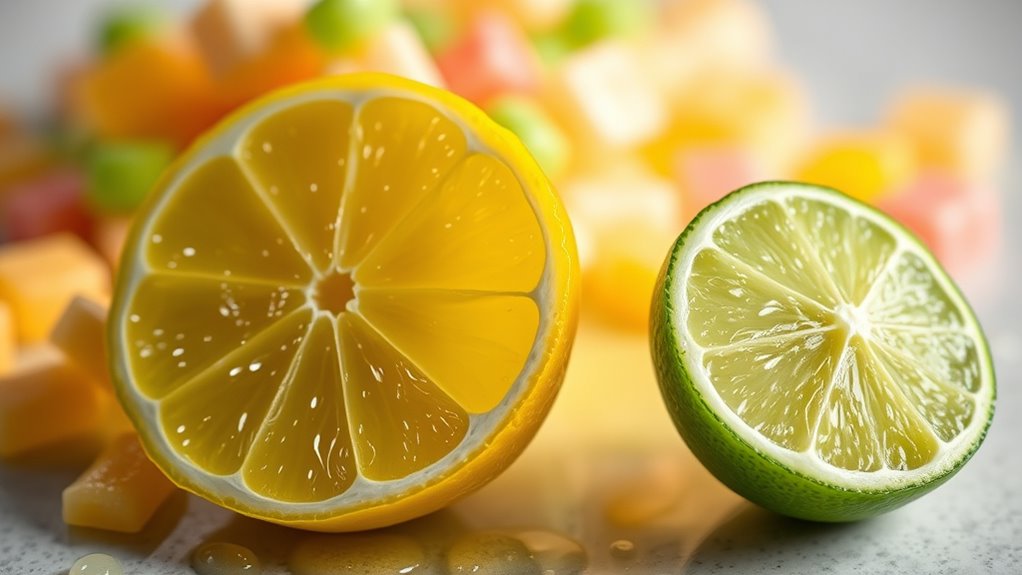
Although acidity and sourness are often used interchangeably, they refer to different sensory and chemical properties. When you taste something sour, you experience a sharp, tangy sensation that’s immediately noticeable. This sensation is largely due to the flavor intensity, which is how strong or pronounced the sour taste feels on your palate. The more intense the sourness, the more it stimulates your taste buds, giving you that puckering, brisk feeling. But behind this sensory experience lies a scientific aspect: pH measurement. The pH scale tells you how acidic a substance is, with lower values indicating higher acidity. When you measure the pH of a food or beverage, it provides an objective, quantifiable number that reflects its acidity level, regardless of how sour it tastes. For example, lemons have a low pH, usually around 2, making them highly acidic, which contributes to their intense flavor. However, the actual sourness you perceive isn’t solely dependent on pH; other factors, like the type of acid present and its concentration, also influence flavor intensity.
Understanding the difference between acidity and sourness helps you better interpret what you’re experiencing. Acidity refers to the chemical property defined by the concentration of hydrogen ions in a solution, which can be precisely measured through pH testing. Sourness, on the other hand, is a sensory perception that results from the interaction of those acids with your taste buds. For instance, a food might be highly acidic (low pH), but if it contains weak acids or certain flavor compounds that mask or mellow the sour sensation, it might not taste as sour as its acidity suggests. Conversely, some foods with moderate acidity can taste very sour because of how the acids interact with your taste receptors, heightening the flavor intensity.
In practical terms, this distinction is important for chefs, food scientists, and anyone tweaking recipes. When adjusting the flavor profile of a dish, you might measure pH to ensure consistent acidity, but you also need to take into account how the sourness will be perceived. A higher pH doesn’t necessarily mean a less sour taste if other ingredients amplify that sensation. Ultimately, understanding the relationship between flavor intensity and pH measurement allows you to better control the balance of acidity and sourness, ensuring your culinary creations reach the desired taste experience.
Frequently Asked Questions
How Do Different Foods Influence Acidity and Sourness Perceptions?
Different foods influence your perception of acidity and sourness through flavor balance and ingredient interactions. When you combine ingredients like citrus or vinegar with sweet or savory elements, it enhances the sourness without overwhelming the dish. Your taste buds respond to the overall flavor balance, so adjusting ingredients can heighten or mellow acidity and sourness. Understanding these interactions helps you create harmonious dishes that appeal to your palate.
Can Acidity or Sourness Affect Dental Health Differently?
Yes, acidity and sourness can affect your oral health differently. Acidic foods lower your mouth’s pH, eroding enamel over time and increasing cavity risk. Sour foods, often high in acids, can also cause enamel erosion if consumed excessively. Your dietary choices play a vital role in maintaining oral health. To protect your teeth, limit acidic and sour foods, and rinse your mouth afterward to neutralize acids.
Are There Cultural Differences in How Acidity and Sourness Are Perceived?
You’ll find that cultural flavor preferences greatly influence how you perceive acidity and sourness. For example, 60% of Asian cuisines incorporate sour flavors, highlighting regional taste perceptions. In some cultures, sourness is cherished for its invigorating qualities, while others see it as an acquired taste. Your perceptions are shaped by these regional influences, making the experience of acidity or sourness unique depending on your cultural background.
How Do Cooking Methods Alter the Acidity or Sourness of Ingredients?
Cooking methods like fermentation processes and various techniques can considerably alter the acidity or sourness of ingredients. When you ferment foods, such as making sauerkraut or yogurt, the natural bacteria produce acids, increasing sourness. Roasting or boiling can mellow acidity, while adding ingredients like vinegar or citrus during cooking boosts sourness. By choosing specific techniques, you control the flavor profile, balancing acidity and sourness to suit your dish.
What Are the Health Benefits or Risks Associated With High Acidity or Sourness?
Think of high acidity or sourness like a double-edged sword. You benefit from acidic benefits like improved digestion and vitamin C, but too much risks tooth erosion or stomach discomfort. If you enjoy sour foods, stay balanced to avoid risks. Your body needs some acidity, but overdoing it can lead to health issues. Moderation is key to harness the benefits while minimizing the risks.
Conclusion
Now that you understand the difference, you see acidity’s sharp, precise edge versus sourness’s tangy, playful bite. Acidity sharpens flavors, adds brightness, and balances sweetness, while sourness teases your taste buds with a lively punch. They’re opposites in nature but work together to create harmony. So, next time you taste that lemon or yogurt, appreciate how acidity and sourness dance together—each distinct, yet perfectly complementing each other in every bite.