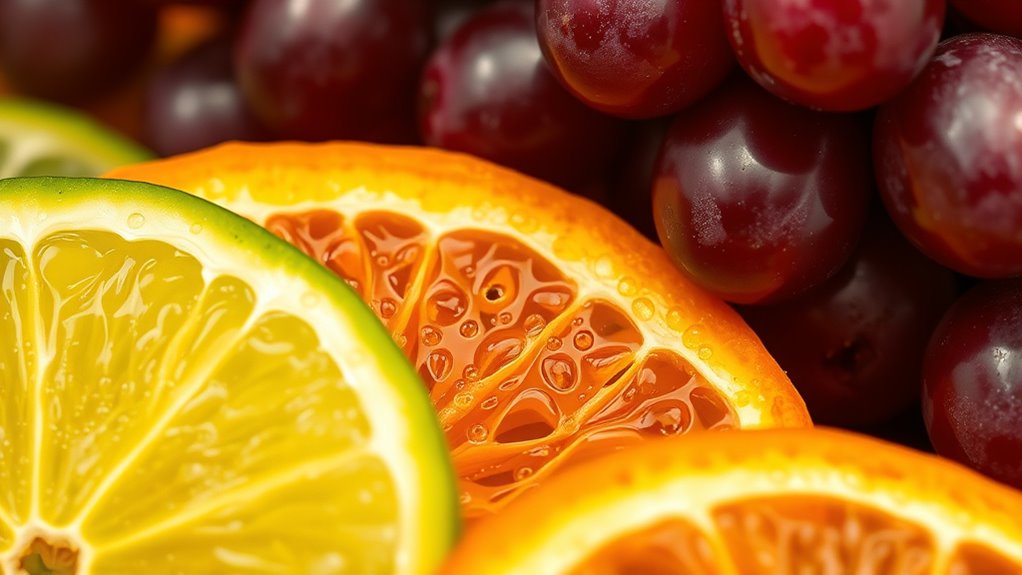

Understanding acidity involves knowing how malic, citric, tartaric, and phosphoric acids influence food. Malic acid gives apples their tart taste, while citric acid is common in citrus fruits and soda flavorings. Tartaric acid is found in grapes and wine, adding tanginess, and phosphoric acid is used in soft drinks to enhance flavor and preserve freshness. Recognizing how these acids affect taste and preservation helps you better appreciate food chemistry and safety. Keep exploring to discover how these acids impact your favorite foods and drinks.
Key Takeaways
- Malic acid is predominant in apples, providing tartness; citric acid is dominant in citrus fruits, offering sour flavor.
- Tartaric acid is mainly found in grapes and wine, contributing to their tangy taste.
- Phosphoric acid is commonly added to sodas for acidity and flavor enhancement.
- These acids help preserve foods by lowering pH and inhibiting microbial growth.
- Understanding their roles aids in food flavoring, preservation, and nutritional processes.
Have you ever wondered what makes certain substances taste sour or cause skin irritation? It all comes down to acidity, a fundamental property of many compounds that influences taste, texture, and how our bodies respond. When we talk about acidity, we’re referring to the concentration of hydrogen ions (H+) in a solution, which directly affects the pH balance. A lower pH indicates higher acidity, which is why lemon juice and vinegar taste sharp and tangy. Understanding how acids like malic, citric, tartaric, and phosphoric acids interact helps us grasp their roles in food and health.
Malic acid is naturally abundant in apples and contributes to their tart flavor. It also plays a role in maintaining the pH balance in our bodies, supporting metabolic processes. Citric acid is found in citrus fruits like lemons and oranges, giving them their characteristic sourness. Beyond flavor, citric acid acts as a natural preservative, inhibiting bacterial growth in food and prolonging shelf life. Tartaric acid, present in grapes and wine, is responsible for the tangy taste and is often used as a food additive for its stabilizing properties. Phosphoric acid, commonly added to sodas, provides acidity that enhances flavor and helps preserve the beverage by controlling microbial growth.
These acids are essential tools in food preservation. By lowering the pH of foods, they create environments hostile to spoilage bacteria and molds, extending the shelf life of products. For example, citric acid and phosphoric acid are widely used in canned foods, soft drinks, and jams to maintain freshness and prevent microbial contamination. Their ability to regulate pH balance in food systems ensures that bacteria don’t thrive, reducing spoilage and foodborne illnesses. Additionally, understanding how bicycle tire maintenance and proper storage methods relate to preserving equipment can be compared to how acids help preserve food quality.
Their ability to regulate pH balance in food systems ensures that bacteria don’t thrive, reducing spoilage and foodborne illnesses. Not only do they preserve the food, but they also enhance the overall sensory experience by contributing to the desired tartness and flavor complexity.
Understanding the different acids and their properties helps you appreciate their importance beyond just taste. They influence food safety, shelf life, and even how your body processes nutrients. When you see a bottle of soda or a jar of preserved fruit, you’re witnessing the practical application of acidity through these acids. They serve as natural preservatives and flavor enhancers, illustrating how chemistry plays a crucial role in everyday life. Recognizing the significance of pH balance in food preservation also reminds you how delicate and vital maintaining proper acidity levels is for both health and food quality.
Frequently Asked Questions
How Does Acidity Affect the Flavor Profile of Foods and Beverages?
Acidity impacts the flavor profile of foods and beverages by enhancing their taste and sharpening sensory perception. You’ll notice that a touch of acidity can brighten fruit flavors or add a invigorating tang to drinks. It balances sweetness and enriches complexity, making flavors more vibrant. By adjusting acidity levels, you influence flavor enhancement and how you perceive the overall taste, creating a more dynamic and appealing sensory experience.
Are There Health Benefits or Risks Associated With Consuming Different Acids?
While consuming acids offers health benefits like vitamin C from citric acid, it also poses risks if you’re acid sensitive, such as tooth erosion or stomach discomfort. You might enjoy the invigorating tang, but remember that excessive intake can impact your health negatively. Balance is key—moderation helps you gain benefits without risking harm. Always pay attention to your body’s signals and consult healthcare providers if needed.
Can Acidity Levels Influence the Preservation and Shelf Life of Products?
Yes, acidity levels can influence the preservation and shelf life of products. When you maintain an acidic pH, it creates an environment less favorable for bacteria and mold growth. This enhances preservation through methods like pickling or adding acids like citric or tartaric acid. By controlling acidity, you can extend shelf life, improve safety, and maintain quality, making acidity a key factor in effective preservation methods.
How Do Ph Levels Relate to the Acidity of Various Acids?
You can determine the acidity of different acids by looking at their pH measurement, which indicates how strong or weak an acid is. A lower pH means the acid has higher strength and more hydrogen ions, making it more acidic. Conversely, a higher pH signifies a weaker acid. Knowing the pH helps you understand each acid’s behavior in food, beverages, or industrial applications.
What Are Natural Sources of Each Acid in Everyday Foods?
Imagine biting into a juicy apple—malic acid fuels that tartness, found in apples and grapes. Citric acid gives citrus fruits like lemons and oranges their zing. Tartaric acid’s the secret in grapes and tamarind, adding depth to wine and some candies. Phosphoric acid lurks in sodas, but small amounts also show up in dairy and meats. These acids naturally spice up your everyday foods, enhancing flavor and freshness.
Conclusion
Understanding acidity is like opening a secret code that reveals the true character of your favorite foods and drinks. When you grasp the roles of malic, citric, tartaric, and phosphoric acids, you’ll appreciate how they shape flavor and balance. Just as a painter uses different colors to create a masterpiece, mastering these acids lets you craft perfect tastes. With this knowledge, you’ll enjoy a richer, more intentional experience with every sip and bite.