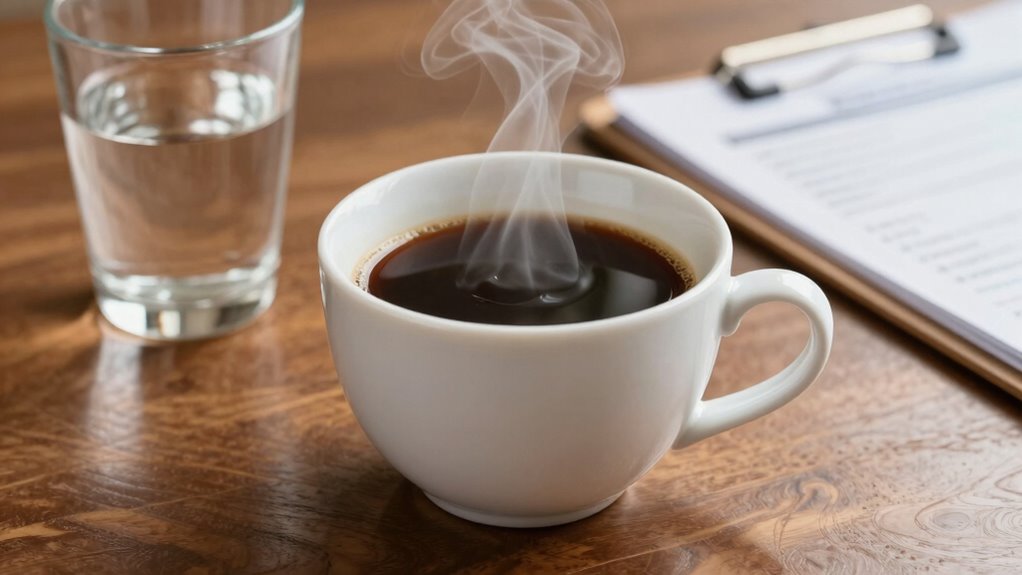

You should avoid drinking coffee before a fasting blood test because it can affect the accuracy of your results. Coffee contains compounds that temporarily alter blood sugar and lipid levels, even if it’s black. Caffeine can also influence hormones related to hunger and insulin sensitivity, which might skew the test outcomes. Sticking to plain water is recommended to guarantee precise results. If you want to understand why coffee is discouraged and how it impacts testing, keep exploring the details below.

Get coffee and tea gear delivered free with Prime
- Fast, free delivery on millions of items
- Prime Video, Amazon Music and more included
- Member-only deals all year
Key Takeaways
- Drinking coffee can temporarily alter blood sugar and lipid levels, potentially skewing test results.
- Most healthcare providers recommend only water during fasting to ensure accurate blood test outcomes.
- Caffeine in coffee may influence hormones related to hunger and insulin, affecting test accuracy.
- Even black coffee, despite low calories, can interfere with fasting blood tests.
- Following medical advice to avoid coffee helps prevent inaccurate results and unnecessary retesting.
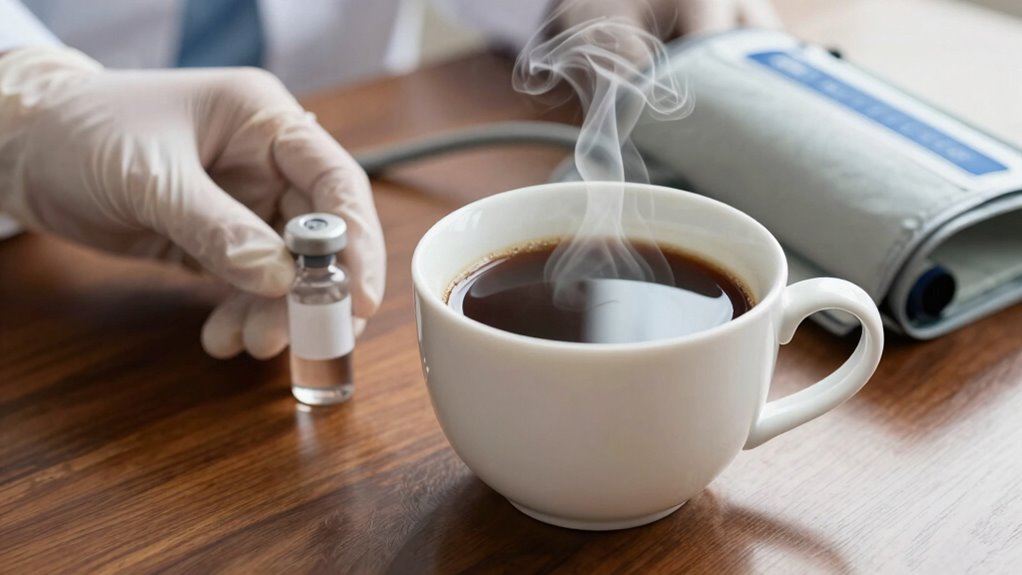
Have you ever wondered if you can enjoy your morning coffee before a fasting blood test? It’s a common question, and many people assume they can sip their favorite brew without affecting the results. The truth is, understanding coffee’s impact and clearing up fasting misconceptions can help you make the right decision. While coffee may seem harmless, it can influence certain blood test outcomes, especially if consumed in the hours before your appointment.
Coffee’s impact on fasting tests isn’t just about caffeine; it’s also about what’s in the coffee itself. Black coffee contains compounds that can temporarily alter your blood sugar levels and interfere with tests measuring glucose or lipids. Even a small amount of cream or sugar can skew results further, so most healthcare providers recommend sticking to plain water during the fasting period. It’s easy to think that a morning coffee won’t do much harm, but these subtle effects can lead to inaccurate readings, potentially causing unnecessary anxiety or additional testing.
Fasting misconceptions are widespread. Many believe that a few sips of coffee won’t break a fast, but technically, fasting means abstaining from all caloric intake. Coffee, especially when consumed black, is very low in calories, but it can still stimulate your digestive system and influence hormones related to hunger and insulin sensitivity. This can be problematic if your test aims to measure fasting blood glucose or lipid levels. The misconception that coffee is “safe” to drink is common because it doesn’t seem to contain solid food, yet even small amounts of caffeine or additives can interfere with the accuracy of your results. Recognizing the effects of caffeine on your body can help you understand why it’s better to avoid it before testing. Additionally, the metabolic response to caffeine can vary from person to person, influencing test outcomes differently.
You might also think that drinking coffee helps curb hunger, making it easier to fast. While it’s true that coffee can suppress appetite temporarily, it doesn’t negate the fact that consuming it may impact your blood chemistry. If you’re unsure about whether you can have coffee, it’s best to follow your healthcare provider’s instructions closely. Usually, they recommend only water during the fasting window, which ensures the most accurate test results. Additionally, being aware of coffee’s effects on blood sugar can help you understand why it’s better to avoid it before testing.
As an affiliate, we earn on qualifying purchases.
Frequently Asked Questions
Can Decaffeinated Coffee Affect Fasting Blood Test Results?
Decaffeinated coffee can affect fasting blood test results, but minimally. It contains some coffee antioxidants and trace caffeine that might influence your metabolism slightly. Since caffeine metabolism varies from person to person, even decaf could impact your test, especially if consumed close to fasting. To guarantee the most accurate results, it’s best to avoid decaffeinated coffee unless your healthcare provider specifically permits it.
How Long Should I Avoid Coffee Before a Fasting Blood Test?
Think of your morning routine as a delicate dance with caffeine—avoid coffee at least 8-12 hours before your test. Caffeine acts like a mischievous spark, skewing your results if it’s still in your system. Just as you’d prepare for a big performance, give your body a break from caffeine to guarantee pure, untainted results. This way, caffeine withdrawal won’t cause unnecessary discomfort, and your test stays accurate.
Does Coffee Impact Glucose or Cholesterol Measurements?
Yes, coffee can impact your glucose and cholesterol measurements. Caffeine absorption from coffee may temporarily raise blood sugar levels, affecting glucose readings. Additionally, coffee influences lipid metabolism, which can alter cholesterol levels, especially LDL and triglycerides. To guarantee accurate results, it’s best to avoid coffee before your fasting blood test. Drinking coffee might lead to misinterpretation of your metabolic health, so follow your healthcare provider’s instructions carefully.
Are There Any Health Risks to Drinking Coffee Before Testing?
Drinking coffee before your test can be like inviting a wild horse into a calm pasture—there are risks. Caffeine metabolism can stimulate your heart and cause jitters, while digestive effects might lead to discomfort, skewing results. If your test requires fasting, even a small coffee could interfere with accuracy. To stay safe and accurate, it’s best to avoid coffee until after your blood draw, minimizing health risks and ensuring precise results.
Is Black Coffee With No Additives Acceptable During Fasting?
Black coffee with no additives is generally acceptable during fasting because it has minimal calories and doesn’t substantially affect your blood tests. However, it can influence your coffee metabolism and caffeine influence, possibly causing mild dehydration or increased alertness. To guarantee accurate results, it’s best to consume coffee in moderation and avoid it if your healthcare provider advises complete fasting. Always follow your doctor’s specific instructions for fasting.
Conclusion
Think of your fasting blood test as a clear mirror, reflecting your true health. Drinking coffee beforehand is like smudging that mirror with fingerprints—it clouds the picture. To get an honest view, skip the coffee and let your results shine pure and true. Just as a calm lake reveals its depths best when undisturbed, your blood test will give you the clearest insight when you’re caffeine-free. Keep it simple, keep it honest.
Fall Picks
fall essentials
As an affiliate, we earn on qualifying purchases.