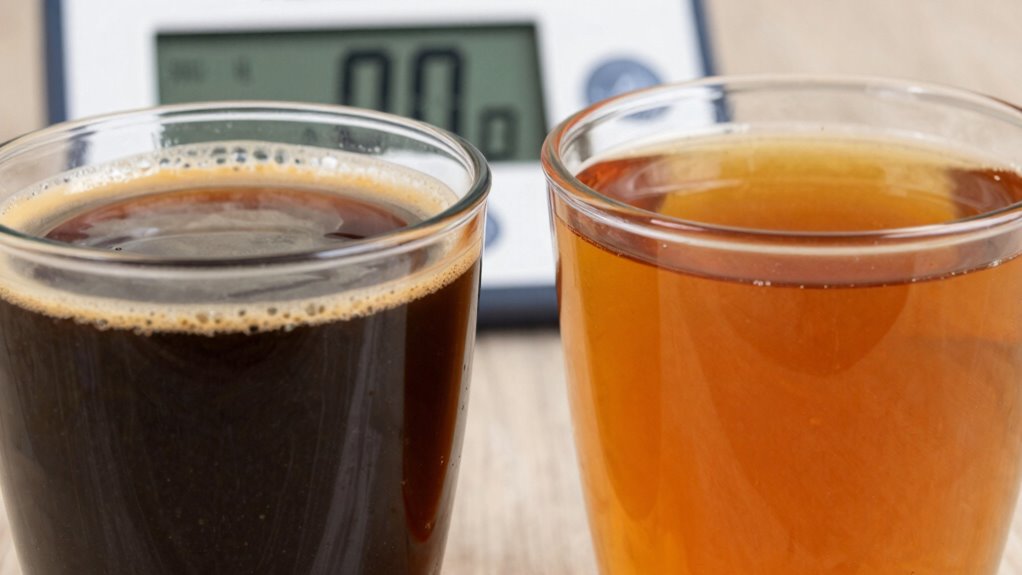

You might think coffee’s acidity is all about pH levels, but perception can be very different from actual numbers. Lighter roasts often seem brighter and more acidic because of their fruity and lively flavors, even though their pH isn’t drastically different from darker roasts. Factors like flavor interactions, brewing methods, and individual taste sensitivity shape how you experience acidity. If you’re curious, exploring how these elements work together will give you a deeper understanding of your coffee’s flavor dance.

Get coffee and tea gear delivered free with Prime
- Fast, free delivery on millions of items
- Prime Video, Amazon Music and more included
- Member-only deals all year
Key Takeaways
- Perceived acidity depends on flavor balance, not just the coffee’s pH level.
- Light roasts appear more acidic due to brighter, fruitier flavors, despite similar pH to dark roasts.
- Actual pH of coffee remains relatively stable across roast levels, with minimal chemical change.
- Flavor interactions and brewing methods significantly influence how acidity is perceived.
- The difference between perceived acidity and actual pH is due to sensory experience, not chemical measurement.
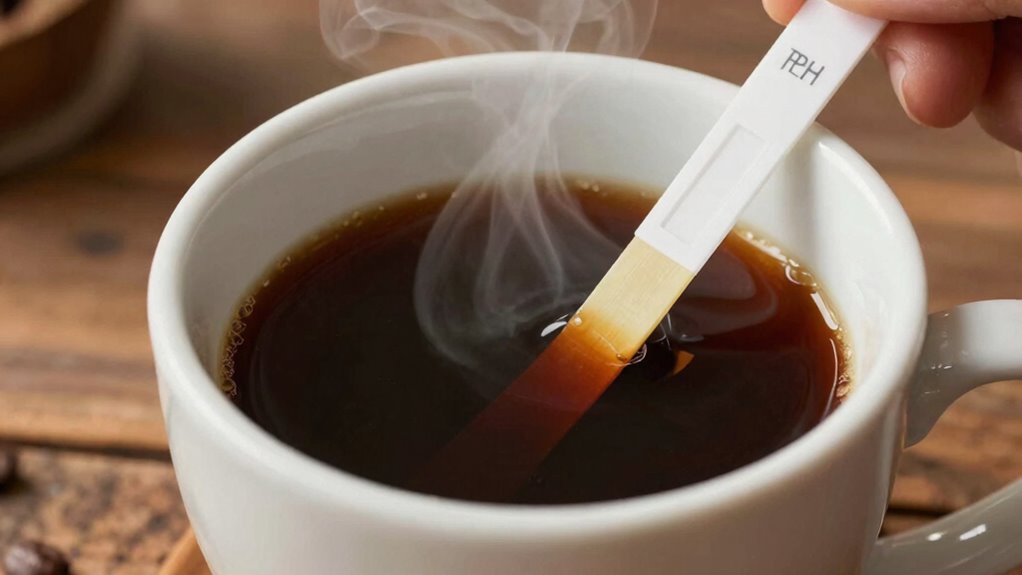
Many coffee enthusiasts believe that a brighter, more vibrant flavor indicates higher acidity, but perception can be quite different from the actual pH level. When you taste coffee, what you interpret as acidity isn’t just about the pH number; it’s also about how the flavors are balanced and how the roast levels influence that balance. The perception of acidity often depends on how well the coffee’s flavor profile complements its other characteristics, like sweetness, bitterness, and body. For example, a well-balanced coffee with bright, lively notes feels more vibrant, but that doesn’t mean it has a necessarily high pH. Instead, it’s about how the acidity interacts with other flavor elements to create an overall harmony.
Perceived acidity depends on flavor balance and roast level, not just the coffee’s actual pH.
The roast levels you choose play a significant role in shaping both the actual acidity and how you perceive it. Light roasts tend to preserve more of the coffee’s original brightness, often resulting in a higher perceived acidity. However, their actual pH might not be drastically different from medium or dark roasts; instead, the lighter roast’s more delicate, floral, or fruity flavors highlight that acidity more prominently. As you move to darker roasts, the perception of acidity generally diminishes because the roasting process reduces the brightness by breaking down acids. Yet, the actual pH may not drop as sharply as your perception suggests. This disconnect occurs because roasting influences flavor balance, making the coffee taste less sharp, even if the pH remains relatively stable. Understanding chemical properties like pH is crucial for a comprehensive appreciation of coffee’s flavor profile. Additionally, sensory perception can be affected by factors such as brewing method and individual taste sensitivity, further complicating the connection between pH and perceived acidity. In fact, chemical interactions during brewing can modify how acidity is perceived, adding another layer of complexity to the experience.
Understanding the nuances between perceived acidity and actual pH helps you better appreciate how roast levels influence your coffee experience. The flavor balance is key here: a well-crafted roast can make a coffee seem more or less acidic regardless of its pH. When you’re selecting beans or roasting profiles, consider how those choices will affect the overall flavor harmony. Lighter roasts, with their vibrant, fruity notes, tend to seem more acidic because those flavors come forward, but their pH might only be slightly lower than darker roasts. Conversely, darker roasts often suppress perceived brightness, giving the impression of a smoother, less acidic coffee, even though the pH difference might be minimal.
Additionally, knowing that chemical properties like pH are just one part of the sensory experience helps you understand why perception can vary so much based on flavor interactions. In the end, your perception of acidity is a complex interplay of chemical properties and sensory experience. Recognizing how flavor balance and roast levels influence that perception allows you to better understand what makes a coffee taste lively or mellow. It’s not just about the numbers; it’s about how the flavors come together, creating that vibrant cup you enjoy every morning.
As an affiliate, we earn on qualifying purchases.
Frequently Asked Questions
How Does Brewing Method Affect Perceived Coffee Acidity?
Your brewing method considerably influences perceived coffee acidity by altering flavor complexity through brewing variables like temperature, extraction time, and grind size. For example, pour-over highlights bright, acidic notes, while a French press yields a fuller-bodied, less acidic profile. These variables shape how your palate perceives acidity, making it seem more or less prominent, regardless of the coffee’s actual pH, ultimately affecting your overall flavor experience.
Can Water Mineral Content Influence Acidity Perception?
Yes, water mineral content can influence how you perceive acidity in coffee. Higher water hardness and mineral balance, especially with calcium and magnesium, can soften the perceived acidity, making it taste smoother. Conversely, low mineral content might accentuate brightness and sharpness. So, adjusting your water’s mineral levels can help you fine-tune your coffee’s acidity perception, ensuring a more balanced and enjoyable cup.
Is There a Standard for Measuring Acidity in Coffee?
Sure, there’s a standard for measuring acidity in coffee—it’s called pH calibration, and it’s pretty serious business. You use specialized equipment to accurately gauge acid measurement, ensuring consistent results. While taste might tell you one thing, the pH value confirms the actual acidity level. So, yes, professionals rely on standardized pH calibration to quantify acidity, separating perception from scientific fact, one precise measurement at a time.
How Does Age Affect Coffee Acidity Perception?
As your coffee ages, you’ll notice a dulling of its vibrant acidity, making the taste seem less bright and lively. Aging taste and sensory decline cause your perception of acidity to diminish, even if the actual pH remains the same. Over time, the nuanced flavors fade, and the coffee feels flatter. To enjoy the full acidity experience, it’s best to consume freshly brewed coffee, as aging impacts your sensory perception profoundly.
Do Different Coffee Beans Have Varying Acidity Levels?
Yes, different coffee bean varieties have varying acidity levels that influence their acidity flavor profiles. For example, Arabica beans tend to be more acidic, offering bright, fruity notes, while Robusta beans usually have a lower acidity with a stronger, bolder taste. These differences come from the beans’ origins, growing conditions, and processing methods, so exploring various varieties helps you find the perfect balance for your preferred flavor experience.
Conclusion
You might think a tiny pH difference means little, but in coffee, that small change can profoundly impact how acidic it tastes—sometimes up to 50% more than you’d expect! Understanding the gap between perceived acidity and actual pH helps you choose your perfect brew. So, next time you’re tasting coffee, remember: those small pH shifts hold big flavor secrets, and knowing them can elevate your coffee experience to a whole new level.
Halloween Picks
halloween
As an affiliate, we earn on qualifying purchases.