To understand a brew recipe easily, think of it as clear, step-by-step instructions. Focus on the sequence of actions, noting durations and temperatures mentioned. Recognize key terms like mash, boil, or ferment, and see which ingredients are flexible for experiments. Once you grasp these basics, you’ll see how each step contributes to the final brew. Stick with it, and you’ll find yourself more confident in making your own brewing tweaks and creations.

Get coffee and tea gear delivered free — and shop member deals
- Fast, free delivery on millions of items
- Access to Prime Big Deal Days deals on October 6–7
- Prime Video, Amazon Music and more included
Key Takeaways
- Look for clear, step-by-step instructions focusing on actions, durations, and temperatures to understand the process easily.
- Recognize brewing terminology and look up unfamiliar words for better comprehension.
- Identify which ingredients are flexible and which are essential for the recipe’s success.
- Pay attention to specific timings and measurements to grasp how each step influences the final brew.
- Treat the recipe as plain English by simplifying complex instructions and visualizing each step clearly.
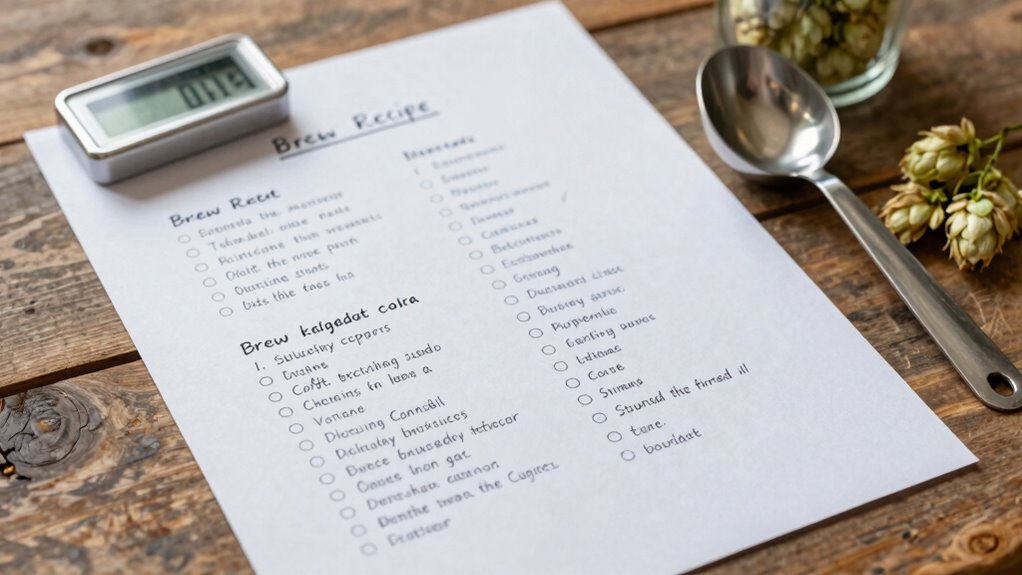
Reading a brew recipe might seem intimidating at first, but once you understand its structure, it becomes much easier to follow and customize your brewing process. Most recipes are laid out in a way that guides you step-by-step, so you can focus on each part without feeling overwhelmed. The key is to familiarize yourself with common brewing terminology, which helps you decode instructions and measurements quickly. For instance, terms like “mash temperature,” “boil time,” and “fermentation” are essential, but once you know what each means, you’ll see how they fit into the overall process.
Understanding brew recipe structure makes brewing easier and more enjoyable.
A good recipe also includes ingredient lists with specific quantities, often in pounds or grams, along with the type of malt, hops, yeast, and other additives. If you don’t have exactly what’s listed, ingredient substitutions are usually acceptable—just know how they might affect the final flavor or alcohol content. For example, swapping a different hop variety or malt can alter bitterness or sweetness, but it’s not a deal-breaker. The recipe often hints at which ingredients are flexible and which are vital, so pay attention to those details.
Most brew recipes are written in a straightforward, step-by-step format. They start with preparation steps, such as heating water or milling grains, then move through mashing, boiling, cooling, and fermentation. Each step includes specific instructions, durations, and temperatures. You’ll also find timings for hop additions, which are essential for bitterness and aroma. It’s helpful to read these instructions carefully and understand how each component contributes to your beer’s profile. Additionally, understanding brewing terminology can make the process much more accessible, even for beginners. Recognizing these terms helps you interpret recipes more effectively and anticipate the outcomes of different steps.
When you see a recipe referencing brewing terminology, don’t get stuck on unfamiliar words. Look them up or think of them as shorthand for a particular process or ingredient. This will make following the recipe more intuitive. Furthermore, ingredient substitutions aren’t just allowed—they’re encouraged when you want to experiment or adapt based on what’s available. Knowing how different ingredients impact the final product can help you make informed decisions and better understand how each change influences your brew. Gaining a solid understanding of brewing steps can also help you troubleshoot issues if your beer doesn’t turn out as expected. Just remember that some substitutions might change the flavor or clarity, so consider the impact before swapping. Being familiar with basic brewing concepts can help you make informed decisions and better understand how each change influences your brew.
In the end, reading a brew recipe like it’s written in plain English is about understanding the structure and purpose behind each step. With practice, you’ll quickly recognize patterns and know which parts are flexible. This knowledge empowers you to tweak recipes confidently, experiment with ingredients, and craft beers tailored to your taste. The more you read and interpret recipes, the more intuitive brewing becomes—turning a complex process into a fun, creative activity.
As an affiliate, we earn on qualifying purchases.
Frequently Asked Questions
What Equipment Do I Need to Follow the Recipe?
To follow the recipe, you’ll need basic brewing equipment like a fermenter, bottling supplies, and a kettle. Keep in mind, ingredient substitutions can help if certain items aren’t available. As you gain experience, consider equipment upgrades, such as a better thermometer or mash tun, to improve your brew quality. Having the right tools makes the process smoother and allows you to experiment with variations while sticking to the core steps.
How Can I Modify the Recipe for Different Beer Styles?
You can totally turn that basic recipe into a new beer style—because who doesn’t love a little chaos in their brew? Just swap out ingredients for different malts, hops, or yeasts, and tweak the flavor profile. Want a hoppier IPA or a smoother stout? Adjust ingredient substitutions and flavor adjustments accordingly. Experiment boldly, record your changes, and remember—beer is all about personal taste, so have fun with it!
What Are Common Mistakes to Avoid When Brewing?
When brewing, avoid rushing fermentation; stick to the recommended duration to guarantee proper flavor development. Don’t overlook bottling essentials like sanitizing bottles and priming sugar, which prevent contamination and over-carbonation. Keep an eye on temperature control and avoid opening the fermenter prematurely, as these mistakes can lead to off-flavors or infected beer. Staying attentive to these details helps produce a clean, tasty brew every time.
How Long Does the Brewing Process Typically Take?
The brewing process usually takes around 4 to 8 weeks, depending on the type of beer you’re making. You’ll need to account for fermentation duration, which can range from a week to several weeks, and the bottling timeline, typically another 1-2 weeks for carbonation. Patience is key—rushing this process can compromise flavor. Keep an eye on fermentation progress and plan your bottling accordingly for the best results.
Do I Need Special Ingredients or Can I Substitute?
You don’t always need special ingredients; ingredient substitutions are common and can be tailored for flavor adjustments. For example, you might swap out a specific malt or hop variety to create a different taste profile or to accommodate what’s available. Just keep in mind that substitutions can affect the final flavor, so choose ingredients that complement each other. Experimenting allows you to craft unique brews suited to your preferences.
Conclusion
Now that you know how to decode a brew recipe, you’re ready to confidently craft your perfect pint. With a little patience and practice, you’ll perfect your process and produce professional-quality pours. Remember, reading recipes carefully and respecting each step guarantees success. So, savor the journey, stay steady, and strike a balance between boldness and precision. Brewing becomes more than a task—it transforms into a fulfilling, flavorful adventure you’ll always appreciate and aspire to improve.
Fall Picks
fall essentials
As an affiliate, we earn on qualifying purchases.