
If your coffee tastes metallic, the culprit could be hidden water issues many overlook. High mineral content, especially in hard water, can cause a metallic taste, but even more common is corrosion in old pipes, which releases rust and metal particles into your water. These contaminants can seep into your brew, affecting flavor. To fix this, you might need to test your water or upgrade your plumbing—discovering more about these often-missed causes can lead to much better coffee.
Key Takeaways
- Mineral imbalances in water, such as high iron or copper, can cause a metallic taste in coffee.
- Old or corroded pipes may release rust or metal particles into water, contaminating your brew.
- Hard water with excessive minerals can alter flavor and contribute to metallic sensations.
- Lack of proper water filtration allows minerals and corrosion particles to affect coffee flavor.
- Regular water testing and plumbing maintenance help identify and prevent metallic tastes caused by water issues.
Beyond mineral imbalances, pipe corrosion plays a significant role in imparting a metallic flavor to your coffee. Over time, plumbing systems—especially older ones—are prone to rust and corrosion. When pipes degrade, tiny particles of rust or metal can break loose and contaminate your water supply. These particles can travel from your pipes directly into your coffee, giving it that unmistakable metallic taste. Even if your water appears clear and odorless, microscopic traces of corroded pipe material could be the cause. This is particularly common in areas with hard water or pipes made of copper or galvanized steel. The longer your plumbing goes without maintenance or upgrades, the more likely it is that pipe corrosion is contributing to the problem. Regular plumbing inspections and water quality testing can help identify issues before they affect your coffee. Addressing these issues requires a proactive approach. You might consider installing a water filtration system designed to remove excess minerals and prevent pipe corrosion particles from reaching your coffee maker. Regularly flushing and maintaining your plumbing can also reduce the buildup of rust and corrosion. Testing your water can reveal mineral imbalances that are affecting taste, allowing you to adjust your water treatment accordingly. Sometimes, switching to filtered or bottled water for brewing can immediately improve the flavor and eliminate that metallic aftertaste. Remember, the quality of your water directly impacts your coffee’s flavor profile. By tackling mineral imbalances and inspecting your plumbing for corrosion, you can enjoy a much cleaner, more delicious cup without that metallic tang.
water filtration system for coffee maker
As an affiliate, we earn on qualifying purchases.
As an affiliate, we earn on qualifying purchases.
Frequently Asked Questions
Can the Type of Coffee Beans Affect Metallic Taste?
Yes, the type of coffee beans can affect the metallic taste. Beans from different origins have unique mineral profiles, which influence flavor. Additionally, the roasting process can bring out or mask metallic notes. If your beans are from a region with high mineral content or are roasted improperly, you might notice a metallic flavor. Choosing fresh beans from reputable sources and proper roasting can help improve your coffee’s taste.
Does Brewing Temperature Influence Metallic Flavors?
Your coffee’s metallic flavor can spike if you don’t control brewing temperature, because extraction temperature impacts water chemistry and how minerals dissolve. When you brew too hot or too cold, you risk releasing bitter, metallic notes that ruin your brew. Keep your temperature steady—ideally around 195-205°F—to guarantee proper extraction and avoid those unwanted metallic tastes. Temperature plays a superhero role in perfecting your coffee flavor!
How Does Storage of Coffee Impact Taste?
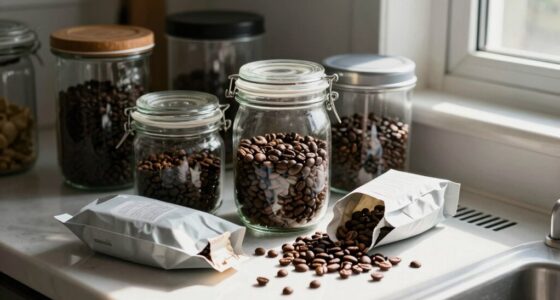
You impact your coffee’s taste by how you store it. Keep your coffee fresh by using airtight storage containers made of non-reactive materials like glass or stainless steel. Avoid plastic, which can absorb odors and compromise flavor. Proper storage prevents exposure to air, moisture, and light, all of which can diminish coffee freshness. This way, your brew stays vibrant, aromatic, and free from metallic or stale tastes.
Are Certain Coffee Brewing Methods More Prone to Metallic Flavors?
Yes, certain brewing methods are more prone to metallic aftertaste and flavor contamination. For example, using unlined or poorly maintained metal coffee makers can introduce a metallic flavor, especially if the equipment is old or corroded. Similarly, brewing with hard water or contaminated water supplies can cause metallic aftertaste. To avoid this, opt for glass or ceramic brewers, regularly clean your equipment, and use filtered water for a cleaner, better-tasting coffee.
Can Cleaning Agents in Coffee Equipment Cause Metallic Taste?
Cleaning chemicals can cause a metallic taste if residues remain on your coffee equipment. When you use harsh cleaning agents, they may lead to equipment corrosion over time, which can leach metallic flavors into your coffee. To prevent this, always rinse your equipment thoroughly after cleaning and opt for food-safe cleaning agents. Proper maintenance ensures your coffee tastes fresh and free of unwanted metallic notes.
Conclusion
So, next time your coffee tastes off, don’t just blame the beans. Take a closer look at your water—because the real culprit might be hiding right there. Could it be your tap water’s hidden metals or minerals? The answer’s closer than you think. Fixing this tiny detail could transform your brew from dull to delightful. Are you ready to uncover what’s been lurking in your water all along? The secret to perfect coffee might just be one simple change away.