Before choosing a water test kit for coffee, you’ll want to measure mineral content, pH levels, and hardness. These factors directly impact flavor, extraction, and equipment health. Look for kits that provide accurate readings of calcium, magnesium, alkalinity, and pH to fine-tune your water. Getting these measurements right guarantees better coffee quality and prevents issues like scale buildup. Keep exploring to discover how these tests can optimize your brewing results.
Key Takeaways
- Measure mineral content, including calcium and magnesium, to assess water hardness and its impact on brewing equipment and flavor.
- Test pH levels to ensure water falls within the ideal 6.5–7.5 range for optimal extraction and balanced taste.
- Check for contaminants or chlorine that could affect coffee aroma and taste, ensuring water purity.
- Determine total dissolved solids (TDS) to gauge overall mineral presence and suitability for brewing.
- Use test kits that provide quick, accurate results for consistent water quality management in coffee preparation.
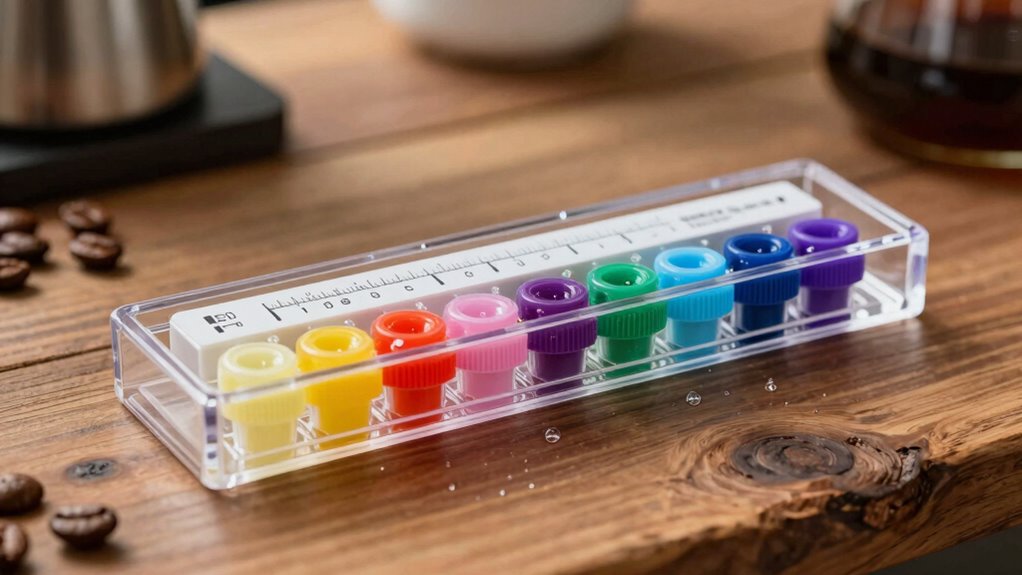
If you’re serious about brewing the perfect cup of coffee, testing your water quality should be a top priority. The quality of your water directly impacts the flavor, aroma, and overall quality of your brew. Before you invest in any coffee gear or beans, it’s essential to understand the characteristics of your water, specifically water hardness and pH levels. These two factors influence how your coffee extracts and how it tastes after brewing.
Water hardness refers to the amount of dissolved minerals, primarily calcium and magnesium, in your water. Hard water can lead to scale buildup in your coffee maker, affecting its performance and longevity. More importantly, it can alter the extraction process, resulting in a cup that’s either over- or under-extracted. If your water is too hard, your coffee might taste bitter or overly robust, masking subtle flavor notes. Conversely, very soft or demineralized water may produce flat, dull coffee because minerals are essential in extracting flavor compounds during brewing. Understanding water mineral content** helps you determine whether you need to soften your water or adjust your brewing process. Many test kits provide a simple way to quantify mineral content, so you can decide if you need water softening treatments or mineral additives to reach the ideal balance**. Keep in mind that the right mineral content enhances extraction and flavor, so understanding your water’s hardness is vital.
Hard water can cause scale buildup and over-extraction, leading to bitter, masked flavors in your coffee.
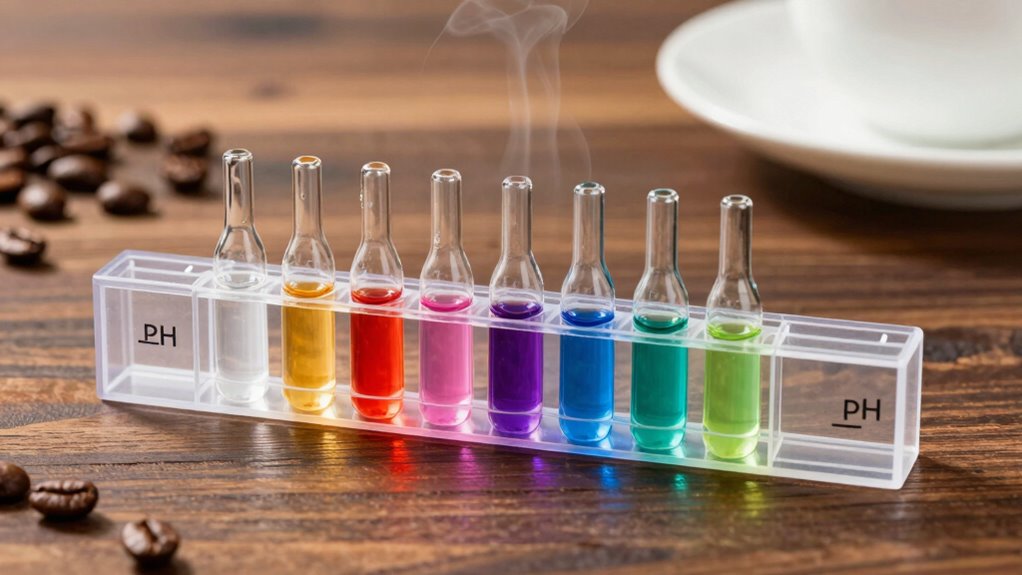
Next, pay attention to pH levels, which indicate how acidic or alkaline your water is. Coffee generally brews best with water that has a pH between 6.5 and 7.5. If the pH is too low (more acidic), it can lead to over-extraction, resulting in bitter, sour flavors. If it’s too high (more alkaline), under-extraction might occur, producing flat or dull-tasting coffee. Testing the pH of your water helps you fine-tune your brewing process, ensuring ideal extraction and flavor clarity.
Using a water test kit that measures pH levels is straightforward. It provides quick, accurate results, allowing you to make informed adjustments. For example, if your water is too acidic, you might add a small amount of baking soda to raise the pH slightly. If it’s too alkaline, you could consider using filtered or bottled water with a more neutral pH for your brew.

Bestprod All-New 21 in 1 Drinking Water Testing Kit Strips, Home Tap and Well Water Test Kit for Hardness, Lead, Iron, Copper, Chlorine, Fluoride
- Clear, Easy-to-Read Results: Provides clear results for all substances
- Simple to Use: Add water, set timer, read results
- User-Friendly Guide: Includes clear instructions for interpretation
As an affiliate, we earn on qualifying purchases.
As an affiliate, we earn on qualifying purchases.
Frequently Asked Questions
How Often Should I Test My Water for Coffee Brewing?
You should test your water quality at least once a month to guarantee optimal coffee brewing. Testing frequency depends on how often you brew and any changes in your water source. Regular checks help identify issues like high mineral content or contaminants that can affect flavor. By maintaining consistent testing, you’ll catch problems early, ensuring your water remains ideal for brewing great coffee every time.
Are Water Test Kits Suitable for Residential Use?
Like a clear mirror reflecting home water quality, water test kits are suitable for residential use. They’re user-friendly and provide quick insights into your water’s health. With good test kit accuracy, you can identify issues like high mineral content or contaminants that affect your coffee’s flavor. Using a test kit at home helps you guarantee your water is ideal, making it easier to enjoy consistently excellent coffee.
Can Water Test Kits Detect Harmful Contaminants?
Yes, water test kits can detect harmful contaminants, helping you guarantee water safety. They typically measure things like bacteria, lead, nitrates, and chlorine, which are vital for evaluating water quality. By using a test kit, you actively identify potential health risks, giving you peace of mind. Just follow the instructions carefully, and you’ll be able to monitor your water’s contaminant levels effectively, safeguarding you and your family.
Do Water Test Kits Require Professional Interpretation?
No, water test kits typically don’t require professional interpretation, especially for DIY testing. They’re designed to be user-friendly, providing straightforward results you can understand easily. However, if you want precise, detailed analysis, laboratory analysis might be necessary. While DIY kits are great for quick checks, professional labs can interpret complex data, ensuring you get accurate insights about your water quality for coffee brewing.
What Is the Cost Range for Reliable Water Test Kits?
You can find reliable water test kits ranging from $20 to $150, depending on features and accuracy. About 80% of home users say investing in a quality kit improves coffee taste considerably. When considering cost, think about kit accuracy and your specific water quality concerns. Cheaper kits may save money upfront but could lack precision, so weigh cost considerations against the importance of accurate measurements for ideal coffee flavor.
Conclusion
Just like a master barista fine-tunes their brew, testing your water guarantees every cup tastes perfect. Think of it as the secret ingredient in your coffee’s story—without it, your brew’s potential is lost. Don’t leave your coffee’s fate to chance; arm yourself with the right water test kit. After all, even the most legendary coffee starts with clean, balanced water—so measure wisely and brew with confidence.