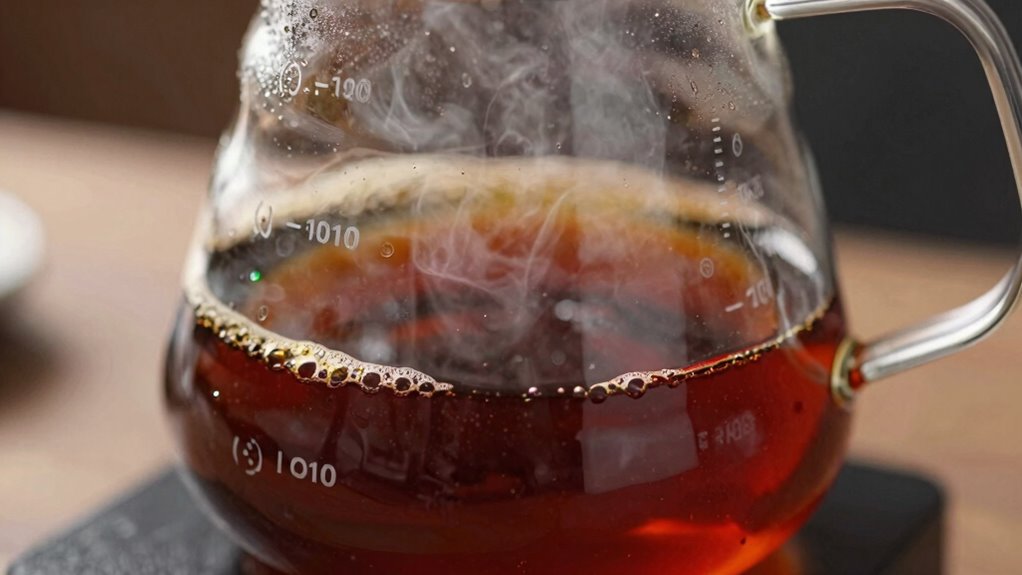
Finding the perfect brew temperature for drip coffee is key to revealing rich flavors without bitterness. Usually, water between 195°F and 205°F (90°C-96°C) works best, ensuring proper extraction of aromas and body. Too hot, and you risk over-extraction, making your coffee bitter; too cool, and it may taste weak or sour. Paying attention to this sweet spot can transform your cup—keep exploring to learn more about optimizing your brew.
Key Takeaways
- The ideal brew temperature for drip coffee is typically between 195°F to 205°F (90°C to 96°C) for optimal flavor extraction.
- Proper temperature ensures balanced extraction, highlighting aromas, body, and nuanced flavors without bitterness or sourness.
- Too hot water causes over-extraction, leading to bitterness; too cool results in under-extraction, producing weak or sour flavors.
- Consistent brewing temperature depends on quality equipment and water chemistry, both crucial for a perfect cup.
- Adjusting temperature based on grind size and water quality helps fine-tune flavor and achieve the “sweet spot” for drip coffee.
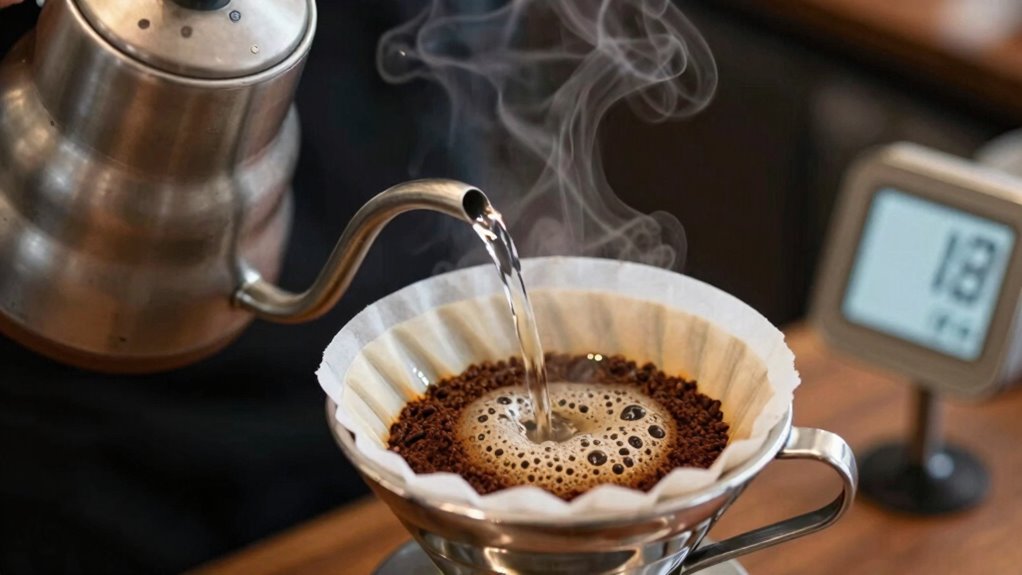
Brew temperature plays a critical role in determining the flavor and quality of your coffee or tea. When you get the temperature just right, it guarantees your brew extracts the perfect balance of flavors, aromas, and body. Too hot, and you risk over-extraction, which makes your coffee taste bitter or harsh. Too cool, and you might end up with under-extraction, resulting in a weak or sour flavor. Finding that ideal temperature range is essential for achieving a well-rounded, satisfying cup.
Water chemistry is a key factor in this process. The mineral content, pH level, and overall composition of your water influence how your coffee’s flavors develop during brewing. Hotter water enhances extraction, but if your water is overly alkaline or contains impurities, it can skew the taste even at the right temperature. That’s why using clean, balanced water helps you take full advantage of perfect brew temperature. When your water has balanced chemistry, it allows the coffee’s complex flavors to shine without interference from unwanted mineral or chemical tastes.
Balanced water chemistry enhances flavor extraction and prevents impurities from skewing your brew’s taste.
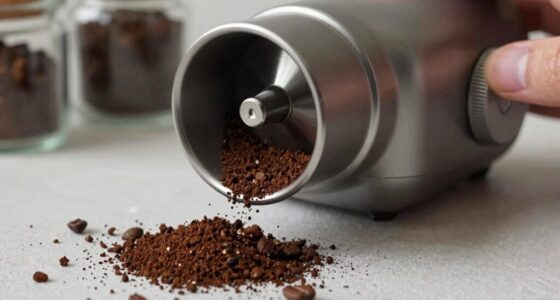
Grind size also plays a significant role in how brew temperature affects your coffee. If your grind is too fine, hot water extracts too quickly, potentially leading to over-extraction and bitterness. Conversely, a coarse grind slows down extraction, which can leave your brew underwhelming, especially if the water isn’t hot enough to compensate. The grind size determines how quickly water interacts with the coffee grounds, so matching it with the right temperature ensures proper extraction. For example, a medium grind used at the perfect brewing temperature allows water to evenly extract flavors, producing a balanced cup.
Understanding these factors helps you fine-tune your brewing process. When you adjust your water temperature, consider your grind size to prevent over- or under-extraction. If you’re using a finer grind, slightly lower your brewing temperature to avoid bitterness; with a coarser grind, a slightly higher temperature can help extract more flavor. Remember, water chemistry also influences this balance. Using filtered or properly mineralized water ensures your brew’s flavor profile remains true to the beans or leaves you’re using. Additionally, paying attention to reliable brewing equipment can help maintain consistent temperatures for optimal results.

CDN DT392 ProAccurate® Digital Food Thermometer, NSF Certified Instant Read Meat Thermometer, Thin Tip Probe for Cooking, Grilling, BBQ, Candy Making & Baking, -50 to 392°F
FAST, ACCURATE READINGS YOU CAN TRUST – Delivers reliable temperature readings in just 6–8 seconds with professional accuracy…
As an affiliate, we earn on qualifying purchases.
As an affiliate, we earn on qualifying purchases.
Frequently Asked Questions
How Does Altitude Affect Optimal Brew Temperature?
Altitude effects can influence your ideal brew temperature because higher elevations often require slightly lower temperatures to maintain brew consistency. As you go higher, water boils at lower temperatures, so you might need to adjust your brewing process to extract the best flavors. By understanding how altitude impacts your coffee, you can tweak your temperature settings to guarantee consistent, delicious results every time, regardless of where you’re brewing.
Can Temperature Fluctuations Impact Coffee Flavor?
Temperature fluctuations can substantially impact your coffee’s flavor stability because coffee is highly temperature sensitive. When the brew temperature varies, it can lead to inconsistent extraction, causing off-flavors or dull taste. You’ll notice a difference in aroma and overall quality. To enjoy a balanced, flavorful cup, keep your brewing temperature steady, avoiding fluctuations that compromise the delicate flavors you’re aiming for.
What Equipment Best Maintains Consistent Brew Temperature?
You should choose equipment with precise temperature controls, like a high-quality thermal carafe or a pour-over kettle with variable temperature settings. Regularly calibrate your grinder to guarantee consistent grind size, which helps maintain stable extraction temperatures. Additionally, selecting filter materials like paper or metal that retain heat can prevent temperature fluctuations, giving you a more consistent brew temperature for ideal flavor.
Does Brew Temperature Influence Caffeine Extraction?
Yes, brew temperature influences caffeine extraction because it affects caffeine solubility and extraction rate. When you keep the temperature in the ideal range, around 195-205°F, you maximize caffeine solubility, allowing quicker and more complete extraction. If the temperature’s too low, extraction slows, leading to less caffeine in your coffee. Conversely, too high a temperature can cause over-extraction, resulting in a bitter taste, so maintaining the right temp is key.
How Quickly Should Coffee Reach the Target Temperature?
You should aim for your coffee to reach the target temperature within 3 to 4 minutes. Using stable heating methods, like a good thermal carafe or a high-quality coffee maker with consistent temperature control, helps sustain temperature stability. Avoid rapid heating, which can cause temperature fluctuations. Keep an eye on your equipment’s temperature settings to make sure your brew hits that ideal range smoothly and efficiently.

Cosori Electric Gooseneck Kettle with 5 Temperature Control Presets, Pour Over Kettle for Coffee & Tea, Hot Water Boiler, 100% Stainless Steel Inner Lid & Bottom, 1200W, 0.8L, Black
5 𝑶𝑵𝑬-𝑻𝑶𝑼𝑪𝑯 𝑷𝑹𝑬𝑺𝑬𝑻𝑺: Your Gooseneck Electric Kettle features 5 precise temperature presets. These accurate presets make brewing coffee…
As an affiliate, we earn on qualifying purchases.
As an affiliate, we earn on qualifying purchases.
Conclusion
So, there you have it—perfect brew temperature isn’t exactly rocket science, just hot enough to release those glorious flavors without turning your coffee into a burnt sacrifice. Don’t settle for lukewarm or scalding chaos; aim for that sweet spot, or risk brewing a cup so bland it makes instant coffee look gourmet. Remember, in the quest for coffee nirvana, temperature is your best friend—because nobody wants a cup of “meh” when they’re counting on a miracle in a mug.

LCD Digital Coffee Maker Temperature Sensor Thermometer for E61 Group Head Espresso Coffee Machines Temperature Gauge Monitor
ACHIEVE PRECISION BREWING: This advanced digital thermometer perfect for espresso enthusiasts using E61 group head. It delivers instant…
As an affiliate, we earn on qualifying purchases.
As an affiliate, we earn on qualifying purchases.

Kitchen Food-Cooking Meat Coffee Thermometer – Pocket Espresso Thermometer for Milk Foam Frothing Chocolate Water Temperature Stainless Steel 1" Dial 5" Long Stem
MILK FROTHING THERMOMETER – This pocket stainless-steel thermometer is designed for milk frothing, steaming and making cappuccino, measure…
As an affiliate, we earn on qualifying purchases.
As an affiliate, we earn on qualifying purchases.