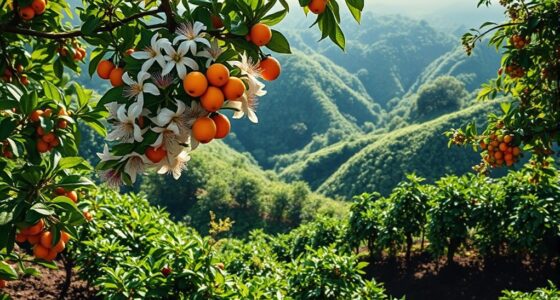
Ethiopian coffees from Sidama and Guji each have unique flavor profiles shaped by their environment and traditional processing. Sidama offers bright acidity with fruity and floral notes, while Guji presents a delicate, tea-like brightness with citrus and jasmine hints. Their distinct flavors come from high elevations, volcanic soils, and shade-grown cultivation combined with washed or natural processing methods. To discover more about their rich profiles and unique methods, keep exploring these exceptional regions’ coffees.
Key Takeaways
- Sidama coffees are known for bright acidity, fruity and floral notes, often processed via washed methods for clarity.
- Guji coffees feature delicate, tea-like brightness with jasmine, citrus, and spice nuances, frequently processed naturally for sweetness.
- High elevations, volcanic soils, and biodiversity in both regions contribute to complex flavor profiles.
- Traditional cultivation techniques like shade-grown and selective harvesting enhance bean quality and flavor development.
- Processing methods (washed vs. natural) significantly influence the coffee’s brightness, sweetness, and overall character.
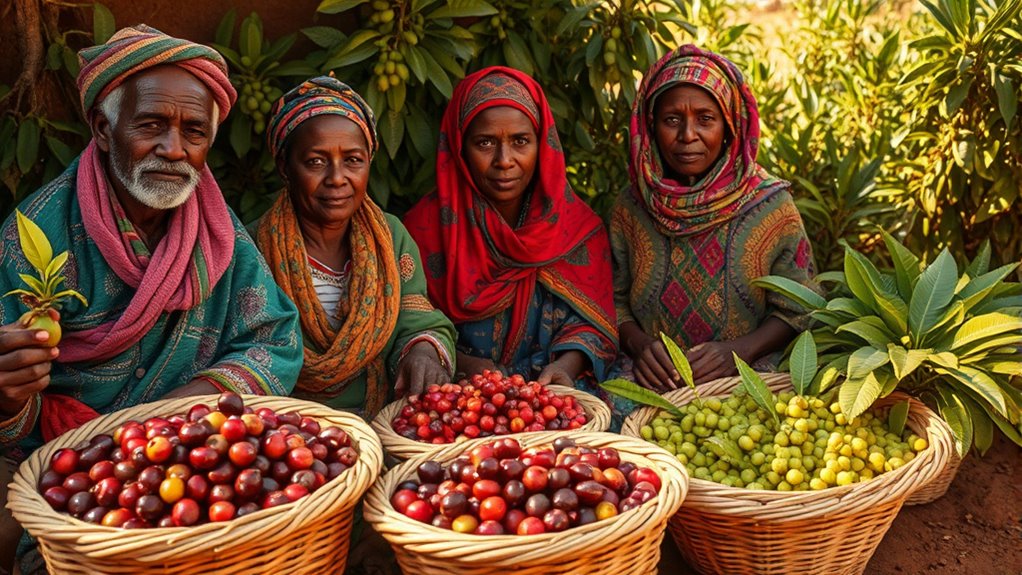
Have you ever wondered what makes Ethiopia’s Sidama and Guji coffee regions stand out? It all begins with how the coffee is cultivated and the unique environment that shapes its flavor profiles. In these regions, cultivation techniques are carefully tailored to take advantage of the high elevations, rich volcanic soils, and ideal climate. Farmers often use traditional methods, such as shade-grown cultivation, which allows coffee cherries to develop slowly, enhancing their sweetness and complexity. They also practice selective harvesting, picking only ripe cherries, which ensures high-quality beans and consistent flavor. These techniques help preserve the beans’ natural characteristics, making each cup distinctive.
Ethiopia’s Sidama and Guji regions excel through traditional, selective cultivation that highlights their unique flavors and rich natural characteristics.
The flavor profiles of Sidama and Guji coffees are equally remarkable. Thanks to the specific cultivation techniques and the region’s biodiversity, these coffees tend to have bright acidity, vibrant fruit notes, and a well-balanced body. Sidama coffee often showcases fruity flavors like berry and citrus, complemented by floral undertones. Its profile is lively, with a crisp finish that excites the palate. Guji coffee, on the other hand, offers a more delicate and nuanced experience. It features a clean, tea-like brightness with hints of jasmine, citrus, and sometimes hints of spice. The altitude and the careful processing methods contribute considerably to these distinctive flavors.
Processing methods in these regions also play an essential role in shaping their coffee’s profile. Most farmers use washed (or wet) processing, which involves removing the cherry’s outer layers before drying the beans. This technique results in a cleaner, brighter cup that highlights the inherent fruit and floral notes. Some producers experiment with natural or dry processing, where cherries are dried with the fruit still on the bean, intensifying sweetness and adding layers of complexity. These processing variations, combined with the cultivation techniques, give each batch its unique flavor fingerprint.
You’ll notice that the meticulous attention to cultivation and processing in Sidama and Guji creates coffees that stand out globally. The combination of altitude, soil, climate, and traditional farming practices produces beans rich in flavor and character. Whether you prefer the vibrant, berry-forward profile of Sidama or the delicate, jasmine-infused nuances of Guji, understanding the cultivation techniques and processing methods helps you truly appreciate what makes these Ethiopian coffees extraordinary. When brewed properly, each cup offers a taste of the region’s rich agricultural heritage, capturing the essence of Ethiopia’s diverse landscape and skilled craftsmanship.
As an affiliate, we earn on qualifying purchases.
Frequently Asked Questions
How Do Sidama and Guji Taste Profiles Differ?
You’ll notice that Sidama coffee offers bright, fruity tasting notes with vibrant acidity and sweet, floral flavor nuances. Guji, on the other hand, tends to have a more complex profile, with deeper berry and spice notes, along with a smoother, balanced acidity. These flavor nuances make each unique; Sidama feels lively and fresh, while Guji provides a richer, more layered tasting experience.
What Are the Traditional Harvesting Methods in Sidama and Guji?
You typically use traditional harvesting tools like sickles and handpicks in Sidama and Guji, carefully selecting ripe coffee cherries. Labor practices involve community workers or family members who work together during the harvest season, often emphasizing manual labor and detailed picking to guarantee quality. This hands-on approach reflects their rich agricultural heritage, with harvests usually taking place during specific seasons to optimize cherry ripeness and flavor.
How Does Altitude Affect Coffee Flavor in These Regions?
Think of altitude as a flavor sculptor for coffee; the higher the elevation, the more it shapes your brew’s complexity. In these regions, altitude influence boosts flavor development by exposing beans to cooler temperatures, which slow maturation and intensify notes. You’ll notice brighter, more nuanced profiles with vibrant acidity and layered aromas. Elevation truly elevates your coffee experience, bringing out unique tastes that only high-altitude cultivation can deliver.
Are There Specific Processing Techniques Unique to Sidama and Guji?
You’ll find that Sidama and Guji use distinct processing techniques, especially in fermentation methods and drying techniques. They often employ traditional wet fermentation, where cherries are pulped and fermented to develop complex flavors. Drying is usually done on raised beds or patios, allowing for controlled airflow. These unique methods enhance the regions’ bright acidity and fruity notes, giving their coffees a vibrant, characteristic profile that reflects their specific processing traditions.
What Challenges Do Farmers Face in Coffee Cultivation Here?
You face several challenges in coffee cultivation here. Climate change causes unpredictable weather, affecting coffee growth and quality. Pest management is vital, as pests like coffee borer beetles threaten your crops. Additionally, limited access to resources and modern farming techniques can hinder productivity. You need to adapt by implementing sustainable practices, managing pests effectively, and staying informed about climate shifts to guarantee a successful harvest.
Conclusion
By exploring Ethiopia’s Sidama and Guji regions, you discover unique coffee profiles shaped by their distinct climates and processing methods. Did you know that Sidama coffee accounts for over 40% of Ethiopia’s coffee exports? This highlights its significance and rich flavor. So, next time you sip your brew, remember the vibrant stories and traditions behind these renowned regions—each cup connecting you to Ethiopia’s vibrant coffee heritage.