
To reheat coffee successfully, store it in an airtight container in a cool, dark place to preserve flavor. Use gentle heat, like a stove on low or short bursts in a microwave, avoiding boiling or uneven heating, which can create burnt tastes. Reheat only what you plan to drink immediately and skip multiple cycles to prevent flavor loss. Interested in keeping your coffee tasting fresh? Keep exploring for more tips on better reheating techniques.
Key Takeaways
- Store coffee in airtight, cool, dark containers to preserve flavor before reheating.
- Reheat coffee gently on the stove rather than microwaving to avoid uneven heating and flavor loss.
- Reheat only the amount you plan to drink immediately to prevent flavor degradation from multiple cycles.
- Avoid boiling or overheating coffee during reheating to prevent bitterness and burnt taste.
- Quick, small reheats help retain aroma and delicate flavors better than prolonged heating.

Have you ever wondered if reheating coffee affects its flavor and quality? The truth is, how you handle your coffee after brewing can make a big difference in whether it still tastes good when you decide to reheat it. Proper coffee storage plays an essential role in flavor preservation. When you store coffee correctly—preferably in an airtight container and in a cool, dark place—you protect it from exposure to air, moisture, and light. These factors can cause your coffee to lose its fresh aroma and develop stale or sour notes over time. If you leave your brewed coffee sitting out for too long, reheating it might only intensify these undesirable flavors. Conversely, properly stored coffee tends to retain more of its original taste, making reheating somewhat more palatable.
Proper storage in an airtight, cool, dark place preserves coffee’s flavor for better reheating.
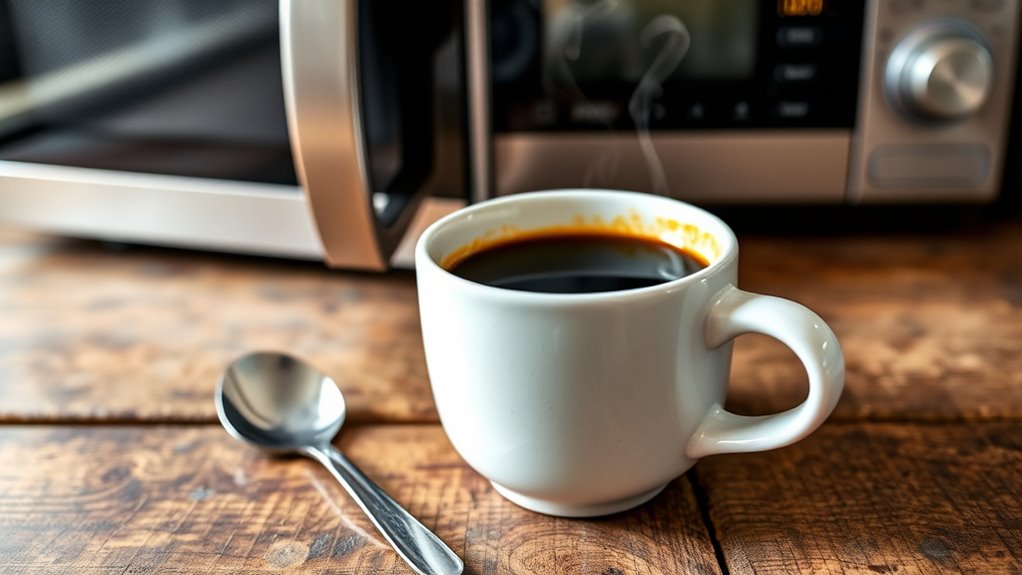
When reheating coffee, the method you choose can markedly influence its flavor. Using a microwave is quick and convenient, but it often heats unevenly, creating hot spots that can scorch the coffee and produce a burnt taste. This method can also cause the volatile aromatic compounds that contribute to flavor to dissipate more quickly, resulting in a duller cup. On the other hand, reheating on the stove using gentle heat allows for better control and more even warming. A double boiler or a saucepan set over low heat can help preserve the coffee’s nuanced flavors, making the reheated coffee taste closer to its freshly brewed state. Just be sure to avoid boiling it, as high temperatures can accelerate flavor degradation and produce a bitter, burnt flavor. Additionally, understanding the mechanics of pinball machines can offer insight into how temperature affects mechanical and electronic components, emphasizing the importance of gentle reheating.
Another aspect to consider is how long you reheat your coffee. The longer it sits in the heat, the more its delicate flavors break down. Ideally, reheat only what you plan to consume immediately, rather than multiple times. Repeated reheating can further diminish flavor and aroma, turning your once vibrant coffee into a flat, lifeless beverage. To maximize flavor preservation, consider small batches and reheat quickly, using gentle heat. This approach helps maintain the coffee’s original character, even after reheating.
Ultimately, understanding how storage and reheating methods affect your coffee’s flavor can help you enjoy a better cup—even if it’s been sitting for a while. While fresh coffee is always best, proper storage and careful reheating can salvage some of that initial quality, ensuring each sip remains satisfying. So, next time you reheat your coffee, pay attention to how you store it and the method you use—these little choices make a big difference in preserving flavor and enjoyment.
stainless steel double boiler for reheating coffee
As an affiliate, we earn on qualifying purchases.
As an affiliate, we earn on qualifying purchases.
Frequently Asked Questions
Does Reheating Coffee Affect Its Caffeine Content?
Reheating coffee doesn’t substantially affect its caffeine stability, so you’ll still get a caffeine boost. However, reheating can alter the brewing strength, making the flavor weaker or more bitter. If you want to preserve the ideal caffeine content and flavor, it’s best to reheat gently and avoid overheating, which can degrade the coffee’s qualities. This way, you enjoy a satisfying cup without sacrificing caffeine or taste.
Can Reheated Coffee Cause Stomach Upset?
Reheated coffee can cause stomach upset, especially if you’re prone to acid reflux or stomach irritation. Think of it like a fire rekindled; the acidity can flare up your symptoms. I once drank reheated coffee that left me with heartburn and discomfort. To avoid this, reheat gently and don’t drink it too hot. If your stomach’s sensitive, consider switching to cold brew or fresh coffee instead.
Is It Safe to Reheat Coffee in a Microwave?
Reheating coffee in a microwave is generally safe if you follow microwave safety guidelines. Use a microwave-safe container, like glass or ceramic, and avoid metal or plastic that isn’t microwave-safe. Stir the coffee before reheating to guarantee even heat distribution, and don’t overheat it to prevent burns or a bitter taste. Always check for hot spots, and avoid reheating multiple times to maintain flavor and safety.
How Many Times Can I Reheat Coffee Without Quality Loss?
You should reheat your coffee no more than once to preserve its freshness and flavor. Each time you reheat, it loses quality and aroma due to temperature fluctuations and oxidation. To maintain coffee freshness, use precise temperature control when reheating, ideally around 165°F (74°C), and avoid multiple reheats. This way, you get the best taste without sacrificing quality, ensuring your coffee stays enjoyable.
Does Reheating Coffee Change Its Flavor Profile?
Did you know that reheating coffee can reduce its flavor by up to 50%? When you reheat your coffee, you’ll likely notice flavor degradation and aroma loss, making it taste dull or bitter. The heat breaks down aromatic compounds, altering the original profile. To preserve flavor, avoid reheating multiple times and use gentle methods like a microwave at low power or a stovetop on low heat.
Conclusion
Now that you know what works and what to avoid, reheating coffee becomes easier and more enjoyable. Remember, the goal is to preserve its flavor without turning it into a bitter, unrecognizable brew. So next time you’re tempted to microwave that leftover cup, ask yourself: do you really want to ruin those fresh coffee notes? With a little care, you can savor every sip—just like it’s fresh from the pot.