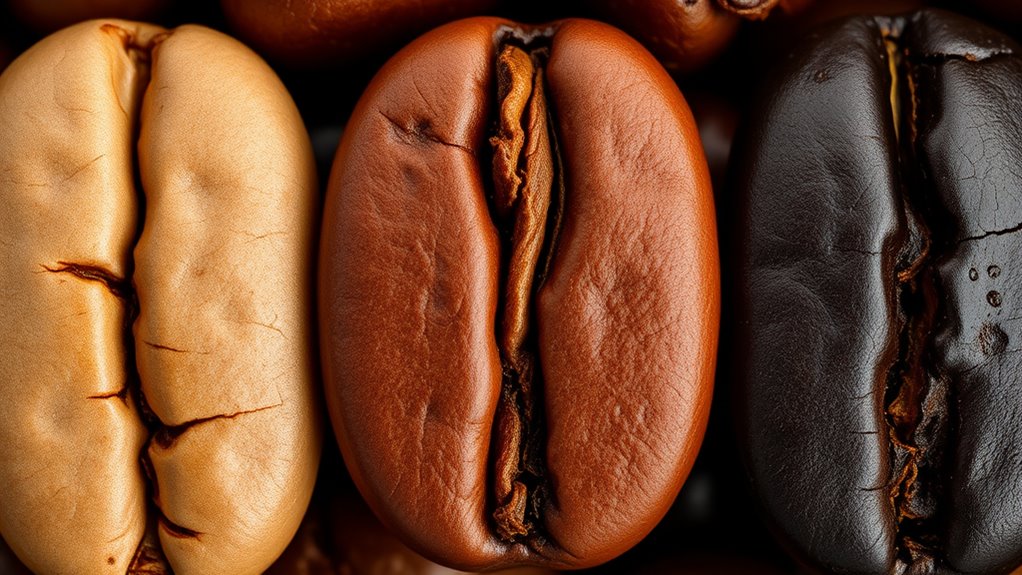

Understanding roast levels—light, medium, and dark—helps you choose the flavor profile you prefer. Light roasts are roasted briefly at lower temperatures, preserving bright, fruity, and floral notes from the bean’s origin. Medium roasts develop a balanced sweetness with hints of chocolate, while dark roasts are roasted longer, producing bold, smoky, and bitter flavors with less acidity. Exploring these differences can enhance your appreciation of coffee’s diversity, so stay curious for more details.
Key Takeaways
- Light roast preserves the bean’s original flavors, acidity, and origin characteristics, resulting in a brighter, more floral taste.
- Medium roast offers a balanced profile with added caramelization, nutty, and chocolate notes, appealing to many drinkers.
- Dark roast involves extended roasting, creating smoky, bold flavors that reduce acidity and emphasize roasted qualities.
- The roast level affects flavor, aroma, body, and color, with lighter roasts highlighting origin traits and darker roasts focusing on roasted notes.
- Personal preference, brewing method, and bean origin influence the choice of roast level for optimal flavor.
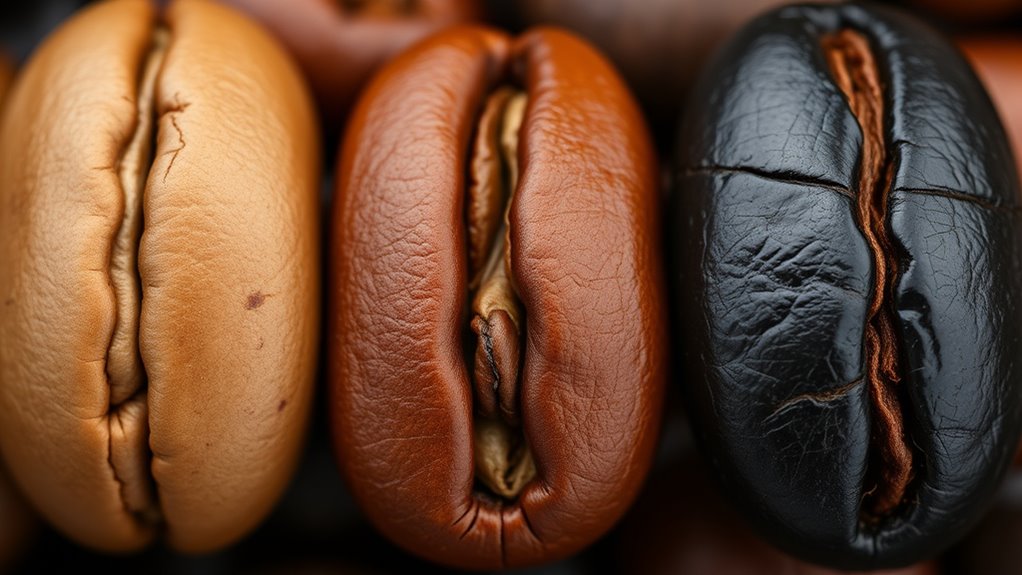
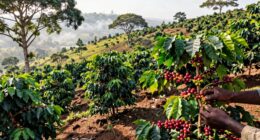
Have you ever wondered how the roast level of your coffee or espresso affects its flavor? The answer lies in the intricate relationship between bean origin, roasting techniques, and the degree to which beans are roasted. Each factor plays a essential role in shaping the final taste, aroma, and body of your brew. When exploring roast levels, understanding how bean origin influences flavor helps you appreciate the nuances at each stage. For example, beans from Latin America often exhibit bright, fruity notes that can shine through lighter roasts, while beans from Africa might bring more vibrant acidity. Meanwhile, beans from Indonesia tend to have earthy, full-bodied qualities that are enhanced by darker roasts. Roasting techniques further refine these characteristics by controlling heat application, duration, and temperature. A light roast is achieved through gentle, shorter roasting techniques, which preserve the bean’s original flavors and origins. This method maintains the bean’s natural acidity, bright fruitiness, and floral notes, making it ideal for highlighting the unique qualities of specific bean origins. A medium roast involves a longer roasting process, balancing the bean’s intrinsic flavors with the development of caramelization. Here, you get a rounded, sweeter profile with hints of chocolate and nuttiness, often preferred for its versatility. It’s a popular choice because it offers a good balance between the bean’s origin characteristics and the roasted notes introduced during the process. Dark roasts come from extending the roasting process further, often into second or third crack, resulting in beans with a smoky, bold flavor. This level of roasting reduces the bean’s original acidity and emphasizes roasted, bitter notes. The roasting techniques here involve higher temperatures and longer durations, which can sometimes overshadow the bean’s origin traits but create a rich, full-bodied experience suited for espresso lovers. The choice of roast level is also influenced by personal preference and brewing method, but knowing how bean origin and roasting techniques interact helps you make an informed decision. For instance, if you prefer a bright, lively cup, a light roast that preserves the bean’s origin qualities might be your best bet. Conversely, if you enjoy a robust, intense flavor, a dark roast can deliver that punch, especially with espresso. Additionally, sustainable sourcing practices can impact the flavor profile by ensuring higher-quality beans. Ultimately, understanding these elements allows you to select the perfect roast for your taste and brewing style. So next time you pick up a bag of coffee, consider not just the roast level but also where the beans come from and how they’ve been roasted. This awareness helps you appreciate the complex craft behind every cup and guides you toward a brew that truly satisfies your palate.

Amazon Fresh, Just Bright Whole Bean Coffee Light Roast, 32 Oz
- Roast Type: Light roast with crisp flavor
- Package Size: 32-ounce whole bean bag
- Coffee Type: 100% Arabica from Americas
As an affiliate, we earn on qualifying purchases.
As an affiliate, we earn on qualifying purchases.
Frequently Asked Questions
How Does Roast Level Affect Caffeine Content?
You’ll find that roast level impacts caffeine strength, with darker roasts generally having slightly less caffeine than lighter ones. This roasting impact occurs because longer roasting times shrink beans and reduce caffeine content slightly. However, the difference is minimal, so your choice of roast doesn’t drastically change caffeine intake. If you want a stronger caffeine boost, opt for a light roast, but remember, the beans’ origin also influences caffeine levels.
Which Roast Level Is Best for Espresso?
You should choose a dark roast for espresso, as it offers a bold flavor profile, rich body, and intense aroma that complement the espresso brewing method. Dark roasts excel in highlighting robust flavors, balancing bitterness, and producing a smooth, full-bodied shot. If you prefer a stronger, more pronounced taste with less acidity, a dark roast aligns perfectly with your brew method preferences and flavor profile differences.
Do Darker Roasts Have More Antioxidants?
Darker roasts tend to have slightly fewer antioxidants than lighter roasts because the roasting process reduces antioxidant levels. However, they still offer health benefits, including antioxidants that support your immune system. If you’re seeking maximum antioxidant levels for health benefits, opt for lighter roasts. Still, enjoy darker roasts for their bold flavor, knowing they provide some antioxidants, albeit in slightly lower amounts.
How Should I Store Different Roast Levels?
Think of your coffee beans like precious jewels—proper storage keeps their sparkle. Store coffee in an airtight container, away from light, heat, and moisture to maintain its freshness. For different roast levels, keep light roasts in a cool, dark place to prevent staling, while dark roasts can handle slightly warmer spots. Proper coffee storage ensures each cup stays flavorful, no matter the roast level.
Can Roast Level Influence Coffee Acidity?
Yes, roast level influences coffee acidity, shaping its flavor profile through roasting process nuances. Light roasts typically preserve more of the beans’ natural acidity, resulting in brighter, more vibrant coffee flavor profiles. Medium roasts balance acidity and sweetness, while dark roasts tend to have lower acidity with richer, bolder flavors. Your choice of roast level directly impacts the coffee’s overall taste, allowing you to select according to your preferred acidity and flavor nuances.
Conclusion
Think of roast levels like a symphony—each note, from light to dark, adds a unique flavor and character. As you explore, you’ll find your perfect harmony, whether you prefer the bright, lively notes of a light roast or the deep, smoky richness of a dark one. Embrace the journey, and remember, the right roast level is your personal melody in every cup—waiting to be discovered and savored with every sip.