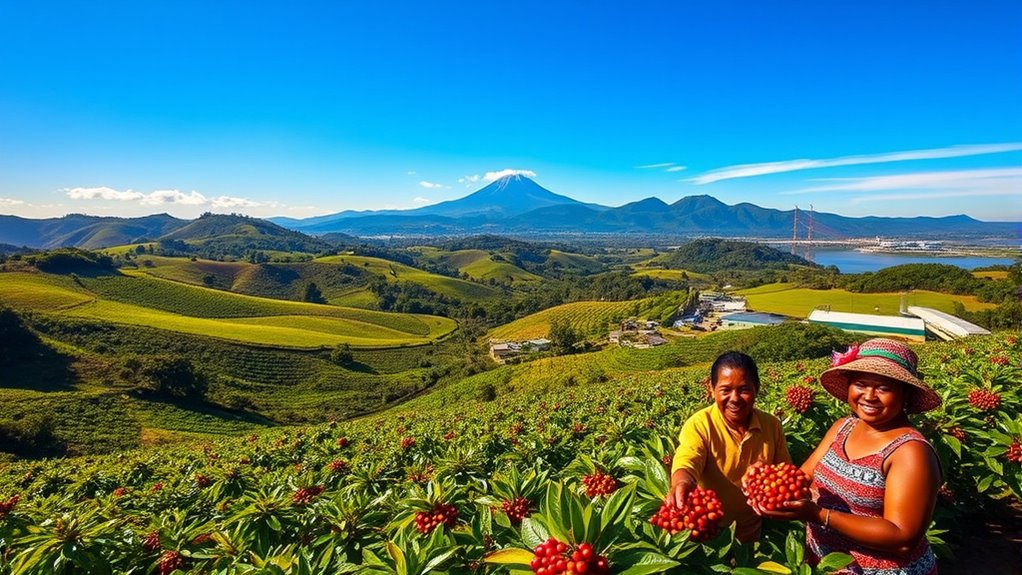

Costa Rica’s coffee reforms focus on sustainable farming, promoting eco-friendly practices that protect landscapes and improve crop resilience. These policies streamline export procedures, helping farmers access global markets more efficiently. By supporting smallholders and encouraging quality certifications, the reforms foster social development and fair income distribution. As a result, local communities thrive, poverty decreases, and the country’s reputation grows as a producer of environmentally responsible coffee. To learn more about how these initiatives are shaping Costa Rica’s future, keep exploring further.

Get coffee and tea gear delivered free with Prime
- Fast, free delivery on millions of items
- Prime Video, Amazon Music and more included
- Member-only deals all year
Key Takeaways
- Costa Rica’s export reforms streamline procedures, expanding market access for small-scale farmers and cooperatives.
- Sustainable farming practices improve crop quality, boost farmer incomes, and promote community development.
- Environmental initiatives protect Costa Rica’s iconic landscapes, enhancing coffee resilience amid climate change.
- Certification standards and fair trade policies foster social inclusion and equitable wealth distribution in the coffee industry.
- Overall reforms promote responsible growth, environmental stewardship, and social progress within Costa Rica’s coffee sector.
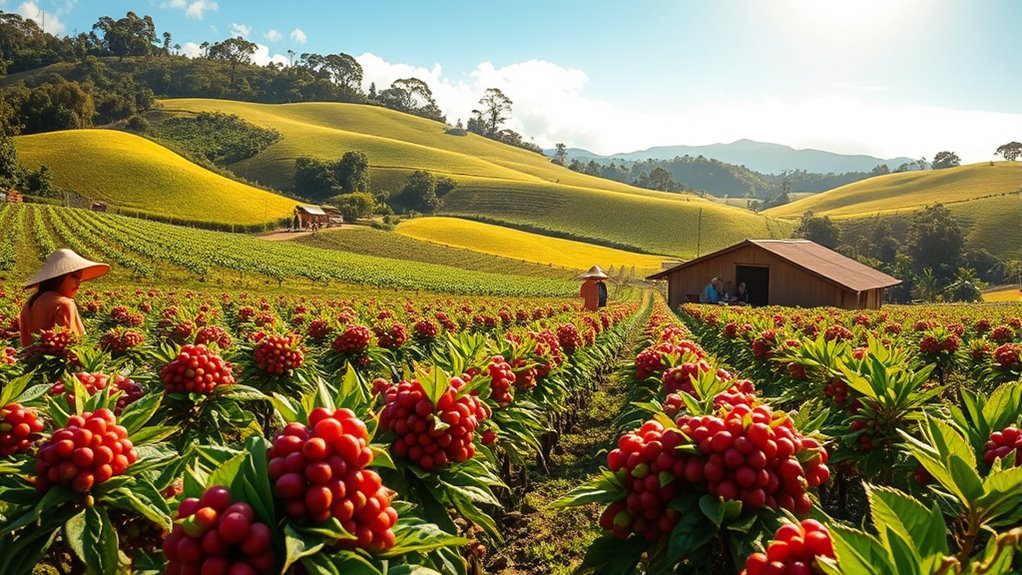
Have you noticed how Costa Rica is transforming its coffee industry? The country is making significant strides toward more sustainable farming practices, recognizing that the future of its renowned coffee sector depends on environmental health and social responsibility. By embracing sustainable farming, farmers are implementing eco-friendly techniques such as organic cultivation, water conservation, and soil preservation. These practices help protect the lush landscapes that make Costa Rican coffee so distinctive while also boosting the resilience of coffee plants against climate change. You’ll see that this shift isn’t just about the environment; it directly benefits farmers by reducing costs and improving crop quality, leading to better income and stability for local communities. As the industry evolves, export policies are also playing a vital role in shaping the future of Costa Rican coffee. The government has worked to streamline export procedures, making it easier for farmers and cooperatives to sell their beans on international markets. Simplified export policies reduce bureaucratic hurdles, shorten shipping times, and ensure that high-quality coffee reaches global consumers efficiently. This, in turn, helps elevate Costa Rica’s reputation as a provider of premium coffee and opens new opportunities for small-scale farmers to expand their reach. You’ll notice that these policies aren’t just about boosting exports—they’re also about creating a fairer, more transparent framework that benefits everyone involved. By prioritizing sustainability and refining export policies, the country is fostering a more resilient and socially responsible coffee industry. Farmers are encouraged to adopt environmentally friendly methods because they align with international standards and consumer preferences for ethically produced goods. Additionally, the government’s support in establishing certifications and quality controls ensures that Costa Rican coffee remains competitive globally. This approach helps farmers access new markets and command better prices, ultimately contributing to local social development. It’s a win-win situation: as farmers improve their practices and access broader markets, communities experience increased income and improved living conditions. The reforms also promote social inclusion, empowering smallholders and cooperatives to participate more actively in the global coffee economy. Furthermore, the emphasis on sustainable farming practices encourages innovation and adoption of new environmentally-conscious technologies among farmers. As a result, you’ll see a more equitable distribution of wealth within the industry, fostering community development and reducing poverty. Overall, Costa Rica’s focus on sustainable farming and smart export policies demonstrates a commitment to protecting its environment while supporting social progress. This integrated strategy is setting a benchmark for other coffee-producing countries, proving that economic growth and social responsibility can go hand in hand. By embracing these reforms, Costa Rica is not only safeguarding its coffee heritage but also ensuring that future generations can enjoy the fruits of a thriving, sustainable industry.
As an affiliate, we earn on qualifying purchases.
Frequently Asked Questions
How Have Coffee Reforms Impacted Local Communities’ Social Mobility?
You’ve seen how coffee reforms boost social mobility by empowering local communities. When you join coffee cooperatives or earn Fair Trade certifications, you gain better access to markets, higher incomes, and improved education. These reforms create opportunities for you to rise economically and socially, breaking traditional barriers. As a result, your community benefits from increased stability, more jobs, and a stronger sense of collective progress.
What Specific Policies Promote Environmental Sustainability in Coffee Production?
You can promote environmental sustainability in coffee production through policies that encourage sustainable farming and eco-friendly practices. These policies might include incentives for using organic fertilizers, conserving water, and reducing chemical use. Implementing shade-grown coffee methods helps preserve biodiversity, while supporting certifications like Rainforest Alliance guarantees farms follow eco-friendly standards. By adopting these policies, you actively contribute to a more sustainable coffee industry that benefits both the environment and local communities.
How Do Reforms Influence Coffee Farmers’ Access to Education and Healthcare?
You’ll find that reforms open new doors for coffee farmers like you, boosting access to education and healthcare. Educational programs become more available, helping you learn better farming techniques and improve your income. Healthcare access also gets easier, ensuring you and your family stay healthy and resilient. These policies create a ripple effect, empowering farmers to thrive socially and economically, often when you least expect it, transforming lives across coffee-growing communities.
Are There Economic Incentives for Small-Scale Coffee Producers?
Yes, small-scale coffee producers have economic incentives through Fair Trade certification, which boosts their market access and guarantees better prices. By participating in Fair Trade programs, you can sell your coffee at premium rates, ensuring stable income. These incentives motivate you to improve quality and sustainability, ultimately benefiting your community’s economic growth. Fair Trade’s focus on market access helps you reach international markets more easily, increasing your earnings and supporting social development.
What Role Does Government Collaboration Play in Social Development Through Coffee?
You might think government collaboration isn’t crucial, but it actually plays a vital role in social development through coffee. By fostering stakeholder engagement, the government guarantees diverse voices are heard, leading to effective policy implementation. This collaboration helps improve living standards, supports small-scale producers, and builds resilient communities. When government works closely with farmers and organizations, it creates sustainable growth, making social development through coffee a shared, impactful effort.
Conclusion
As you see, Costa Rica’s coffee reforms are the heartbeat of its social development. They’ve cultivated more than just coffee beans—they’ve grown stronger communities and a more equitable society. Like a well-tended plantation, these changes have sown seeds of hope and resilience, proving that thoughtful reform can turn a simple crop into a catalyst for lasting progress. Keep watching this vibrant nation brew a brighter future, one cup of change at a time.
Evergreen bestsellers Picks
bestsellers
As an affiliate, we earn on qualifying purchases.