
The history of takeaway coffee cups shows how they evolved alongside urban and coffee culture. Originally simple containers, they grew more sophisticated as demand for convenience increased, introducing insulated designs and spill-proof lids. Environmental concerns led to eco-friendly innovations like biodegradable and reusable options. Today, designers focus on balancing functionality with sustainability, shaping the future of coffee on the go. If you keep exploring, you’ll discover even more surprising insights about their development and impact.

Get coffee and tea gear delivered free with Prime
- Fast, free delivery on millions of items
- Prime Video, Amazon Music and more included
- Member-only deals all year
Key Takeaways
- Disposable coffee cups emerged in the 20th century alongside the rise of urban coffee culture.
- Initially simple containers, they evolved with insulation and spill-proof lids to enhance user experience.
- Plastic-lined single-use cups contributed to environmental waste, prompting eco-friendly material innovations.
- Designers developed biodegradable and reusable cups to address ecological challenges and promote sustainability.
- Future trends focus on eco-conscious designs, reflecting growing consumer awareness and sustainable takeaway coffee practices.
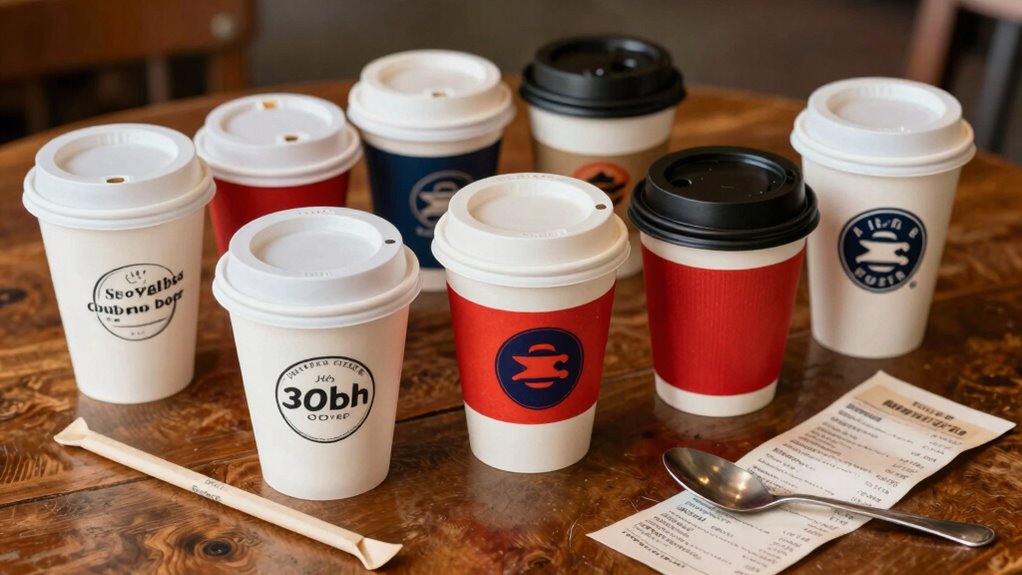
Have you ever wondered how takeaway coffee cups became an everyday essential? It’s a story rooted in convenience, innovation, and the evolving coffee culture of the 20th century. When coffee shops started booming, especially during the rise of fast-paced urban lifestyles, people wanted a way to enjoy their favorite brew on the go. The initial solutions were simple, but as demand grew, so did the need for better, more practical containers. This led to the development of disposable coffee cups, which revolutionized how we consume coffee outside of cafés.
However, this convenience came with a significant environmental impact. Single-use cups, often lined with plastic to prevent leaks, contributed heavily to waste problems. Recognizing this, designers and manufacturers began seeking new solutions that could reduce environmental harm. Over the years, numerous design innovations emerged to address these concerns. For example, some companies introduced compostable cups made from biodegradable materials, aiming to lessen landfill accumulation. Others experimented with reusable cups, encouraging customers to bring their own containers and therefore cut down on waste. These innovations not only aimed to minimize environmental impact but also reflected a shift in consumer consciousness towards sustainability.
Innovations like biodegradable and reusable cups are transforming coffee culture toward sustainability and reducing environmental impact.
Design innovations also focused on improving functionality and user experience. Early cups were simple paper vessels, but now they feature insulated layers that keep beverages hot longer and reduce burns. Sip lids evolved from basic flat covers to sophisticated designs that prevent spills and allow for easy drinking, even while on the move. Some cups now incorporate textured grips, making them easier to hold, especially when hot. There’s been a conscious effort to make these cups more environmentally friendly without sacrificing convenience, blending form and function seamlessly. Additionally, awareness of biodiversity and the importance of sustainability has increasingly influenced packaging choices, prompting a shift toward environmentally responsible materials. This ongoing evolution demonstrates how the industry adapts to the growing demand for eco-friendly options. Furthermore, the development of biodegradable materials has become a crucial aspect of designing more sustainable takeaway cups, driven by research into environmentally responsible packaging. The industry’s focus on these innovations reflects a broader move toward sustainable design in consumer products.
Today, you can find takeaway coffee cups that are not only functional but also eco-conscious. The industry’s response to environmental concerns has driven a wave of creative solutions, from plant-based plastics to reusable designs that can be washed and reused countless times. These design innovations continue to shape the future of takeaway coffee culture, making it more sustainable and aligned with modern values. So next time you grab your morning coffee, remember that behind that simple cup lies a fascinating history of innovation and a growing commitment to protecting our planet. The evolution of takeaway coffee cups reflects a balance between convenience and responsibility, illustrating how design can address both human needs and environmental challenges.
As an affiliate, we earn on qualifying purchases.
Frequently Asked Questions
When Did Disposable Coffee Cups First Become Popular?
You’ll find disposable coffee cups became popular in the 1950s, as coffee culture grew and on-the-go lifestyles emerged. During this time, branding on coffee cups started gaining importance, turning them into mobile advertising tools. The cultural significance of these cups grew, symbolizing modernity and convenience. Today, their widespread use reflects a blend of branding strategies and societal shifts toward fast, accessible coffee, shaping daily routines worldwide.
Who Invented the First Paper Coffee Cup?
You might be surprised to learn that the first paper coffee cup was invented by American inventor Lawrence Luellen in 1907. This innovation helped popularize coffee cup branding, making each cup a canvas for marketing. It also played a role in shaping cultural coffee rituals worldwide, turning coffee into a portable, everyday ritual. Today, disposable cups are a global phenomenon, with over 500 billion used annually, shaping how we enjoy coffee on the go.
How Did Coffee Cup Designs Evolve Over Time?
You see, coffee cup designs evolved through design innovation, shifting from plain to branded, eye-catching cups. As brands realized the power of coffee cup branding, they introduced logos, colors, and unique shapes to stand out. Over time, materials also improved, with insulated and eco-friendly options emerging. This evolution helps you connect with your favorite coffee brands visually, making your coffee experience more personalized and memorable.
What Materials Were Used Before Paper for Takeaway Cups?
Before paper, coffee cup manufacturing relied on materials like ceramic, metal, and glass, which offered high material durability. You’d find ceramic mugs for cafes and metal cups for portability, but they weren’t practical for takeaway. Paper became popular because it’s lightweight and disposable, making it ideal for quick service. These early materials emphasized durability and reusability, but paper revolutionized convenience and single-use simplicity, shaping the modern coffee culture you enjoy today.
Are There Any Sustainable Alternatives to Traditional Coffee Cups?
Think of sustainable coffee cups as a revitalizing breeze in a smog-filled city. You can choose biodegradable coatings that break down naturally or support reusable cup initiatives, turning your daily coffee run into an eco-friendly act. These alternatives reduce waste and lessen environmental impact, making your coffee habit more sustainable. By opting for them, you help protect our planet while still enjoying your favorite brew.
Conclusion
Now, as you sip your takeaway coffee, think back to its humble beginnings—an era of ceramic mugs and slow mornings. That simple paper cup, once a symbol of convenience, now stands as a tribute to innovation and change. While you enjoy your caffeine fix on the go, remember the surprising history behind it, a story blending tradition and modernity. It’s a small cup with a big story, blending the past and present in every sip.
Fall Picks
fall essentials
As an affiliate, we earn on qualifying purchases.