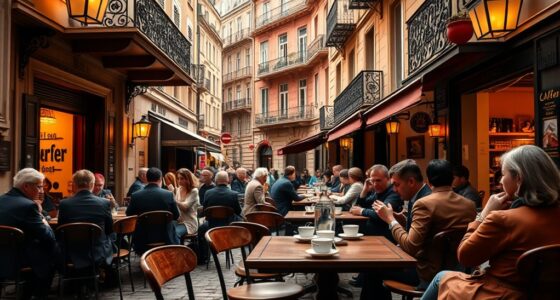
When coffee first arrived in Europe, it sparked controversy because many viewed it as a foreign influence that challenged traditional norms. It quickly became an essential part of commerce, fueling trade routes and colonial economies. Coffeehouses, or cafés, transformed social life by becoming venues for discussion, politics, and intellectual exchange. If you want to explore how coffee shaped European societies and sparked debates that echoed through history, there’s more to uncover.
Key Takeaways
- Coffee was first introduced to Europe via trade routes from Ethiopia and Middle Eastern ports like Venice and Amsterdam.
- European reactions to coffee ranged from suspicion and hostility to cultural integration over time.
- Coffeehouses emerged as social hubs for intellectual debate, political discussion, and community building.
- Control of coffee trade routes sparked international competition and influenced political movements such as the Enlightenment.
- Coffee’s cultural adoption transformed social customs, art, and public spaces in European society.

Have you ever wondered how coffee made its way to Europe? When it first arrived, it sparked a mix of curiosity, controversy, and fascination that would shape European culture for centuries. The journey of coffee from its origins in Ethiopia to the bustling streets of European cities wasn’t just a story of trade—it had profound historical implications. It challenged existing social norms, influenced political discussions, and even altered daily routines. As coffee entered Europe through trading ports like Venice and Amsterdam, it quickly became more than just a beverage; it became a symbol of modernity and a catalyst for change. The introduction of coffeehouses, or cafés, transformed social interactions, offering a space where ideas could be exchanged beyond the confines of traditional authorities. These establishments became hotbeds of intellectual discussion, political debate, and artistic inspiration, fueling movements such as the Enlightenment. This shift had lasting effects on European society, encouraging more open dialogue and fostering a sense of community among patrons. Additionally, the spread of coffee culture contributed to the development of urban social spaces, which played a crucial role in shaping modern public spheres.
Cultural adaptations played an essential role in how coffee was embraced across different regions. In some countries, the beverage was initially met with suspicion or outright hostility, regarded as a foreign influence that threatened local customs. Over time, however, Europeans adapted coffee into their cultural fabric, creating unique traditions around its consumption. In England, coffeehouses became the “penny universities,” where anyone could pay a small fee for a cup and engage in lively discussion. Meanwhile, in France, cafés became fashionable gathering spots for writers, artists, and philosophers, shaping the cultural landscape of the country. The Dutch, with their extensive trading networks, established coffee plantations in their colonies, further integrating coffee into their economy and society. These adaptations weren’t just about drinking coffee; they involved developing new rituals, social norms, and even art forms inspired by this exotic drink.
The arrival of coffee in Europe also had diplomatic and economic implications. Countries competed over control of coffee trade routes, and the establishment of coffeehouses often became intertwined with political movements. They served as forums for revolutionary ideas, influencing events like the French Revolution. The widespread popularity of coffee changed how Europeans worked and socialized, fostering a culture of conversation and intellectual exchange. In essence, coffee’s journey to Europe was much more than a simple trade story; it was a transformative force that challenged conventions, inspired new cultural expressions, and reshaped societies in profound ways. Whether embraced as a symbol of progress or viewed with suspicion, coffee’s arrival marked a pivotal moment with enduring historical implications and cultural adaptations that continue to influence us today.

Veken French Press Coffee Maker, No Plastic Touching Cafe,34oz 1 L Cafetera
- Plastic-Free Brewing Surface: Made with stainless steel and silicone
- Durable Heat-Resistant Glass: High borosilicate glass up to 360°F
- Versatile Brewing Options: Suitable for hot coffee, cold brew, tea
As an affiliate, we earn on qualifying purchases.
As an affiliate, we earn on qualifying purchases.
Frequently Asked Questions
How Did European Societies Initially React to Coffee’s Arrival?
When coffee first arrived, you’d see European society reacting with curiosity and initial suspicion. Some embraced it quickly, valuing its stimulating effects, while others saw it as a cultural threat. You might notice coffee becoming a symbol of social change, encouraging gatherings in cafés. Over time, cultural adaptation took hold, and coffee’s significance grew, transforming social customs and symbolizing enlightenment and modernity in European life.
Which European Country Embraced Coffee the Fastest?
You might say the Dutch “hit the ground running” with coffee. They quickly embraced the coffee culture, making it a staple in their daily lives. Their enthusiasm for caffeine consumption led to vibrant coffeehouses and a thriving trade. As a result, the Netherlands became one of the first European countries to fully integrate coffee into their social fabric, setting a fast-paced example for others to follow.
What Were the Main Religious Objections to Coffee?
You might find that the main religious objections to coffee involved religious prohibitions and theological debates. Some believed that coffee’s stimulating effects could disrupt prayer and devotion, leading to concerns it encouraged laziness or impiety. Religious authorities debated whether coffee was a suitable beverage, with some condemning it as a threat to spiritual discipline. These theological debates fueled controversy, but ultimately, coffee gained acceptance across many faith communities.
How Did Coffee Influence European Social Structures?
You’ll find that coffee dramatically shifted European social structures, with over 70% of social gatherings now centered in coffeehouses. It blurred social hierarchy lines, allowing common folk and elites to mingle more freely. Women found new roles, often managing or influencing the café culture. This caffeinated revolution democratized social interaction, breaking down traditional gender roles and fostering a more egalitarian environment.
Were There Any Early European Coffee Trade Routes?
Yes, early European coffee trade routes existed, mainly connecting ports like Venice and Amsterdam to the Ottoman Empire and North Africa. These trade routes facilitated cultural exchange, introducing Europeans to coffee’s social and cultural significance. You can see how merchants and explorers helped establish these routes, spreading coffee’s popularity. These routes not only boosted commerce but also fostered the exchange of ideas, customs, and social practices around coffee across Europe and beyond.
Conclusion
As you explore the rich history of coffee’s arrival in Europe, remember that embracing this new beverage connects you to centuries of cultural exchange. Some might worry about losing traditional customs, but coffee’s adaptability actually enriches your experience. So, give it a try—savor the aroma and flavor—and appreciate how coffee has become a vibrant part of our shared heritage. You might just find a new favorite way to start your day.