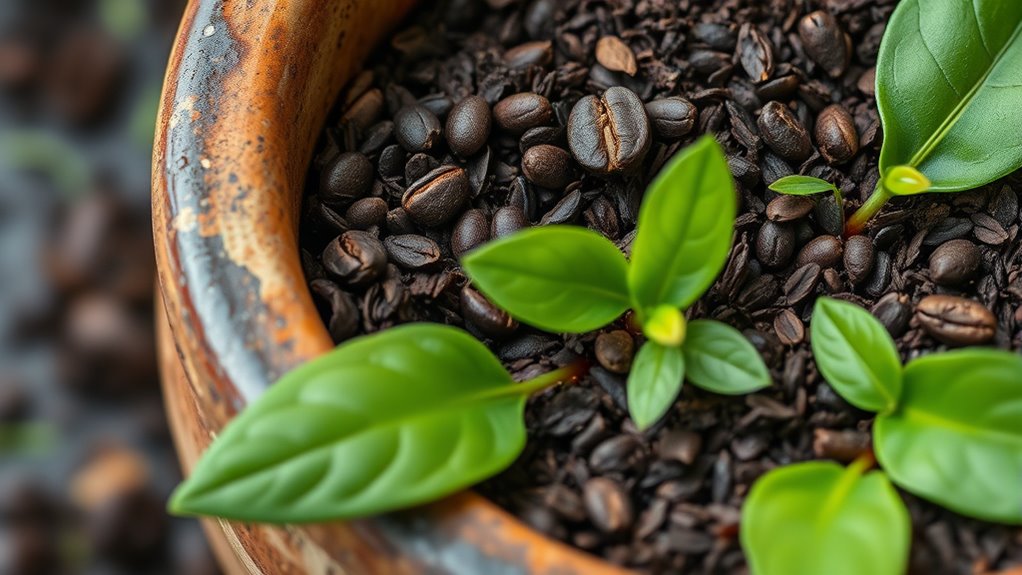

Composting coffee grounds can boost your soil’s health by adding nitrogen-rich green materials that help break down organic waste faster. Mix your grounds with carbon-rich brown materials, like leaves or straw, maintaining a 2:1 green-to-brown ratio for best results. Incorporating grounds regularly speeds up composting to 4–6 months and creates nutrient-dense humus. To learn how to optimize your compost and avoid common pitfalls, keep exploring for helpful tips.
Key Takeaways
- Coffee grounds are nitrogen-rich green materials that enrich compost and support microbial activity.
- Mix grounds with carbon-rich brown materials at a 2:1 ratio for optimal composting.
- Incorporate grounds immediately after brewing, including from K-Cup pods, for best results.
- Adding grounds accelerates composting to about 4–6 months, creating nutrient-dense humus.
- Composting coffee grounds reduces waste and improves soil health, moisture retention, and plant growth.
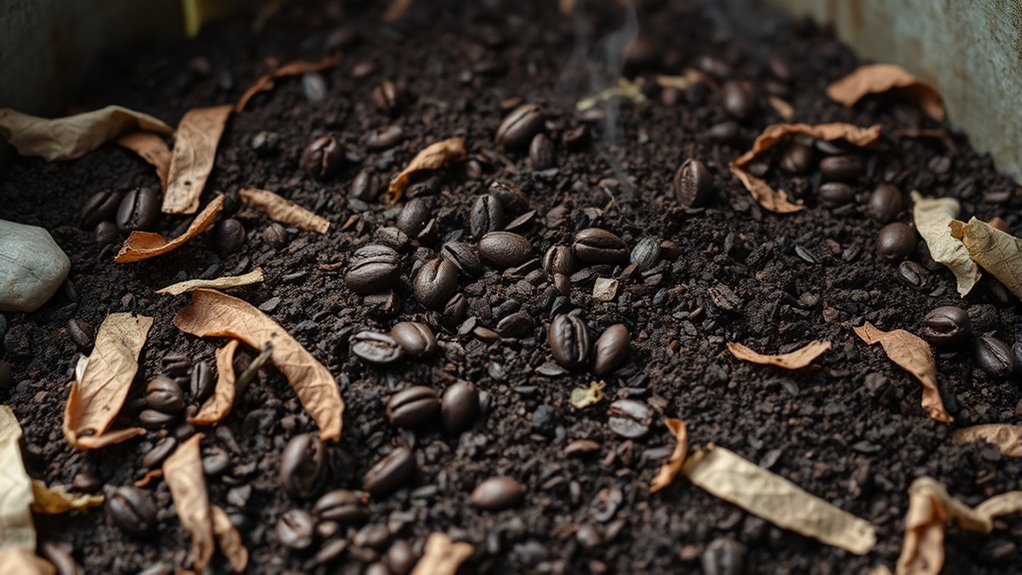
Composting coffee grounds is an easy way to enrich your soil while reducing waste. Used coffee grounds are classified as nitrogen-rich green materials, making them a valuable addition to your composting efforts. When added to your compost pile or compost bin, they help balance the organic waste and speed up decomposition. Because nitrogen is essential for microbial activity, coffee grounds boost the microbial breakdown of other materials, leading to a richer, more fertile soil amendment.
Adding coffee grounds boosts microbial activity and enriches soil while reducing waste.
To get the most out of your used coffee grounds, you should mix them with carbon-rich brown materials, such as leaves or straw. Maintaining a proper green-to-brown ratio of about 2:1 ensures your composting process remains efficient. Coffee grounds on their own can be slightly acidic, but when properly composted, they break down to create a nutrient-rich soil amendment that benefits plants without adding unwanted acidity or caffeine residues. This makes them an eco-friendly way to recycle organic waste directly from your kitchen.
Adding coffee grounds to your compost is straightforward. You can include them immediately after brewing, even from used K-Cup pods, as long as you scrape out the grounds and avoid using excess amounts. Distributing a thin layer of used coffee grounds throughout your compost pile or bin encourages microbial activity and helps maintain a healthy balance of green and brown materials.
This not only speeds up the composting process, which typically takes about 4 to 6 months, but also ensures that the nutrients from the grounds are fully integrated into the finished compost. By regularly incorporating used coffee grounds, you’re actively turning organic waste into a valuable resource for your garden.
Not only do they add nitrogen, but they also help sustain the microbial activity necessary for composting. Over time, the grounds decompose and become part of a rich, dark humus that improves soil structure, retains moisture, and supports healthy plant growth. Since coffee grounds are readily available and easy to add, they’re one of the simplest ways to make your composting process more efficient and environmentally friendly. Additionally, microbial activity is crucial for the rapid and effective breakdown of organic materials in compost.
Frequently Asked Questions
Is It Okay to Compost Coffee Grounds?
You’re wondering if it’s okay to compost coffee grounds. Yes, you can! Coffee grounds are beneficial because they add nitrogen to your compost, helping it break down faster.
Just remember to use them in moderation—around 10-20% of your pile—and mix them with other organic waste like leaves or food scraps.
Avoid synthetic filters, and you’ll create rich, healthy compost that benefits your garden and supports sustainability.
Which Plants Cannot Use Coffee Grounds?
You should avoid giving coffee grounds directly to plants like blueberries, azaleas, hydrangeas, gardenias, and rhododendrons. These plants prefer less acidic soil, and coffee grounds can make the soil more acidic, harming their growth.
Additionally, young seedlings and sensitive plants such as tomatoes might experience slowed development or inhibited germination if exposed to high caffeine levels.
Always research your specific plants’ soil needs before adding coffee grounds.
What Are the Disadvantages of Coffee Grounds as Fertilizer?
You should know that using coffee grounds as fertilizer has some downsides. Too much can make your soil too acidic, which might harm certain plants.
It can also temporarily tie up nitrogen, leading to deficiencies. Caffeine residue may slow seed germination and plant growth.
While dense layers can prevent water and air from reaching roots. Plus, overuse might attract pests like slugs and snails.
Use coffee grounds carefully to avoid these issues.
Which Plants Like Coffee Grounds Best?
You’re wondering which plants like coffee grounds best. You’ll find that acid-loving plants like blueberries, azaleas, rhododendrons, gardenias, and hydrangeas thrive when you add moderate coffee grounds around their roots.
These grounds help improve soil acidity, benefiting such plants. Just remember to use finely ground, unbleached coffee grounds and avoid overdoing it, especially if you’re growing plants sensitive to acidity, like tomatoes or peppers.
Conclusion
Now that you know how to compost coffee grounds, it’s easy to turn your morning ritual into a eco-friendly practice. Just add grounds to your compost bin, balance them with other materials, and let nature do its work. Over time, your coffee grounds will enrich your soil and reduce waste. Keep it simple, stay consistent, and enjoy the benefits of healthier plants and a greener planet with every cup.