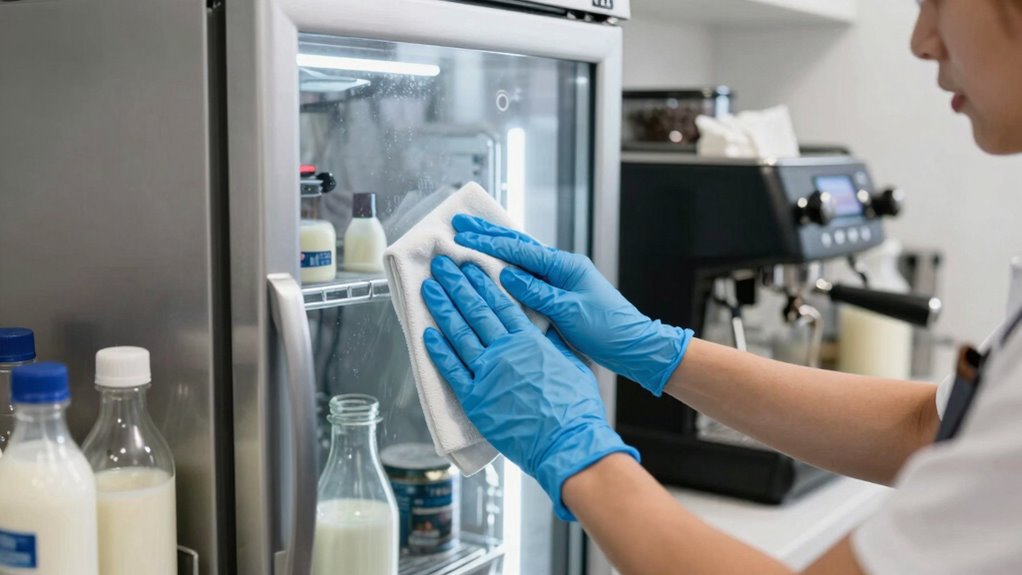

To guarantee your milk fridge and coffee bar stay safe and hygienic, establish a regular cleaning schedule using food-safe cleaning agents. Thoroughly wipe down all surfaces, containers, and equipment, then rinse to remove residues. Keep the fridge at or below 4°C and check temperatures frequently. Use gloves during cleaning and inspect equipment regularly for damage. Following these routines helps prevent contamination and keeps products fresh—stick around to learn more about maintaining top hygiene standards.

Get coffee and tea gear delivered free with Prime
- Fast, free delivery on millions of items
- Prime Video, Amazon Music and more included
- Member-only deals all year
Key Takeaways
- Establish a regular cleaning schedule for all surfaces, shelves, and containers using food-safe disinfectants.
- Maintain fridge temperature at or below 4°C (39°F) and regularly verify temperature consistency.
- Rinse thoroughly after cleaning to remove residues and disinfect all contact surfaces, including coffee machines and drip trays.
- Use gloves during cleaning and handling to prevent bacteria transfer and ensure hygiene compliance.
- Educate staff on proper cleaning techniques and hygiene practices to maintain a safe, contamination-free environment.
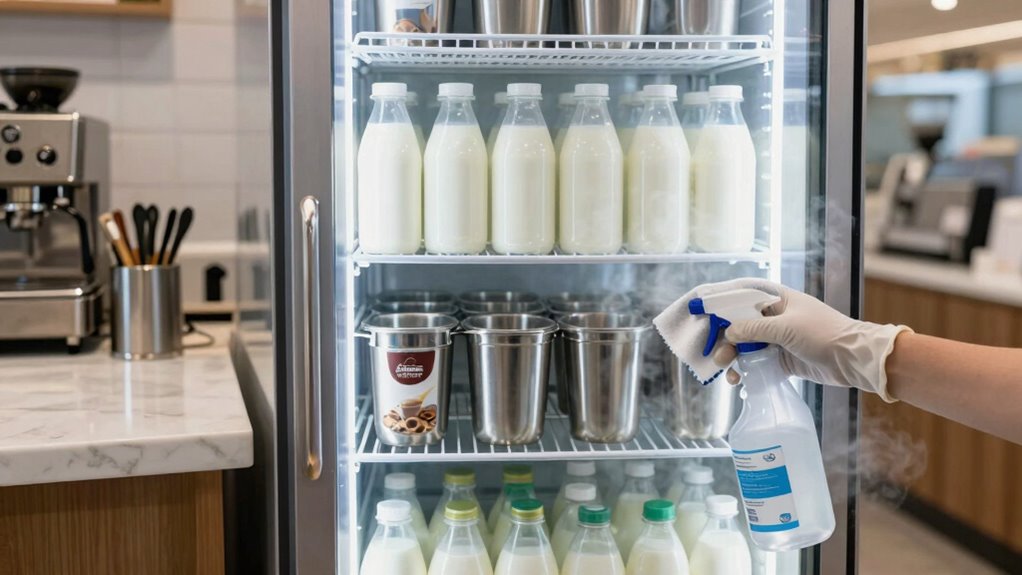
Maintaining clean milk fridges and coffee bars is essential to guarantee safety and prevent contamination. When you keep these areas hygienic, you reduce the risk of milk spoilage and assure your customers or team members stay healthy. Milk is highly perishable, and if not stored properly or cleaned regularly, bacteria can grow quickly, leading to spoilage that affects both taste and safety. Following strict hygiene standards isn’t just about appearance; it’s about protecting everyone who uses the space. Regular cleaning helps eliminate buildup of mold, bacteria, and other contaminants that can cause off-flavors or health issues.
Keeping milk fridges and coffee bars clean is vital for safety, freshness, and preventing contamination.
You should start by establishing a routine cleaning schedule that covers all surfaces, shelves, and containers. Use food-safe cleaning agents designed for dairy environments, and make sure to rinse thoroughly to remove any residue. Wiping down the fridge interior with a clean cloth and disinfectant prevents cross-contamination and stops bacteria from thriving in hidden corners. For coffee bars, it’s equally important to regularly sanitize countertops, drip trays, and coffee machines, especially parts that come into contact with milk or milk alternatives. This reduces the chance of milk spoilage caused by bacteria or mold forming in damp, unclean areas. Additionally, understanding the importance of proper cleaning techniques can significantly improve hygiene outcomes and reduce contamination risks.
A thorough understanding of cleaning frequency also plays a vital role in maintaining a hygienic environment, ensuring that routines are consistently followed. Pay attention to the temperature of your milk storage. Milk should be kept at or below 4°C (39°F) to slow bacterial growth and extend its freshness. Check your fridge regularly to ensure the temperature remains consistent. If you notice any signs of spoilage—sour smell, curdling, or off-flavors—discard the milk immediately. Do not compromise hygiene standards by trying to salvage spoiled milk, as it can pose health risks. Proper storage practices, such as avoiding overfilling containers or exposing milk to fluctuating temperatures, can help maintain quality. Also, ensure that containers are tightly sealed after each use to prevent spillage, exposure to air, or absorption of odors from other foods. Proper storage not only prolongs the freshness of your milk but also simplifies cleaning routines. Maintaining temperature control is crucial for preventing bacterial growth and ensuring milk remains safe for consumption.
In addition, educate staff or yourself about the importance of hygiene standards and proper cleaning techniques. Wearing gloves when handling milk or cleaning supplies can help prevent the transfer of bacteria. Regularly inspect equipment and surfaces for cracks or damage, which can harbor bacteria and become difficult to clean. Practicing proper hygiene practices is essential for maintaining a safe environment and ensuring the longevity of your equipment. Using effective cleaning agents that are suitable for dairy environments can also make a significant difference in maintaining hygiene. By adhering to these practices, you create a safer environment, extend the shelf life of your milk, and uphold high hygiene standards that protect everyone who relies on your facilities. Maintaining cleanliness isn’t just about appearance; it’s a critical part of food safety and quality assurance.
food-safe cleaning agents for dairy equipment
As an affiliate, we earn on qualifying purchases.
As an affiliate, we earn on qualifying purchases.
Frequently Asked Questions
How Often Should Milk Fridges Be Cleaned?
You should clean milk fridges at least once a week to guarantee safe milk storage and maintain proper fridge maintenance. Regular cleaning prevents the buildup of bacteria, mold, and residual odors that can contaminate milk. When you clean, focus on wiping down shelves, door seals, and interior surfaces with food-safe disinfectants. Consistent cleaning helps keep your milk fresh, extends the fridge’s lifespan, and guarantees a safe environment for storing dairy products.
What Cleaning Products Are Safest for Coffee Bar Equipment?
Did you know that using eco-friendly disinfectants can reduce chemical exposure by up to 80%? For your coffee bar, opt for food-safe cleaning agents that are gentle yet effective. These products are safe for your equipment and staff, and they won’t compromise the quality of your beverages. Always check labels to verify they’re environmentally friendly and approved for food contact surfaces, keeping your workspace safe and clean.
How Do I Prevent Mold Growth in Milk Fridges?
To prevent mold growth in milk fridges, you should regularly clean and sanitize the interior, focusing on door seals and shelves. Keep the fridge at the right temperature—around 37°F (3°C)—to slow milk spoilage and inhibit mold formation. Avoid overcrowding, which hampers airflow, and promptly discard any spoiled milk. Consistent maintenance and proper temperature control are key to keeping your milk fresh and mold-free.
Can I Use Vinegar to Clean Coffee Machines?
Yes, you can use vinegar to clean coffee machines, but opt for cleaning vinegar rather than regular vinegar. Cleaning vinegar is more concentrated and designed for household cleaning. If you prefer vinegar alternatives, consider lemon juice or baking soda solutions. Always guarantee cleaning vinegar safety by rinsing thoroughly to prevent any residual acidity that could affect your coffee’s flavor. Avoid using undiluted vinegar directly on machine parts to prevent damage.
What Are the Best Practices for Sanitizing Milk Storage Containers?
You should always rinse milk containers thoroughly after each use, then sanitize them using approved sanitizing protocols. Focus on milk container maintenance by washing with hot, soapy water first, then applying a food-safe sanitizer, making certain all surfaces are covered. Let the containers air dry completely before refilling. This routine minimizes bacteria growth, keeps your milk fresh, and guarantees safety, blending proper cleaning with diligent sanitizing protocols seamlessly.
Conclusion
By maintaining these safe cleaning routines, you create a pristine, inviting space where milk and coffee aromas mingle freely, and bacteria stay at bay. Picture your fridge and coffee bar gleaming under the gentle glow of cleanliness, ready to serve fresh, safe beverages. Every wipe and scrub transforms your routine into a ritual of care, ensuring your customers savor every sip with confidence. When cleanliness is your craft, your space becomes a sanctuary of freshness and trust.
Columbus Day / Indigenous Peoples' Day Picks
long weekend sales
As an affiliate, we earn on qualifying purchases.