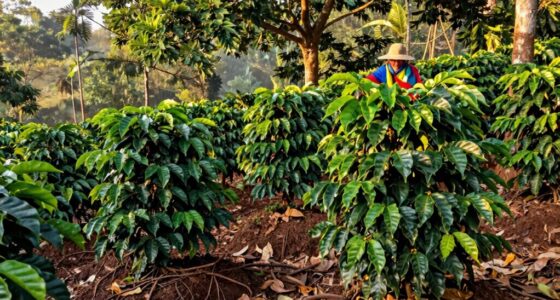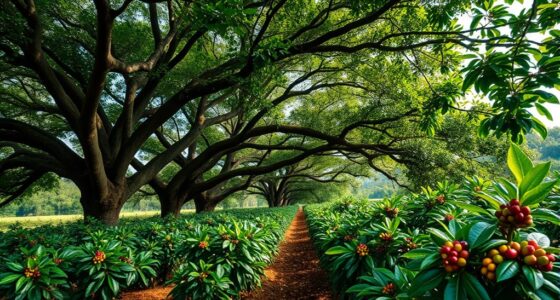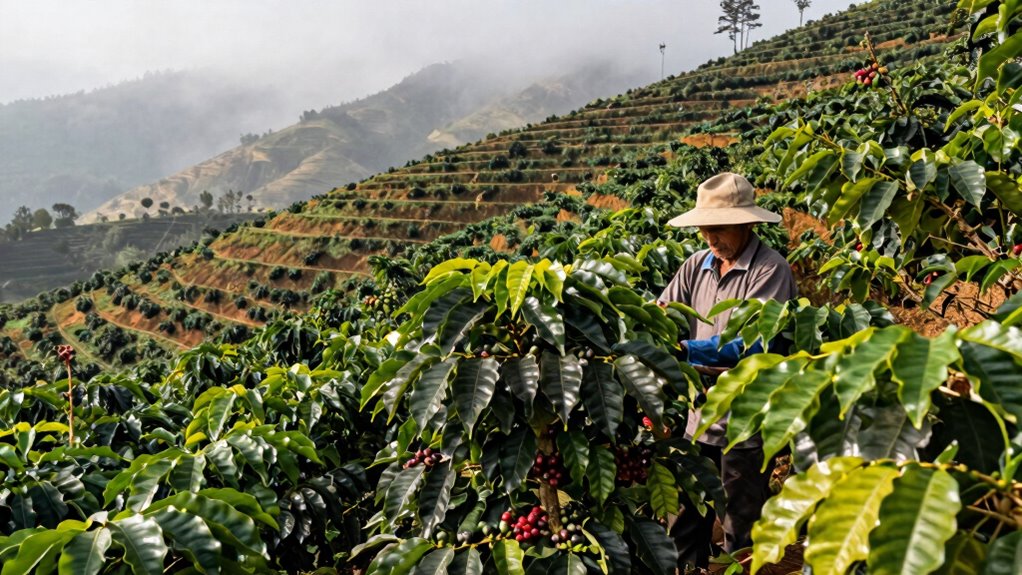

Growers are betting on climate-resilient coffee varieties that can withstand higher temperatures, unpredictable rainfall, and pests. They’re choosing resistant strains developed through selective breeding and sourcing diverse gene pools to adapt quickly to changing conditions. Agroforestry practices and biodiversity support their efforts by creating microclimates and natural pest control. If you want to learn how these strategies are shaping sustainable future coffee production, keep exploring the innovative solutions farmers are adopting.

Get coffee and tea gear delivered free with Prime
- Fast, free delivery on millions of items
- Prime Video, Amazon Music and more included
- Member-only deals all year
Key Takeaways
- Growers are investing in resistant coffee strains developed through selective breeding and regional sourcing.
- Diversifying coffee varieties enhances resilience against climate stresses and pest threats.
- Collaboration with researchers accelerates access to innovative, climate-adaptive coffee varieties.
- Agroforestry practices and native plant integration buffer extreme weather impacts.
- Emphasizing coffee biodiversity and genetic diversity strengthens long-term farm resilience.
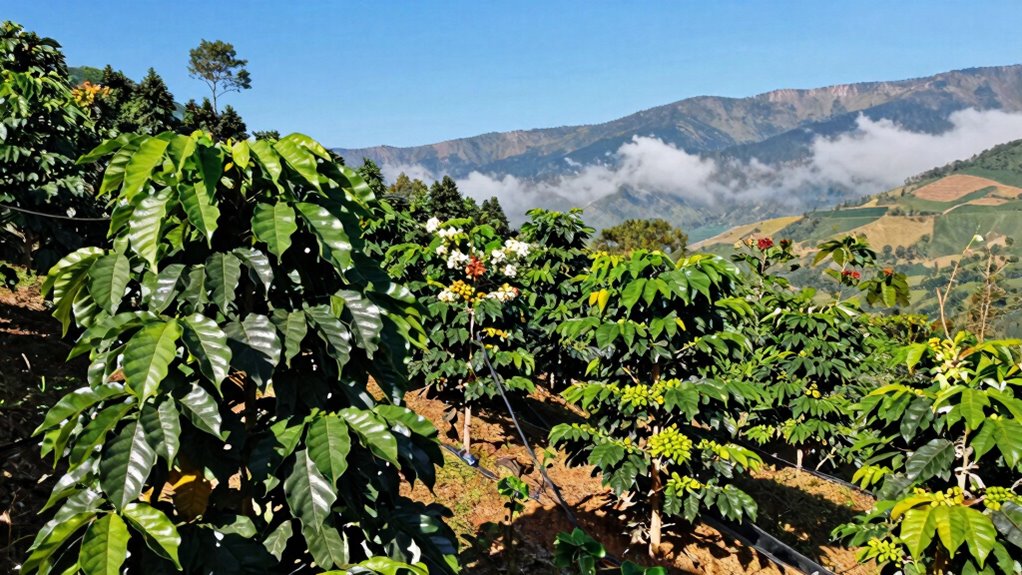
As climate change accelerates, traditional coffee varieties face increasing threats from higher temperatures, unpredictable rainfall, and pests. You need to adapt quickly to guarantee your livelihood and the future of coffee cultivation. Farmer adaptation becomes essential, pushing you to explore new strategies that can withstand shifting climate patterns. One of the most promising approaches involves diversifying your coffee plants to enhance coffee biodiversity. By planting a variety of coffee strains, you reduce the risk of total crop failure and create a resilient ecosystem that can better cope with environmental stresses.
Diversify coffee varieties to build resilience and safeguard your future amid climate change challenges.
In your efforts to adapt, you might start experimenting with different coffee varieties that are naturally more resistant to heat and pests. These resilient strains are often developed through selective breeding or sourced from regions with similar climate challenges. Incorporating such varieties into your farm helps you maintain productivity even as traditional plants struggle. Coffee biodiversity plays a pivotal role here, as a diverse gene pool increases the chances of finding varieties that thrive under changing conditions. This diversity also supports ecosystem health, attracting beneficial insects and improving soil stability. Embracing genetic diversity can significantly strengthen your farm’s resilience against climate impacts.
You’re also likely to adopt agroforestry practices, integrating shade trees and native plants to create microclimates that buffer against extreme weather. These practices not only protect your coffee plants but also foster biodiversity by providing habitats for local flora and fauna. The presence of diverse plant species can naturally suppress pests and improve nutrient cycling, reducing your reliance on chemical inputs. In this way, farmer adaptation isn’t just about choosing the right coffee varieties but also about designing a resilient farm system that leverages natural ecological processes. Implementing agroforestry strategies has been shown to enhance overall farm resilience and sustainability. Additionally, utilizing climate-resilient coffee varieties can help mitigate some of the adverse effects of climate change, ensuring long-term productivity. Incorporating climate-adaptive practices can further improve your farm’s capacity to withstand environmental fluctuations.
Moreover, investing in research and seed exchanges with other growers can give you access to innovative, climate-adapted coffee varieties. Collaborating with agricultural scientists and local organizations helps you stay informed about new developments in climate-resilient coffee. By sharing knowledge and plant material, you contribute to building a broader coffee biodiversity that benefits everyone involved. This collective effort strengthens your capacity to face climate unpredictability while safeguarding the genetic richness of coffee plants.
Ultimately, your commitment to farmer adaptation and embracing coffee biodiversity is essential. It’s about more than just surviving climate change — it’s about thriving in a new agricultural landscape. By diversifying your crops, adopting sustainable practices, and staying connected with research networks, you’re helping secure a resilient future for coffee cultivation. Your proactive steps today can guarantee that coffee remains a viable and vibrant crop for generations to come. Recognizing the importance of climate-resilient coffee varieties is key to ensuring sustainable coffee farming in the face of ongoing environmental challenges.
climate-resilient coffee seedlings
As an affiliate, we earn on qualifying purchases.
As an affiliate, we earn on qualifying purchases.
Frequently Asked Questions
How Do Climate-Resilient Coffee Varieties Impact Local Ecosystems?
Climate-resilient coffee varieties positively impact local ecosystems by promoting biodiversity preservation and maintaining ecosystem balance. When you choose these varieties, you help reduce the need for chemical inputs and deforestation, protecting native plants and wildlife. This sustainable approach encourages a healthier environment, ensuring that ecosystems remain resilient and diverse. As a grower or consumer, you contribute to balancing local biodiversity and supporting long-term ecological stability.
Are These Varieties More Resistant to Pests and Diseases?
You’re in luck—these varieties are more resistant to pests and diseases. They’re bred specifically for pest resistance and disease resilience, giving you a better shot at a healthy harvest. By choosing climate-resilient coffee, you’re not just weathering storms, but actively reducing risks from common threats. This proactive approach helps keep your plants thriving, ensuring fewer losses and more consistent yields. It’s a win-win for your farm’s future.
What Is the Cost Difference Between Traditional and New Coffee Varieties?
The cost difference between traditional and new climate-resilient coffee varieties varies, often showing higher initial expenses for the new types due to advanced breeding and adaptation efforts. However, these varieties can lead to better yields and fewer pest or disease issues, which benefits farmers economically in the long run. Farmer adoption depends on these economic implications, with many willing to invest initially, knowing it can improve their sustainability and profitability over time.
How Long Does It Take for New Varieties to Mature?
You’ll typically see new coffee varieties take around 3 to 4 years to mature after planting, depending on the cultivar and growing conditions. The germination period usually lasts 1 to 2 months, and the cultivation timeline includes planting, seedling development, and eventual harvesting. Patience is key, but once mature, these varieties often provide better resilience against climate change and pests, making the wait worthwhile.
Can Climate-Resilient Varieties Adapt to Different Coffee-Growing Regions?
You might worry that climate-resilient coffee varieties won’t adapt well across regions, but their genetic diversity helps them do just that. With proper cultivation practices, these varieties can thrive in different climates, offering flexibility for growers. They’re designed to handle varying conditions, so you can confidently expand your coffee operations, knowing these adaptable varieties are built to flourish no matter where you plant them.
Conclusion
As you embrace these climate-resilient coffee varieties, you hold the brush to paint a sustainable future amid a warming world. These hardy plants are your armor against shifting seasons and unpredictable storms, offering hope in every robust bean. By planting these resilient varieties, you’re not just cultivating coffee—you’re sowing the seeds of resilience, brewing a legacy that can withstand nature’s unpredictable symphony. Your dedication fuels the dawn of a more sustainable coffee future.
Halloween Picks
halloween
As an affiliate, we earn on qualifying purchases.