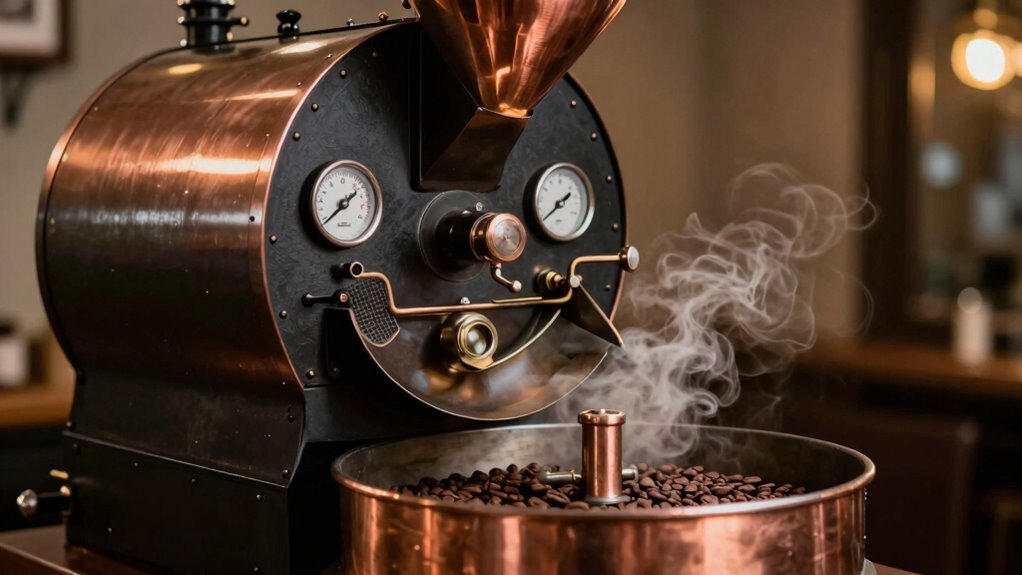
Hot air coffee roasters use convective heat to roast beans quickly and evenly, making them the most practical entry point for home roasting — but the category splits sharply between small sample roasters and larger batch machines. The Fresh Roast SR800 earns my best overall pick for its exceptional fan and heat control, which gives you repeatable roasts batch after batch. If batch size matters more than fine-tuning, the GYPSYFY Hot Air Roaster (100–200g) and the 500g GIVEROO cover the small-and-precise and family-sized ends of the spectrum. The main tradeoff you’ll face is control versus capacity: the most adjustable machines roast small batches, while the big-capacity models simplify or automate the process. Keep reading for the full breakdown of all 13 roasters.

Get coffee and tea gear delivered free with Prime
- Fast, free delivery on millions of items
- Prime Video, Amazon Music and more included
- Member-only deals all year
Complete the kit


Key Takeaways
- The Fresh Roast SR800 and SR540 separated themselves from the field through independent fan and heat adjustment — nearly every other roaster here couples temperature and airflow, which limits your ability to control roast development.
- Capacity claims are misleading across this category: machines rated 500g–800g only handle those weights at lower fan speeds, so real usable capacity for even hot-air roasting is often half the listed number.
- Smoke management is the dividing line for indoor use — only the Fatamorgana 500g includes a built-in smoke filter, which is why it ranks higher than similarly sized competitors for kitchen roasting.
- The 100g roasters (Huanyu and the 1500W adjustable model) are best treated as sample roasters, not daily drivers — they suit experimentation with new beans rather than keeping a household supplied.
- The Roma Pro Smart is the only roaster in the lineup with app-connected profiles, making it the clear choice if you want to log and replay roasts without a separate data setup.




More Details on Our Top Picks
Electric Coffee Bean Roaster, 800g Capacity, Adjustable Temperature
Among these five options, I’d choose this model when batch size matters more than roast speed. Its 800g stated capacity is the largest here, though the recommended 300–500g batch is the more useful limit for planning. That still gives it an edge over the GYPSYFY and CAFEMASY, which are designed for batches under 200g. The adjustable temperature and transparent, vented lid give home users a way to monitor beans and tailor heat, while the honeycomb non-stick base should make cleanup simpler. The tradeoff is its 800W power: compared with the 1500W B0H1V8H1DT, it may take longer to roast. It also lacks the listed air-fan and bean-agitation controls found in some dedicated hot-air designs, so buyers should not assume the larger capacity means finer roast control.
Pros:- Recommended 300–500g batches suit larger household needs than the sub-200g models here
- Adjustable 0–240°C temperature supports different roast preferences
- Transparent lid with ventilation holes lets users watch bean color
- Honeycomb non-stick base is designed for even heating and easier cleanup
Cons:- 800W power may mean longer roasting than the 1500W B0H1V8H1DT
- The 800g headline capacity exceeds the recommended 300–500g batch size
- Product data does not specify dedicated fan control or a cooling cycle
Best for: Home roasters who want to prepare several hundred grams per batch and value a visible, easy-clean roasting surface.
Not ideal for: Buyers seeking fast, dedicated hot-air roasting or precise fan control; the listed 800W power and simpler controls may be limiting.
- Stated capacity:800g
- Recommended batch size:300–500g
- Power:800W
- Voltage:110V
- Temperature range:0–240°C
- Dimensions:12.6 × 4.7 inches
- Base:Honeycomb non-stick
- Lid:Transparent with four-hole ventilation
Our verdict“Choose this roaster if you want larger home batches and can accept slower roasting with fewer listed hot-air controls.”
GYPSYFY Hot Air Coffee Roaster, 110V 2200W, 100-200g Capacity
The GYPSYFY is the clearest fit here for buyers who specifically want a dedicated hot-air roaster in a compact, small-batch format. Its 100–200g capacity is well below the 300–500g recommended for the larger B0H36GB39G, but that smaller load can suit a household roasting just enough for regular use. The borosilicate glass chamber makes bean color visible, and the removable chaff collector addresses one of the messier parts of roasting. Temperature adjustment and a timer offer some control, though the maximum 20-minute roast time may constrain users seeking longer roast profiles. Its stated 2200W power is substantially higher than the larger-capacity B0H36GB39G’s 800W, but wattage alone does not establish roast speed or quality. The five-minute cooling cycle is useful, yet this model remains a small-batch choice rather than a high-volume one.
Pros:- Dedicated hot-air format with adjustable temperature and timer
- Glass chamber allows visual monitoring of bean color
- Removable chaff collector makes post-roast cleanup easier
- Includes an approximately five-minute cooling cycle
Cons:- 100–200g batch capacity is much lower than the larger pan-style options
- 20-minute maximum timer may limit longer roast approaches
- High stated wattage does not by itself guarantee faster or more even roasting
Best for: Home coffee enthusiasts who want a purpose-built hot-air machine, visible bean development, and batches up to 200g.
Not ideal for: Households or small venues that need several hundred grams per roast, or roasters who want sessions longer than 20 minutes.
- Batch capacity:100–200g (3.5–7.1oz)
- Power:2200W
- Voltage:110V
- Temperature range:302–464°F (150–240°C)
- Timer:15-minute default; up to 20 minutes
- Cooling cycle:Approximately 5 minutes
- Chamber material:High-borosilicate glass
- Chaff handling:Removable collector
Our verdict“Pick the GYPSYFY for small, dedicated hot-air batches with visible roasting and built-in cooling.”
CAFEMASY Coffee Bean Roaster Machine – Home Use Air Coffee Roaster with Adjustable Timer, Roasting Heating and Air Fan Settings
CAFEMASY makes the strongest case for a beginner who wants to learn how heat and airflow settings affect a roast without starting with a larger machine. Automatic and manual modes let a new user begin with less hands-on input, then experiment with the 1–8 heating levels and fan power. That control is a point of difference from the simpler B0H36GB39G, whose listed features focus on temperature adjustment and batch capacity. The tradeoff is a modest 80–100g batch, smaller than the GYPSYFY’s 100–200g range, so this is better for practice batches than stocking up. A clear glass jar helps users follow color changes, and automatic cooling removes a post-roast step. The ABS plastic body is less substantial on paper than the stainless steel basket in the B0H1V8H1DT, and the short 15-minute timer limits the available roast window.
Pros:- Automatic and manual modes support a gradual learning curve
- Eight heating levels and adjustable fan power provide control over small roasts
- Glass jar and LED display make the process easier to follow
- Automatic cooling helps finish a roast without a separate cooling step
Cons:- 80–100g capacity requires repeated batches for larger coffee needs
- 15-minute maximum timer limits longer roast profiles
- ABS plastic body may feel less durable than the stainless steel basket of B0H1V8H1DT
Best for: New home roasters who want automatic and manual modes plus separate heat and fan settings for learning small batches.
Not ideal for: Frequent roasters who need larger batches or longer roast sessions; its capacity tops out at 100g and timer at 15 minutes.
- Batch capacity:80–100g (2.8–3.5oz)
- Timer range:1–15 minutes
- Heating levels:1–8
- Modes:Automatic and manual
- Fan:Adjustable fan power
- Body material:Heat-resistant ABS plastic
- Jar material:High-boron glass
- Other features:LED display, chaff collection basket, automatic cooling
Our verdict“Choose CAFEMASY to learn heat and airflow control in small batches, provided its short timer and limited capacity fit your routine.”
Electric Coffee Bean Roaster Machine, Hot Air 360° Heating, 130-300g Capacity
This model stands out for combining 360° hot-air heating with a rotating stir rod, a pairing intended to keep beans moving through the roast. Its 130–300g capacity lands between the compact GYPSYFY and CAFEMASY machines and the larger recommended batches of the B0H36GB39G. That makes it a flexible middle ground for home users who want more than a sample-sized roast without moving to a wide pan-style appliance. The 1500W motor, seven roasting levels, and LED indicators give it a more defined control setup than the GIVEROO, whose description emphasizes an automatic auger and adjustable temperature. A removable stainless steel basket and quartz glass cabin support access and visibility. The drawback is that 300g remains a ceiling for each batch, and the product data does not specify a timer, temperature range, or cooling cycle.
Pros:- 360° hot-air heating and rotating stir rod are designed to move beans during roasting
- 130–300g capacity bridges compact and larger home roasters
- Seven roast levels and LED indicators provide straightforward adjustment
- Removable stainless steel basket and quartz glass cabin aid access and visibility
Cons:- 300g maximum capacity may require multiple batches for larger needs
- Product data does not list a timer, temperature range, or cooling cycle
- Multi-use claims for popcorn and peanuts may be less relevant to buyers seeking a coffee-only roaster
Best for: Home roasters who want a mid-sized batch, moving beans, and several preset roast levels in a hot-air design.
Not ideal for: Small caterers or households that need batches above 300g, or buyers who require specified timer and cooling controls.
- Batch capacity:130–300g
- Power:1500W
- Roasting levels:7
- Heating method:360° hot-air drum
- Roasting chamber:Quartz glass cabin
- Bean movement:Rotating stir rod
- Basket:Removable stainless steel
- Controls:LED indicators
Our verdict“Pick this model for a mid-sized hot-air roast with bean movement and seven settings, if its unspecified timer and temperature details are acceptable.”
GIVEROO 500g Coffee Bean Roaster with Timer
GIVEROO is aimed at buyers who want a 400–500g recommended batch and an automatic auger to keep beans moving. That makes it more practical for larger household quantities than the CAFEMASY or GYPSYFY, both of which top out at 200g. Its transparent cover and 0–240°C temperature adjustment support visual monitoring and basic heat selection, while the non-stick pot also handles foods such as popcorn and nuts. The stated 800g capacity needs context: the recommended roasting amount is 400–500g, so the larger figure should not be read as the advised coffee load. This is a pan-style electric roaster, and its description does not specify a hot-air chamber or fan settings like the CAFEMASY. Small or damaged beans can jam the auger, and batches below 400g may roast unevenly, making it a poor match for sample-size experimentation.
Pros:- Automatic auger keeps beans moving through the roast
- Recommended 400–500g batches suit higher-volume home use
- Transparent cover and adjustable 0–240°C temperature support monitoring and heat selection
- Non-stick pot can also roast several other foods
Cons:- Product data warns that batches under 400g may roast unevenly
- Small or damaged beans may jam the auger
- Description does not specify a dedicated hot-air chamber or fan settings
Best for: Home users who regularly roast 400–500g batches and want an auger to keep beans moving during roasting.
Not ideal for: People who prefer small test batches or specifically want a dedicated hot-air chamber with stated fan controls.
- Stated capacity:800g
- Recommended roasting amount:400–500g
- Temperature range:0–240°C
- Voltage:110V
- Bean movement:Automatic auger
- Timer:Included; duration not specified
- Cover:Transparent glass
- Pot:Non-stick
Our verdict“Choose GIVEROO for larger, auger-assisted batches, but skip it if you roast small quantities or require a dedicated hot-air design.”
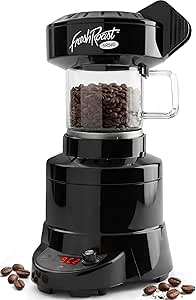
Fresh Roast SR800 Home Coffee Roaster
The Fresh Roast SR800 pairs an 8 oz batch capacity with adjustable heat and fan controls, giving home roasters room to tune a roast without moving to a larger countertop machine. Its real-time temperature display and nine power settings offer more feedback than the simpler one-knob Home Coffee Roaster Machine, which favors hands-on monitoring over detailed controls. The SR800 is also described as roasting in under 10 minutes, a useful fit for frequent small batches. The tradeoff is that its stated maximum capacity is smaller than the 300 g Roma Pro and far below the Fatamorgana’s 500 g. Buyers also need to supply green beans and manage the home-roasting process. I’d choose it for control and quick batches, rather than maximum output.
Pros:- Adjustable heat and fan settings support roast tuning
- Real-time temperature display gives feedback during roasting
- 8 oz maximum batch is larger than the SR540’s 120 g capacity
- Roasting takes under 10 minutes, according to the product description
Cons:- Smaller stated capacity than the 300 g Roma Pro and 500 g Fatamorgana
- Requires green beans and hands-on home roasting
- The product data does not specify dimensions or weight
Best for: Home roasters who want adjustable heat and fan control, temperature feedback, and more capacity than a compact 120 g roaster.
Not ideal for: People who want to roast large weekly quantities in fewer batches or prefer a machine that uses pre-roasted beans.
- Brand:Fresh Roast
- Model:SR800
- Maximum batch size:8 oz (226 g)
- Power settings:9
- Controls:Adjustable heat, fan, and time
- Display:Real-time temperature
- Roasting time:Less than 10 minutes
- Company origin:USA family-owned company
Our verdict“Choose the SR800 if you want quick, adjustable home roasting with an 8 oz ceiling; pick the Fatamorgana for substantially larger batches.”
Fatamorgana Electric Coffee Bean Roaster Machine, 500g Capacity, 110V, Home Use with Smoke Filter
The Fatamorgana Electric Coffee Bean Roaster stands out for its 500 g capacity and reusable smoke filter, a combination suited to households that would otherwise need several rounds in a smaller roaster. The Fresh Roast SR540 handles just 120 g per batch, so this Fatamorgana can roast a much larger quantity at once. It also has temperature and time adjustments, while its fully automatic operation may appeal to people who want a simpler routine than the Roma Pro’s automatic and manual modes. The filter is described as reducing smoke and odors, not eliminating them, so indoor roasting still calls for suitable ventilation. At 17 lb and 15 inches wide, it takes a real share of the counter. I’d favor it for batch size, provided the kitchen can accommodate it.
Pros:- 500 g capacity reduces the number of batches needed
- Reusable smoke filter is designed to reduce smoke and odors
- Temperature and time adjustments provide roast settings
- Can roast coffee beans and various grains
Cons:- Smoke filtration may not remove all roasting smoke indoors
- At 17 lb and 15 inches wide, it occupies significant counter space
- 800 W power specification is provided without a stated roast time
Best for: Households that roast substantial quantities at home and have counter space and ventilation for a 17 lb machine.
Not ideal for: Small-kitchen users or anyone expecting smoke-free indoor roasting without additional ventilation.
- Capacity:500 g (1.1 lb)
- Voltage:110 V
- Wattage:800 W
- Power source:AC adapter
- Filter type:Reusable
- Operation mode:Fully automatic
- Dimensions (D × W × H):7.9 × 15 × 9.5 in
- Weight:17 lb
Our verdict“Choose the Fatamorgana for large home batches and smoke reduction if you have room to ventilate and store a substantial countertop appliance.”
Fresh Roast SR540 Automatic Coffee Bean Roaster
The Fresh Roast SR540 is the compact choice for people who want temperature feedback and adjustable convection without committing to the SR800’s larger stated batch size. It roasts up to 120 g in under 10 minutes and includes a chaff basket and glass roasting chamber, making the process visible while chaff is collected. Compared with the SR800, its smaller capacity means more repeat batches when supplying several coffee drinkers, but it takes less counter space according to the product description. Nine power levels and fan control leave room to adjust roasts as skills grow. The tradeoff is clear: this is a small-batch appliance, and the supplied data gives no durability details. I’d pick it for limited space and modest consumption, not high-volume roasting.
Pros:- Compact countertop design
- Nine power levels and convection fan control allow adjustments
- Real-time temperature appears on the digital status display
- Glass roasting chamber and chaff basket are included
Cons:- 120 g capacity means repeated batches for higher coffee demand
- The product data provides no long-term durability information
- Product origin is listed as China despite the company description noting a USA-based family-owned company
Best for: New or experienced home roasters with limited counter space who typically roast up to 120 g at a time.
Not ideal for: Households wanting larger batches; the SR800 holds up to 226 g and the Roma Pro up to 300 g.
- Brand:Fresh Roast
- Model number:SR540
- Capacity:120 g (about 4 scoops)
- Roast time:Under 10 minutes
- Power settings:9 levels
- Display:Digital status display with real-time temperature
- Included components:Chaff basket and glass roasting chamber
- Country of origin:China
Our verdict“Choose the SR540 for compact, adjustable roasting in small batches; move to the SR800 or Roma Pro if batch output matters more.”
Roma Pro Smart Home Coffee Bean Roaster, 120V
The Roma Pro offers a middle ground between the small-batch Fresh Roast SR540 and the 500 g Fatamorgana: its 300 g capacity suits a larger home roast without requiring the Fatamorgana’s stated batch size. Its automatic and manual modes let buyers choose between a guided routine and more direct control, while a viewing window makes roast progress visible. Automatic cooling and low-smoke chaff collection also give the process a clearer endpoint than models whose supplied specs omit cooling. The tradeoff is that it roasts green beans only and does not brew coffee, and the product description says decaf may call for manual mode. At 18.5 inches tall, it also needs vertical clearance. I’d choose it for mode flexibility and moderate batch size, not a compact footprint.
Pros:- 300 g capacity exceeds the SR540’s 120 g batch
- Automatic and manual modes suit different levels of involvement
- Viewing window and automatic cooling make roast progress and finish easier to track
- Low-smoke chaff collection is included
Cons:- Processes green beans only and does not brew coffee
- Decaf beans may require manual mode
- 18.5 inch height may not fit below some kitchen cabinets
Best for: Home roasters who want both automatic and manual modes, a viewing window, and capacity above 120 g.
Not ideal for: Buyers seeking a coffee maker, a short appliance for low shelves, or a roaster dedicated to simple decaf automation.
- Voltage:120 V
- Capacity:300 g
- Input:Green coffee beans
- Modes:Automatic and manual
- Display:Digital display and timer
- Temperature units:Celsius and Fahrenheit
- Cooling:Automatic
- Dimensions (D × W × H):6 × 8.3 × 18.5 in
Our verdict“Choose the Roma Pro if you want 300 g batches and a choice of roasting modes, and can accommodate its tall design.”
Home Coffee Roaster Machine, 750g Capacity
This 750 g pan roaster is the largest-capacity option in this batch, with a recommended 300–500 g working range and auto mixing arms to keep beans moving. That makes it a stronger fit for substantial home or small-shop batches than the hot-air Fresh Roast SR800, whose maximum is 226 g. It also handles nuts, seeds, and popcorn, giving the appliance uses beyond coffee. The compromise is control: a single temperature knob and no built-in timer leave the operator responsible for watching the roast, while the Roma Pro offers a digital timer and automatic cooling. Its approximately 25-minute roast time is also longer than the under-10-minute times listed for Fresh Roast models. I’d choose it for capacity and versatility if manual monitoring is acceptable.
Pros:- 750 g pan capacity supports larger batches than the Fresh Roast models
- Auto mixing arms move beans during roasting
- Temperature range from 0–240°C allows light-to-dark adjustments
- Also handles nuts, seeds, and popcorn
Cons:- No built-in timer, so the roast needs manual monitoring
- Stirring arm must be switched off manually after heating stops
- Approximately 25-minute roasting time is longer than the Fresh Roast models’ stated times
Best for: Home roasters or small-shop users who need 300–500 g working batches and want one appliance for coffee and other dry foods.
Not ideal for: People who want a quick roast, timer-based control, or a compact hot-air roasting setup.
- Pan capacity:750 g
- Optimal batch size:300–500 g
- Power:800 W
- Temperature range:0–240°C (32–464°F)
- Roasting time:Approximately 25 minutes
- Timer:None
- Controls:One-knob temperature control
- Safety features:Auto shut-off at set temperature, motor reversal if jammed, heat-resistant handles, anti-scald design, and lid vent hole
Our verdict“Choose this machine for larger, versatile batches if you are comfortable monitoring time and stopping the mixing arm yourself.”
Huanyu 100g Home Coffee Bean Roaster with Storage Canister
The Huanyu 100g suits roasters who want to watch a small batch develop and adjust several variables along the way. Its glass chamber gives a direct view of bean color, while temperature changes in 1°C steps, three fan speeds, and a 1–20 minute timer offer more manual control than the automatic mode on the Electric Coffee Bean Roaster Machine, 1500W Hot Air Roaster. That flexibility can help with experimenting, though it also asks the user to manage more settings. Capacity is limited to 100g, so it is better for tasting batches than stocking up. A cooling mode and chaff filter support the roast workflow, and the included canister adds a date tracker and one-way valve. The compact format comes with careful glass handling and frequent small-batch roasting as tradeoffs.
Pros:- Glass chamber makes bean color visible during roasting
- Temperature adjusts in 1°C increments, with three fan speeds and a 1–20 minute timer
- Cooling mode and chaff filter support post-roast handling
- Included canister has a roast date tracker and one-way valve
Cons:- 100g capacity means larger needs require repeated batches
- Multiple adjustable settings take more attention than an automatic mode
- Glass chamber calls for careful handling
Best for: Home coffee enthusiasts who want to observe and adjust roast settings for small, fresh batches
Not ideal for: Households that need larger batches or prefer a simple automatic roast with minimal adjustment
- Capacity:100 g
- Chamber material:Borosilicate glass
- Power:1500 W
- Voltage:110 V
- Temperature range:150–240°C (302–464°F), adjustable in 1°C increments
- Roast time:1–20 minutes
- Fan speeds:3
- Dimensions and weight:7.09 × 7.09 × 14.76 inches; 5.39 lbs
- Included accessories:Coffee canister with date tracker and cleaning brush
Our verdict“Choose the Huanyu if you value visible, hands-on control over batch size and automatic convenience.”
Electric Coffee Bean Roaster Machine, 1500W Hot Air Roaster with Timer, Adjustable Temperature & Fan, 100g Capacity
This 1500W hot-air roaster is the more approachable pick for someone learning to roast at home: its automatic mode is described as delivering a roast in 10 minutes, and it switches to cold air after roasting. That cuts down on active steps compared with the more hands-on Huanyu 100g Home Coffee Bean Roaster, which offers fine temperature increments and includes a storage canister. Manual operation remains available here, with adjustable temperature and three fan speeds, so the automatic setting does not remove all room to experiment. The clear borosilicate chamber lets users watch the roast, but its 100g capacity limits output, and the chamber needs careful handling. The stated temperature range begins at 32°F, so it offers a broad control span on paper; the product data does not describe how precisely it holds each setting.
Pros:- Automatic mode provides a straightforward starting point for home roasting
- Automatically switches to cold air when roasting ends
- Clear borosilicate chamber allows visual monitoring
- Manual mode includes adjustable temperature, timer, and three fan speeds
Cons:- 100g capacity is restrictive for larger household batches
- Glass chamber requires careful handling
- Product data gives limited detail on the automatic roast profile
Best for: First-time home roasters who want an automatic starting point plus the option to adjust temperature and airflow
Not ideal for: Buyers who roast for several people at once or want a larger batch capacity
- Power:1500 W
- Capacity:100 g
- Temperature range:32–464°F
- Timer:0–20 minutes
- Fan speeds:3
- Roasting chamber:Borosilicate glass
- Display:LED
- Modes:Automatic and manual
- Cooling:Automatic cold-air mode after roasting
Our verdict“Choose this model if you want an automatic entry point with manual controls available as your roasting skills grow.”
Fatamorgana 450 g Direct-Fired Coffee and Nut Roaster
With a stated 450g capacity, the Fatamorgana is aimed at buyers who want to roast substantially more at once than the 100g Huanyu or the 1500W hot-air model. Its direct-flame simulation and 5 mm quartz-glass viewing window keep visual monitoring central, while a removable window is designed for hand cleaning. The larger capacity and ability to handle coffee, dried fruits, and some nuts make it a broader kitchen tool, but this is not a conventional hot-air roaster: buyers focused on airflow-based roasting should weigh that difference before choosing it. The listing also excludes nuts under 2 mm in diameter, which narrows its multi-use claim. Stainless steel housing is a practical plus, yet the product information mentions defective motors in a previous batch, a reliability concern absent from the smaller hot-air options.
Pros:- 450g stated capacity exceeds the 100g hot-air models in this lineup
- Quartz-glass window allows visual monitoring of bean color
- Removable glass is designed for tool-free cleaning
- Stainless steel housing and multi-use roasting scope
Cons:- Uses direct-flame simulation rather than hot-air roasting
- Not suitable for nuts under 2 mm in diameter
- Listing mentions defective motors in a previous batch
Best for: Buyers who want a larger roast capacity and a machine that can also handle suitable dried fruit and nuts
Not ideal for: Shoppers specifically seeking a hot-air coffee roaster, or those who need to roast very small nuts
- Capacity:450 g
- Roasting method:Direct-flame simulation
- Voltage:110 V
- Viewing window:5 mm quartz glass
- Housing material:Stainless steel
- Suitable for:Coffee beans, dried fruits, and nuts
- Minimum nut diameter:2 mm
Our verdict“Choose the Fatamorgana for larger, multi-use roasting only if its direct-fired method fits your needs and the motor history is acceptable to you.”

How We Picked
I ranked these hot air coffee roasters on five factors that directly shape roast quality and everyday usability. Control granularity came first: machines with independently adjustable heat and fan speed outperform fixed-program roasters because airflow drives both bean movement and roast speed. Real usable capacity came second, discounted against manufacturer claims since airflow drops under heavy loads. I also weighed build and chaff collection, smoke management for indoor use, and ease of cleaning, since chaff cleanup is the recurring chore most buyers underestimate.
The ranking logic follows buyer intent rather than raw specs. Roasters that give you a genuine upgrade path — the SR800, Roma Pro Smart, and CAFEMASY with its adjustable fan — placed above higher-capacity machines with locked controls. Budget roasters earned their positions by delivering acceptable consistency at their price, not by matching premium features. The direct-fired Fatamorgana 450g sits last among my top considerations because it straddles two categories without excelling at either hot-air purity or drum-roast depth.
Factors to Consider When Choosing Hot Air Coffee Roasters
Choosing a hot air coffee roaster comes down to matching the machine’s airflow design and capacity to how you actually drink coffee. These are the factors that separate a satisfying purchase from a dusty countertop appliance.Batch Size Versus Roast Quality
The biggest mistake new buyers make is equating advertised capacity with usable capacity. A roaster rated for 800g can technically tumble that much green coffee, but hot-air machines depend on airflow to lift and agitate beans — overload the chamber and the fan can’t circulate them, producing scorched spots and uneven development. In practice, most home hot-air roasters perform best at 50–70% of their rated load. Work backward from your consumption: a two-cup-a-day drinker goes through roughly 250g of roasted coffee per week, which is about 300g of green beans. That means a 100g sample roaster requires weekly sessions, while a 300–500g machine can cover two weeks in one roast. Don’t buy capacity you won’t use — larger chambers roast small batches poorly because the fan speed can’t drop far enough to keep light loads agitated.
Fan and Heat Control: The Real Differentiator
Hot-air roasting is fundamentally an airflow discipline. Temperature alone doesn’t determine roast outcome — the fan controls how fast beans pass through the drying, browning, and development stages, and changing fan speed mid-roast is how experienced roasters manipulate flavor. Machines that couple heat and fan into one dial force you into whatever curve the manufacturer chose, which caps how much you can learn or correct. Independent controls, like those on the Fresh Roast SR800, let you drop fan speed as beans lose moisture and gain weight-loss-adjusted density, keeping them circulating without blowing out of the chamber. If you see roasting as a hobby you’ll grow into, this single feature matters more than capacity, timer presets, or appearance. Fixed-program machines still make drinkable coffee, but they plateau your skill immediately.
Smoke and Chaff Management for Indoor Roasting
Roasting coffee produces smoke proportional to roast darkness — a light roast barely smokes, while a full-city roast fills a kitchen fast. Most hot-air roasters handle chaff with a simple screen or cup on the exhaust, which catches flakes but passes smoke straight through. If you roast indoors without strong ventilation, look for a built-in smoke filter like the Fatamorgana 500g offers, or plan to roast on a porch, garage, or under a range hood on full blast. Chaff is a separate issue: cheap chaff collectors clog quickly and let debris scatter across your counter, turning cleanup into the least enjoyable part of the hobby. Expect to empty the collector every single batch and wipe down the chamber — a well-designed collector takes seconds, a bad one takes minutes and makes a mess.
Durability and Heating Element Quality
Hot-air roasters work their heating elements hard, cycling between ambient and roast temperatures for 10–15 minutes per session. Budget machines often use lighter-gauge coils and thinner housings, which means element life is the most common failure point after a year of regular use. Premium machines justify their cost with better element construction, more robust fans, and replaceable parts — a factor worth weighing if you roast weekly. Another durability signal is the chamber material: borosilicate glass lets you watch color development but can crack from thermal shock if handled carelessly, while metal chambers are tougher but remove visual feedback. Neither is strictly better; glass suits learners who need to see the roast, metal suits roasters who’ve moved to smell and sound cues.
Timer Presets Versus Manual Control
Many roasters in this range advertise adjustable timers and preset programs as convenience features, but they cut both ways. A timer that auto-drops the beans prevents scorching if you get distracted, which is genuine protection for beginners. The downside is that fixed time programs ignore bean variability — dense high-grown coffees need longer roasts than soft lowland beans, and a timer that ends the roast at ten minutes regardless will under-develop the former. The best compromise is a timer you can override or extend mid-roast, combined with manual temperature authority. Machines that let you adjust while roasting, rather than locking settings once started, keep you in control when beans crack earlier or later than expected. Treat presets as training wheels, not as the feature you’re buying.
Total Cost of the Hobby, Not Just the Machine
The roaster is one line in a bigger budget. You’ll also need green coffee (which runs far cheaper than roasted, and is where the economics of home roasting actually pay off), a scale that reads in grams, storage containers for degassing beans, and eventually a way to log roasts. Buyers who fixate on the machine price often skip the scale, then wonder why their roasts are irreproducible — a 10-gram difference in charge weight changes everything in a 100g chamber. Electricity costs are trivial, but consumables aren’t: smoke filters on machines like the Fatamorgana need periodic replacement, and spare chaff screens are cheap insurance for machines you plan to keep for years. Budget for the ecosystem, and the machine choice becomes clearer.
Frequently Asked Questions
Is a hot air roaster better than a drum roaster for beginners?
For most beginners, yes, and the reason is speed and feedback. Hot air roasters complete a batch in 8–12 minutes versus 15–20 for drum machines, so you can run more experiments per hour and learn faster from mistakes. The convective heat also roasts more evenly without your intervention, whereas a drum demands some skill in managing drum temperature and first-crack timing. The tradeoff is roast character: drum roasters develop more body and can handle darker roasts without tipping or scorching, which matters once you know you prefer dark, syrupy coffee. Start with hot air, and if you outgrow it, the drum conversation becomes worthwhile — that’s partly why the direct-fired Fatamorgana 450g occupies a curious middle ground in this lineup.
How much does capacity actually matter for a household?
Less than the spec sheets suggest, and more than most buyers calculate. Roasted coffee loses roughly 15% of its green weight during roasting, and home machines perform best under-loaded, so a nominal 250g roaster realistically yields about 170g of roasted coffee per great batch. A single daily coffee drinker consumes around 60–75g per week if they brew pour-over, or double that with espresso. That math makes a 100–200g machine adequate for one person and a 300–500g machine comfortable for a household of two to three coffee drinkers. Buying an 800g machine for one person usually backfires — small charges tumble poorly in oversized chambers, and green coffee stales too, so roasting huge batches to store defeats the freshness advantage.
Can I roast dark coffee with a home hot air roaster?
You can, but with real limitations worth understanding before buying. Hot air roasters lose temperature authority as beans darken and become less dense late in the roast, and many home units can’t push past the beginning of second crack without extended roast times that bake the coffee. The machines with stronger heating elements and higher fan authority — the SR800 and the higher-wattage GYPSYFY — handle medium-dark roasts more convincingly than the 100g entry-level units. Expect more smoke the darker you go, which is why ventilation or a built-in smoke filter becomes non-negotiable for dark roasters. If French or Italian roast is your daily preference, weight your purchase toward wattage and smoke management over control granularity.
Why do the same beans taste different from my roaster than from a commercial roaster?
Two main reasons: development time and profile control. Commercial roasters extend the time between first crack and the end of the roast — the development phase — using drum mass and precise heat adjustments that home hot-air machines can’t fully replicate. Home air roasters also roast faster overall, which produces brighter, more acidic cups that some people love and others read as underdeveloped. You can close the gap by dropping your charge temperature, lowering heat after first crack, and extending development to 20–25% of total roast time, which favors machines with mid-roast adjustability like the CAFEMASY or SR800. Bean freshness matters too — green coffee roasted within the year beats stale stock regardless of equipment. The gap narrows quickly with practice, which is a genuine argument for buying a machine you can grow into.
Are the cheap electric roasters under $100 worth buying?
They’re worth it for a specific buyer: someone who wants to try home roasting before committing real money. The budget machines in this lineup — the Huanyu 100g and the generic adjustable 100g models — do produce drinkable coffee, and they teach you the basics of listening for first crack and judging color. Where they fall short is repeatability: coupled heat and fan controls, weaker elements, and inconsistent batch-to-batch behavior mean your tenth roast won’t necessarily match your ninth. If you already know you’ll roast weekly, spending up to a Fresh Roast SR540 or CAFEMASY saves you the upgrade cycle entirely. If you’re genuinely unsure the hobby will stick, a cheap roaster plus quality green coffee is a rational first step rather than wasted money.
Conclusion
After comparing all 13 machines, the right choice depends less on specs and more on what kind of roaster you intend to become. Best overall goes to the Fresh Roast SR800, whose independent fan and heat controls deliver the repeatability and growth potential that define this category at its best. Best value belongs to the GYPSYFY 100–200g, which covers a practical batch range with honest performance for the money. Best premium is the Roma Pro Smart — its profile logging and app control make it the closest thing here to a prosumer setup. Best for beginners is the Fresh Roast SR540, which simplifies the SR800’s learning curve while keeping real adjustability. For specific needs: choose the Fatamorgana 500g with smoke filter for indoor roasting, the GIVEROO 500g for household batch sizes, and the Huanyu 100g if you want a low-cost sample roaster for trying new beans. Whatever you pick, buy a gram scale and good green coffee — the machine is only one-third of the equation.
Halloween Picks
halloween
As an affiliate, we earn on qualifying purchases.