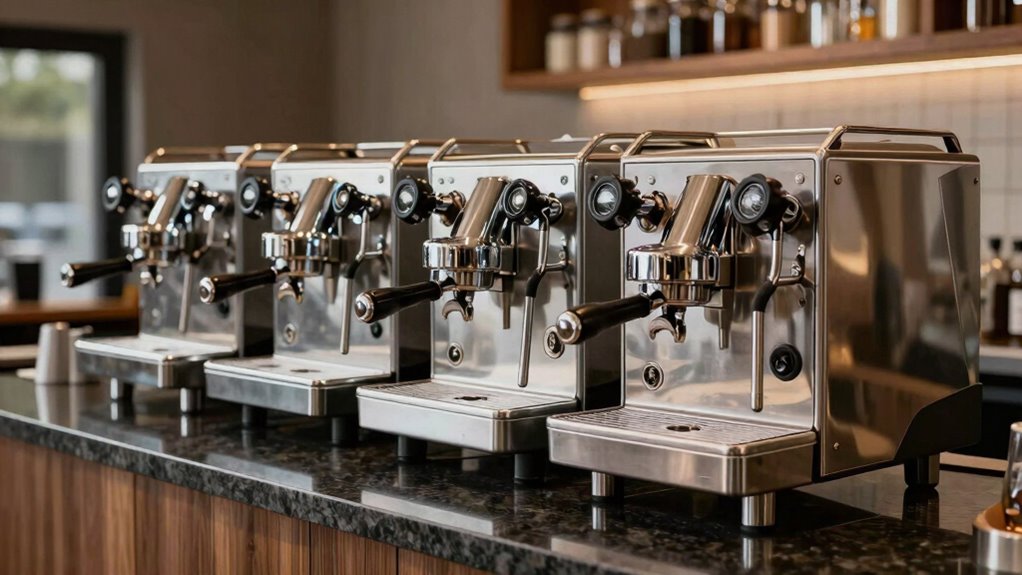

Commercial lever espresso machines occupy a narrow but passionate corner of the coffee world, promising hands-on pressure control and a distinctive shot character that pump machines struggle to replicate. After comparing six leading options, the Bezzera Strega stands out as the best overall pick for cafés and serious enthusiasts alike, thanks to its spring-loaded lever group paired with modern boiler automation. The La Pavoni PC-16 Professional remains the classic manual choice for full barista control, while the budget-friendly SUPERKOP Manual Espresso Maker proves lever coffee doesn’t require plumbing or a big footprint. The main tradeoffs in this category come down to spring-lever consistency versus manual pressure control, boiler capacity versus counter space, and whether you need true commercial durability or café-grade flavor at home. Keep reading for the full breakdown of who each machine suits best.

Get coffee and tea gear delivered free with Prime
- Fast, free delivery on millions of items
- Prime Video, Amazon Music and more included
- Member-only deals all year
Complete the kit


Key Takeaways
- The Bezzera Strega separated itself from the rest by combining a true spring-lever group with an electric boiler and gas option, making it the only pick here that can genuinely survive high-volume café service.
- Four of the six machines come from La Pavoni, and the comparison revealed clear tiers within the brand: the Esperto Abile and Stradivari are style-driven upgrades, while the Europiccola and PC-16 differ mainly in boiler size and group capacity.
- The SUPERKOP is the outlier of the lineup — no boiler, no steam, purely mechanical — which makes it the cheapest entry into lever espresso but eliminates it for anyone who needs milk drinks.
- Spring-lever machines (Strega) deliver more consistent shot-to-shot pressure than full-manual levers (all La Pavoni models), a distinction that matters more in commercial settings than at home.
- Rosewood accents and chrome bodies push the Esperto Abile and Stradivari up in price without changing brewing fundamentals, so buyers should decide whether aesthetics justify the premium before upgrading.
- Boiler capacity became the clearest dividing line for volume: the 16-cup La Pavoni models handle small gatherings and light café duty, while the 8-cup Europiccola is strictly a one-or-two-person machine.
| Bezzera Strega Commercial Espresso Lever Machine |  | Best Overall | Operation mode: Manual lever | Water supply: Switchable tank or plumbed | Coffee input: Ground coffee | VIEW ON AMAZON | See Our Full Breakdown |
| SUPERKOP Manual Espresso Maker, Black |  | Best Portable Pick | Type: Manual, non-electric espresso maker | Coffee capacity: Up to 18 g | Water capacity: 60 ml | VIEW ON AMAZON | See Our Full Breakdown |
| La Pavoni Esperto Abile 16-Cup Lever Espresso Machine with Rosewood Handles |  | Best for Enthusiast Control | Type: Manual lever espresso machine | Boiler capacity: 54 oz nickel-plated | Brewing capacity: Up to 16 two-ounce servings | VIEW ON AMAZON | See Our Full Breakdown |
| La Pavoni PSW-16 Stradivari Lever Espresso Machine |  | Best Classic Design | Model: PSW-16 Stradivari | Type: Manual lever espresso machine | Boiler capacity: 38 oz | VIEW ON AMAZON | See Our Full Breakdown |
| La Pavoni EPC-8 Europiccola Manual Lever Espresso Machine |  | Best for Beginners | Model: EPC-8 Europiccola | Operation: Manual lever | Finish: Chrome and silver | VIEW ON AMAZON | See Our Full Breakdown |
| La Pavoni PC-16 Professional Lever Espresso Machine |  | Best Classic Café Workhorse | Model: PC-16 | Type: Manual lever espresso machine | Capacity: Up to 16 shots per boiler fill | VIEW ON AMAZON | See Our Full Breakdown |
| commercial lever espresso machine | Type | Frothing systems | Model |
|---|---|---|---|
| Bezzera Strega Commercial Espr | — | — | — |
| SUPERKOP Manual Espresso Maker | Manual, non-electric espresso maker | — | — |
| La Pavoni Esperto Abile 16-Cup | Manual lever espresso machine | Dual | — |
| La Pavoni PSW-16 Stradivari Le | Manual lever espresso machine | Dual | PSW-16 Stradivari |
| La Pavoni EPC-8 Europiccola Ma | — | — | EPC-8 Europiccola |
| La Pavoni PC-16 Professional L | Manual lever espresso machine | Traditional steam wand and automatic cappuccino maker | PC-16 |
More Details on Our Top Picks
Bezzera Strega Commercial Espresso Lever Machine
The Bezzera Strega is the only machine in this lineup built to genuinely handle commercial-grade duty. Its spring-assisted lever borrows from traditional Italian café design while adding modern electronics, and the switchable tank or plumbed water supply gives it installation flexibility that nothing else here can match — the La Pavoni models are countertop-only with no plumbing option. At 70 pounds of stainless steel, it absorbs vibration and holds heat through back-to-back shots the way a busy bar demands.
The tradeoff is real, though. This is a heavyweight, high-commitment machine that assumes a permanent spot on your counter, and compared with the compact La Pavoni EPC-8 Europiccola, it demands far more space, budget, and electrical planning. For anyone serving volume, that commitment pays off; for a hobbyist, it’s overkill.
Pros:- Switchable between water tank and plumbed connection for flexible installation
- Commercial-grade stainless steel construction built for continuous service
- Spring-assisted lever delivers consistent pressure without exhausting the barista
- Reusable filter system keeps operating costs down
Cons:- At 70 pounds, moving or repositioning it is a two-person job
- Manual lever operation requires training and more effort than push-button machines
- Demands dedicated counter space and possibly electrical upgrades
Best for: Café owners and serious enthusiasts who need true commercial durability with flexible water-line installation
Not ideal for: Home users with limited counter space — its 70-pound build and plumbing requirements make it impractical for a residential kitchen
- Operation mode:Manual lever
- Water supply:Switchable tank or plumbed
- Coffee input:Ground coffee
- Filter type:Reusable
- Material:Stainless steel
- Weight:70 lb
Our verdict“If your lever machine needs to survive daily commercial service, this is the one to buy — everyone else should consider a smaller La Pavoni.”
SUPERKOP Manual Espresso Maker, Black
The SUPERKOP plays a completely different game from every other machine here. It’s non-electric, needs no warm-up, and uses a 1:40 displacement lever mechanism to reach espresso pressure through five or six smooth strokes — a clever mechanical approach that means you’re the boiler, the pump, and the power source all at once.
Where the Bezzera Strega anchors a counter, the SUPERKOP fits in a travel bag, and unlike the La Pavoni Esperto Abile, there’s no boiler to descale or backflush; a rinse cleans it. The catches are worth weighing: you must source 203°F water separately, and each shot takes deliberate lever work. It also can’t steam milk, so latte drinkers are out of luck. As an espresso purist’s travel companion, though, nothing else in this roundup competes.
Pros:- Fully non-electric operation with no warm-up time
- 58 mm stainless steel portafilter matches commercial accessories
- Simple rinse cleaning — no backflushing or descaling needed
- Compact and durable enough for travel and camping
Cons:- Requires separately heated water for every shot
- Multiple lever strokes needed per extraction
- No milk frothing capability at all
Best for: Travelers, campers, and off-grid espresso drinkers who want real pressure extraction without electricity
Not ideal for: Milk-drink lovers or anyone wanting one-touch convenience — there’s no steam wand and every shot demands manual effort plus pre-heated water
- Type:Manual, non-electric espresso maker
- Coffee capacity:Up to 18 g
- Water capacity:60 ml
- Recommended water temperature:203°F
- Extraction time:25–30 seconds
- Portafilter:58 mm polished stainless steel
- Materials:Powder-coated aluminum shell, steel internals
- Safety valve:Releases pressure at 20 bars
Our verdict“This makes the most sense for espresso drinkers on the move who value portability over milk drinks and volume.”
La Pavoni Esperto Abile 16-Cup Lever Espresso Machine with Rosewood Handles
The Esperto Abile sits at the craftsman end of La Pavoni’s range, and its standout feature is feedback: a group pressure gauge lets you watch extraction pressure in real time, something the Stradivari and Europiccola don’t offer. Combined with three competition-grade filters in 9, 16, and 20 g sizes, it gives you the tools to dial in a shot like a barista competitor rather than guess.
Its 54-ounce boiler is the largest in the La Pavoni trio here, stretching to 16 two-ounce servings per fill with dual frothing systems for milk work. The flip side: it still brews only one or two cups at a time, so it’s a high-control machine, not a high-volume one. Compared with the Bezzera Strega, it’s lighter and prettier on a home counter but not built for café throughput.
Pros:- Group pressure gauge gives real-time extraction feedback
- Three competition filters (9/16/20 g) for different dose styles
- Large 54 oz boiler yields up to 16 servings per fill
- Dual frothing systems for milk drinks
Cons:- Only brews one or two cups per lever pull
- Fully manual operation demands skill and attention for every shot
- Rosewood and chrome finish needs careful upkeep
Best for: Hands-on espresso hobbyists who want pressure visibility and competition-level filter options for dialing in shots
Not ideal for: Small offices or households serving several people quickly — one or two cups per pull means a queue forms fast
- Type:Manual lever espresso machine
- Boiler capacity:54 oz nickel-plated
- Brewing capacity:Up to 16 two-ounce servings
- Frothing systems:Dual
- Filters:Competition filters, 9/16/20 g
- Wattage:1000 W, 110 V
- Dimensions:12 × 7 × 15 in
- Weight:17 lb
Our verdict“This pick makes the most sense for the enthusiast who treats each shot as a craft project and wants instruments to prove it.”
La Pavoni PSW-16 Stradivari Lever Espresso Machine
The Stradivari is the traditionalist’s choice in this lineup. Its boiler is solid brass triple-plated in chrome — a heavier, more heat-stable construction than the Europiccola’s smaller setup — and the wood-handled lever mechanism delivers the fully analog, pre-infusion-to-pull experience lever purists chase. This option stands out for craftsmanship as much as performance: it looks like an heirloom and behaves like one.
Compared with the Esperto Abile, you give up the pressure gauge and competition filters, so it rewards feel and repetition rather than measurement. The 38-ounce boiler still covers 16 two-ounce servings per fill with dual frothing, but like every La Pavoni here it’s a one-to-two-cup machine. Compared with the SUPERKOP, it gains a steam wand and true boiler — at the cost of any portability.
Pros:- Solid brass, triple chrome-plated boiler for heat stability and durability
- Up to 16 two-ounce servings per boiler fill
- Dual frothing systems handle a full range of milk drinks
- Wood handles and chrome finish give it genuine heirloom styling
Cons:- No pressure gauge — feedback comes only from feel and taste
- Brews just one or two cups per pull
- Chrome and wood detailing requires regular polishing to stay pristine
Best for: Design-conscious buyers who want traditional brass-and-chrome lever craftsmanship with full milk-steaming capability
Not ideal for: Data-driven dial-in brewers — no pressure gauge means you learn entirely by taste and feel, which frustrates beginners
- Model:PSW-16 Stradivari
- Type:Manual lever espresso machine
- Boiler capacity:38 oz
- Boiler material:Solid brass, triple chrome-plated
- Capacity:Up to 16 two-ounce servings per fill
- Frothing systems:Dual
- Construction:Steel with wood handles and knobs
- Country of manufacture:Italy
Our verdict“Choose the Stradivari if you value classic materials and hands-on ritual over measurable control; pick the Esperto Abile if you want gauges instead.”
La Pavoni EPC-8 Europiccola Manual Lever Espresso Machine
The Europiccola is the entry point into true lever espresso, and its greatest strength is simplicity. With a modest 0.8 L capacity, a removable drip tray, and a one-or-two-cup format, it strips the lever experience down to its essentials — you learn pre-infusion, pressure, and pull timing without the extra variables of the Esperto Abile’s gauge and multiple filters or the Stradivari’s larger brass boiler.
That minimalism cuts both ways. There’s no pressure readout and no competition accessories, so you’ll outgrow it if your technique gets serious. Compared with the Bezzera Strega, it’s clearly a personal-use machine rather than a commercial workhorse, but that’s exactly the point: it’s the least intimidating way to find out whether manual lever brewing suits you before committing to a bigger, pricier machine.
Pros:- Simplest lever platform for learning manual extraction technique
- Compact footprint fits small kitchens and offices
- Removable drip tray simplifies daily cleanup
- Durable chrome and silver finish with proven La Pavoni engineering
Cons:- Limited 0.8 L capacity constrains back-to-back brewing
- No pressure gauge or advanced accessories for skill progression
- Only one or two cups per pull
Best for: First-time lever buyers and small households wanting to learn manual espresso without a big investment or footprint
Not ideal for: Growing enthusiasts or entertainers — the small boiler and one-or-two-cup output cap it quickly once skills or guest counts increase
- Model:EPC-8 Europiccola
- Operation:Manual lever
- Finish:Chrome and silver
- Water capacity:0.8 L
- Brewing capacity:One or two cups per pull
- Filter type:Reusable
- Origin:Italian craftsmanship
Our verdict“The Europiccola is the smart first lever machine — buy it to learn the craft, then upgrade to the Esperto Abile when you outgrow it.”
La Pavoni PC-16 Professional Lever Espresso Machine
Sitting at the intersection of old-world craft and genuine daily-driver capability, the La Pavoni PC-16 earns its place as the roundup’s classic workhorse. Its 38-ounce nickel-plated brass boiler brews up to 16 shots per fill, which puts real distance between it and the smaller La Pavoni EPC-8 Europiccola — the Europiccola suits quiet mornings at home, while the PC-16 keeps up with a steady queue of customers. Compared with the Bezzera Strega, the PC-16 gives up spring-assisted lever mechanics, meaning the operator supplies all the pressure by hand; that’s more physical work but also more direct control over every extraction.
The integrated pressure gauge is a practical advantage over the Stradivari PSW-16, giving baristas visual feedback instead of guesswork. The dual frothing setup — a traditional steam wand plus an automatic cappuccino maker — covers both skilled latte art and high-volume milk drinks. Tradeoffs are real: fresh grounds are needed every cycle, descaling is a recurring chore, and the chrome finish demands gentle care.
Pros:- Large 38 oz brass boiler brews up to 16 shots per fill, far exceeding smaller lever machines
- Integrated pressure gauge provides visual feedback the Stradivari lacks
- Dual milk-frothing options handle both artisan steaming and fast cappuccino service
- Handcrafted Italian build with detailed instructions and an instructional video to shorten the learning curve
Cons:- Fully manual lever requires fresh grounds each cycle and physical effort for every shot
- Boiler needs regular descaling to maintain performance
- Chrome finish is easily damaged by abrasive cleaners, demanding careful maintenance
Best for: Small café owners and serious enthusiasts who want high shot capacity per boiler fill and hands-on control of every extraction
Not ideal for: High-volume shops or operators who need repeatable, low-effort shots — the fully manual lever and per-cycle grinding demand skill and time the Strega’s spring lever partly eliminates
- Model:PC-16
- Type:Manual lever espresso machine
- Capacity:Up to 16 shots per boiler fill
- Boiler:38 oz nickel-plated brass
- Frothing Systems:Traditional steam wand and automatic cappuccino maker
- Pressure Gauge:Integrated
- Finish:Chrome with black accents
- Country of Origin:Italy
Our verdict“Choose the PC-16 if you need classic lever character with café-grade shot capacity and pressure feedback, and skip it if effortless repeatability matters more than hands-on craft.”

How We Picked
I evaluated each machine against the criteria that actually decide a commercial lever purchase: group head design (spring-loaded versus full manual), boiler capacity and recovery speed, build quality of the chassis and components, steam capability for milk-based drinks, and realistic serviceability — because a lever machine in daily use will eventually need seals and gaskets replaced. Durability carried the most weight, since the word “commercial” in this category implies machines expected to survive hundreds of shots per week rather than a weekend hobby.
The ranking logic followed a simple hierarchy: machines that could plausibly serve real customers ranked above machines that deliver café-quality shots in domestic or light-duty settings. That places the Bezzera Strega at the top, the higher-capacity La Pavoni manual levers in the middle tier ordered by capability and value, and the SUPERKOP — a boiler-less manual press — last for volume despite its strengths as an affordable, portable entry point. Where two machines shared brewing fundamentals, as with the Esperto Abile and Stradivari, finish and ergonomics became the tiebreaker.
| commercial lever espresso machine | Type | Frothing systems | Model |
|---|---|---|---|
| Bezzera Strega Commercial Espr | — | — | — |
| SUPERKOP Manual Espresso Maker | Manual, non-electric espresso maker | — | — |
| La Pavoni Esperto Abile 16-Cup | Manual lever espresso machine | Dual | — |
| La Pavoni PSW-16 Stradivari Le | Manual lever espresso machine | Dual | PSW-16 Stradivari |
| La Pavoni EPC-8 Europiccola Ma | — | — | EPC-8 Europiccola |
| La Pavoni PC-16 Professional L | Manual lever espresso machine | Traditional steam wand and automatic cappuccino maker | PC-16 |
Factors to Consider When Choosing Commercial Lever Espresso Machines
Lever espresso is a smaller market than pump-driven espresso, which means fewer models but starker differences between them. Before committing to any of the six machines above, it helps to understand the design decisions that shape what a lever machine can and cannot do — and where buyers most often go wrong.Spring Lever or Full Manual Lever
The single biggest decision is whether the lever itself is powered by a spring or by your arm. A spring-loaded lever group, like the Bezzera Strega’s, compresses a spring on the downstroke and lets it release at a controlled rate, producing a consistent pressure profile shot after shot with minimal operator skill. A full manual lever, used by every La Pavoni in this lineup, puts you in direct control of pre-infusion pressure and decline curve — rewarding in the hands of an experienced barista, frustrating for a new hire or a busy morning. In a commercial setting where multiple staff pull shots, spring levers remove operator variability almost entirely. At home, many enthusiasts actually prefer manual levers because the learning curve becomes part of the hobby. Be honest about who will be pulling the shots and how much consistency you need before choosing.
Boiler Capacity and Recovery Time
Boiler size determines how many drinks you can serve in a row before temperature stability suffers. An 8-cup boiler, like the Europiccola’s, is fine for one or two people but will struggle to keep up with a brunch crowd, while 16-cup models buy you headroom for small gatherings or very light café duty. Recovery time matters as much as raw capacity — a boiler that reheats slowly between shots creates queue-killing delays that customers notice. The mistake I see most often is buyers equating “commercial-grade build” with “commercial-grade throughput”; a chrome La Pavoni looks like a café machine but its boiler was designed around domestic pacing. If you genuinely serve the public, size the boiler to your peak hour, not your average day. When in doubt, step up a size rather than down.
Steam Power and Milk Drink Capability
Espresso purists sometimes forget that most café customers order milk drinks, and steam performance varies widely across lever machines. The Bezzera Strega’s larger boiler delivers steam pressure that keeps pace with continuous drink production, whereas smaller La Pavoni boilers can steam milk but require patience between pitchers. The SUPERKOP has no steam wand at all, which removes it from contention for any setting where lattes and cappuccinos appear on the menu. Wand placement also matters in practice — a wand positioned for right-handed steaming can force awkward movement behind a busy bar. Match the steam system to your actual drink mix: an espresso bar needs far less steam capability than a general-purpose café. Underestimating steam demand is one of the costliest mistakes in this category.
Plumbing, Power, and Installation Reality
True commercial deployment usually means a plumbed water line and possibly a 220V circuit, and not every machine sold as “commercial” supports that. The Strega’s dual gas-and-electric heating option exists precisely for mobile carts and locations without stable power, an option none of the La Pavoni models offer. Manual lever machines with pour-over tanks give you placement flexibility but add daily refill labor and tank cleaning to your routine. Before buying, check the amperage of the circuit you’ll run the machine on, because a heater that trips a breaker mid-service is worse than a smaller boiler. Also confirm drip tray and drainage arrangements for your counter, since lever groups purge more water than most buyers expect. Installation constraints eliminate more “perfect” machines than performance differences do.
Maintenance Access and Parts Availability
Every lever machine depends on gaskets, seals, and piston rings that wear with use, and your long-term happiness depends on how easily you can service them. La Pavoni’s decades-long production history means parts and rebuild kits are widely available and well documented by the repair community — a genuine advantage over obscure brands. The Bezzera Strega benefits from Bezzera’s commercial service network, which matters if you can’t afford downtime. Before purchasing, check whether a local technician will actually work on lever machines, because many modern espresso techs specialize in pump machines and decline lever repairs. Budget for an annual rebuild of the group seals as routine maintenance, not an emergency. A machine you can’t get repaired is a liability no matter how well it pulls shots today.
Aesthetics Versus Function in the Upgrade Decision
Several machines in this category — the Stradivari and Esperto Abile are prime examples — charge a premium for finish details like rosewood handles, sculpted bases, and artful chrome work rather than brewing improvements. There’s nothing wrong with buying a machine partly as a showpiece; a beautiful lever machine on a counter is a legitimate marketing asset for a café and a daily pleasure at home. The mistake is paying for aesthetics while expecting performance you didn’t buy. A Stradivari brews essentially like a standard La Pavoni, so choose it for the way it looks on your bar, not for the coffee it produces. My rule of thumb: lock in the group type, boiler size, and steam capability you need first, then spend whatever remains on appearance. Function you outgrow costs more to replace than finish you admire.
Frequently Asked Questions
Can a manual lever machine like a La Pavoni genuinely handle commercial café volume?
For very light commercial duty — a low-volume espresso bar, a restaurant serving a handful of after-dinner drinks — a 16-cup La Pavoni can work, but it demands realistic expectations. Boiler recovery between back-to-back drinks is the limiting factor, not the lever itself, and a single barista steaming and pulling shots manually will cap out around a drink every few minutes at best. Staff training also becomes an issue, because manual levers reward practiced technique and punish inconsistency. If your peak hour involves more than a dozen drinks, a spring-lever machine like the Bezzera Strega with its faster recovery and repeatable pressure profile is the safer commercial choice. Think of the La Pavoni machines as light-duty commercial at most, and exceptional domestic machines otherwise.
Is the Bezzera Strega worth it over a La Pavoni if I’m mostly an enthusiast?
It depends on how you value consistency versus ritual. The Strega’s spring lever produces a repeatable pressure profile with almost no technique dependency, which means better shots on day one and less frustration dialing in. A La Pavoni gives you finer hands-on control over pre-infusion and pressure decline, which many hobbyists consider the whole point of lever espresso. The Strega also brings a much larger boiler and stronger steam, so it handles entertaining and milk drinks with less effort. If you enjoy the craft of the pull itself and brew mostly for yourself, a Europiccola or PC-16 delivers most of the lever experience for less. Choose the Strega when you want lever character with pump-machine convenience.
What exactly does the SUPERKOP do without a boiler, and who is it actually for?
The SUPERKOP is a purely mechanical press: you provide hot water from a kettle, and the lever mechanism supplies the pressure for extraction. That makes it electricity-free and extremely portable, well suited to off-grid use, travel, office nooks without plumbing, or as a low-commitment way to try lever espresso before investing in a boiler machine. The tradeoffs are real — no steam wand means no milk drinks, water temperature management is entirely on you, and it cannot serve anyone beyond a small group. It is not a commercial machine in any throughput sense, despite appearing in this comparison. Treat it as the affordable gateway into lever-style extraction rather than a café tool.
Which La Pavoni model should I choose between the Europiccola, PC-16, Stradivari, and Esperto Abile?
The brewing fundamentals across these four are closely related, so the decision comes down to capacity, ergonomics, and finish. The Europiccola’s smaller boiler suits one or two regular drinkers; the PC-16’s larger boiler and second steam capability justify the step up if you entertain or serve guests. The Stradivari and Esperto Abile share brewing DNA with their siblings but add sculpted bodies, rosewood accents, and in the Esperto’s case improved group components aimed at the dedicated enthusiast. My guidance: buy capacity first, aesthetics second. A PC-16 with plain chrome serves a household better than a Stradivari that runs out of steam mid-brunch, while the style-driven models make sense once your functional needs are already met.
How steep is the learning curve on a manual lever machine compared to a pump machine?
Honestly, it’s substantial, and buyers should not underestimate it. A manual lever requires you to control pre-infusion pressure, judge the resistance of the puck through your arm, and time the release — skills that typically take weeks of daily practice to develop consistency. Pump machines automate pressure, so a beginner gets drinkable espresso far sooner. Spring-lever machines like the Strega sit in between: the spring manages the pressure profile, so technique matters mostly in dosing and tamping. The payoff for the manual learning curve is a level of control over extraction that no pump machine offers, and many owners describe the ritual as the reason they chose lever espresso at all. If you need consistent shots from multiple users immediately, choose spring lever or pump; if the craft is the appeal, a manual lever rewards the effort.
Conclusion
Mapping these six machines to buyer types makes the decision straightforward. For best overall, the Bezzera Strega is the only machine here that combines lever character with genuine commercial-grade throughput, steam power, and spring-lever consistency. The SUPERKOP takes best value for anyone wanting lever-style extraction without a boiler, a big budget, or a permanent counter commitment. For best for beginners, the La Pavoni EPC-8 Europiccola remains the most approachable manual lever ever made, with the largest community of guides and rebuild documentation behind it. The La Pavoni PC-16 Professional earns best for light commercial and entertaining duty thanks to its larger boiler, while the Stradivari and Esperto Abile serve buyers whose priority is a showpiece — the Esperto Abile standing as the best premium expression of the classic La Pavoni formula. Choose the Strega if customers are waiting, the Europiccola if the craft is the point, and the style-led Pavonis when the machine needs to look as good as the espresso tastes.
Halloween Picks
halloween
As an affiliate, we earn on qualifying purchases.