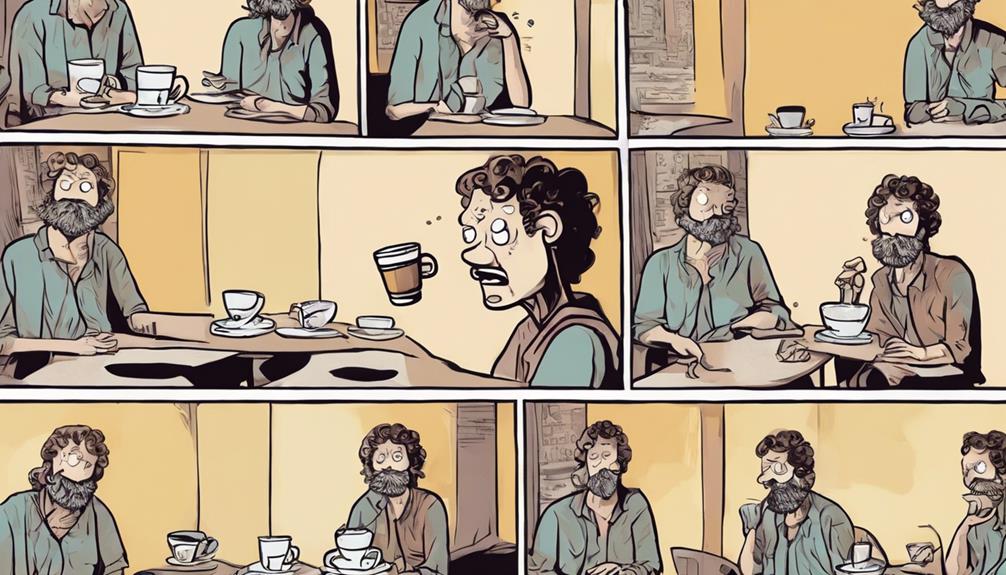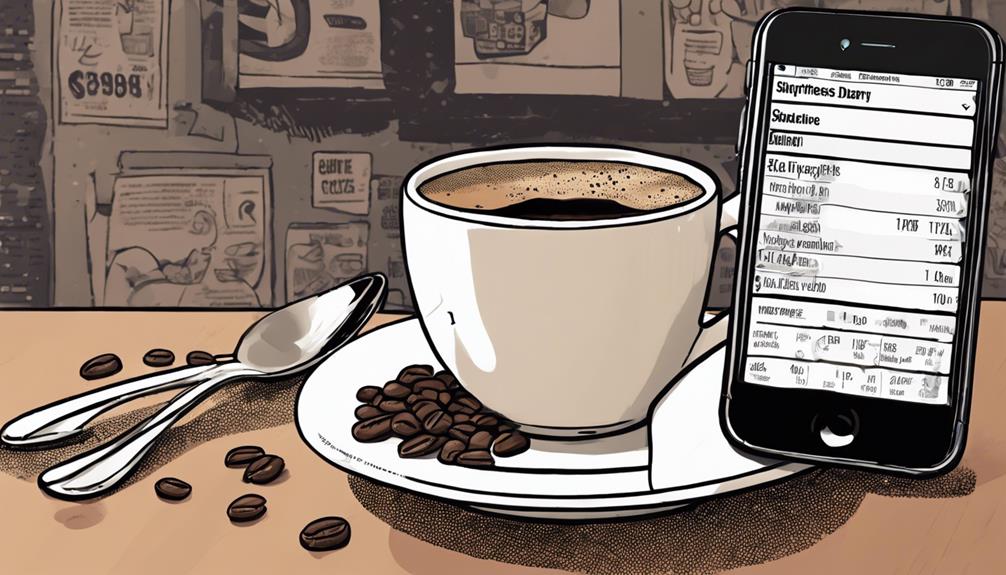
To host a coffee tasting at home, start by selecting beans from different regions like Ethiopia, Colombia, and Sumatra to explore unique flavors. Prepare a few brewing methods such as pour-over, French press, or AeroPress, paying attention to grind size and water temperature. Arrange small samples with labels and tasting notes, then savor each cup slowly, noting aroma and flavor differences. Keep exploring these steps to deepen your appreciation and discover new favorites.

Get coffee and tea gear delivered free with Prime
- Fast, free delivery on millions of items
- Prime Video, Amazon Music and more included
- Member-only deals all year
Key Takeaways
- Select a variety of coffee beans from different regions to showcase diverse flavor profiles.
- Prepare multiple brewing methods like pour-over, French press, or AeroPress for comparison.
- Set up a tasting station with labeled samples, aroma observations, and tasting notes for each coffee.
- Guide participants to sip slowly, focus on flavor, acidity, body, and note differences influenced by origin and brew.
- Encourage discussion and use sensory tools or flavor wheels to deepen appreciation and understanding.
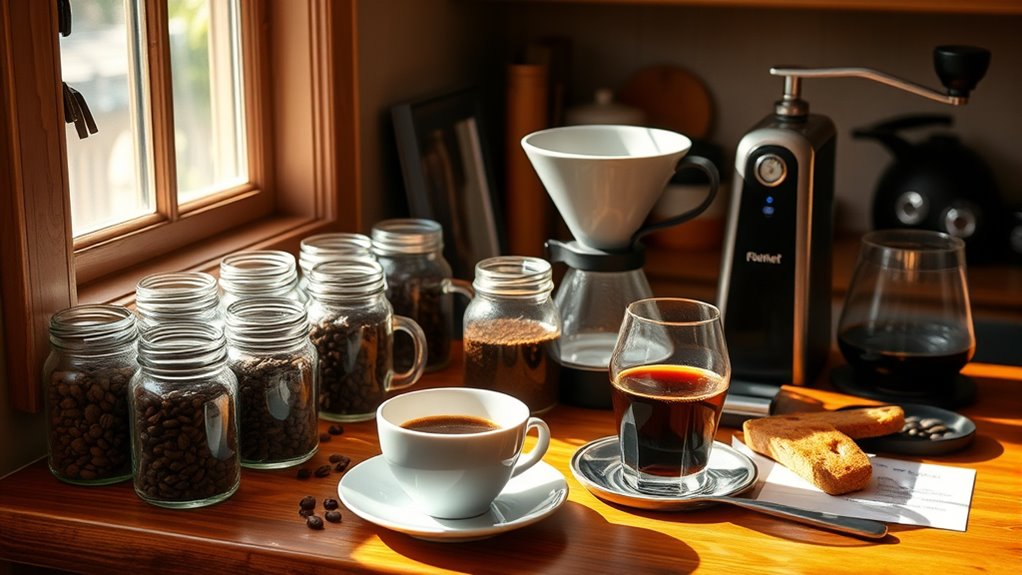
Hosting a coffee tasting at home is a fun and engaging way to explore different flavors and brewing methods without leaving your kitchen. It’s a chance to learn about coffee bean origins and how they influence taste, all while experimenting with various brewing techniques. The first step is selecting a range of coffee beans from different regions, such as Ethiopia, Colombia, and Sumatra. Each origin has unique characteristics, from fruity and floral notes to earthy and bold flavors. By tasting beans from different origins side by side, you’ll notice how geography, climate, and processing methods shape the coffee’s profile.
Once you’ve chosen your beans, plan your brewing methods. Different techniques—like pour-over, French press, AeroPress, or cold brew—bring out distinct qualities in each coffee. For example, pour-over emphasizes clarity and brightness, while French press results in a richer, fuller body. To keep it simple, you might select two or three brewing methods to compare. Prepare each method carefully, paying attention to grind size, water temperature, and brewing time, since these factors substantially affect flavor. Use a scale to measure coffee and water accurately, ensuring consistency across samples.
Set up your tasting station with small cups or glasses for each sample, along with tasting spoons or stirrers. Label each with details about the coffee’s origin and brewing method, so you can remember which is which. As you pour each brew, take time to observe the aroma, noting subtle differences in scent based on origin and brewing technique. When tasting, sip slowly and let the coffee roll over your palate. Pay attention to flavor notes, acidity, body, and aftertaste. You might find that a coffee from Ethiopia has vibrant floral and citrus notes when brewed pour-over, but a more muted profile when prepared with a French press.
Encourage your guests—or yourself—to discuss what you’re experiencing. Comparing different origins and brewing styles side by side helps you develop your palate and understand how subtle changes impact flavor. Consider providing small tasting notes or flavor wheels to guide your observations. A coffee tasting isn’t just about drinking; it’s about appreciating the complexity and craftsmanship behind each cup. With a little preparation and curiosity, you’ll turn a simple gathering into an immersive journey through the world of coffee. Exploring the science behind coffee flavor can deepen your understanding of how chemical compounds influence taste and aroma, making your tasting experience even more insightful. By exploring coffee bean origins and experimenting with brewing methods, you’ll discover new favorites and deepen your appreciation for this beloved beverage.
coffee tasting set with labeled samples
As an affiliate, we earn on qualifying purchases.
As an affiliate, we earn on qualifying purchases.
Frequently Asked Questions
What Equipment Is Essential for a Home Coffee Tasting?
You need basic equipment for a home coffee tasting, including a good coffee grinder for fresh grounds and a variety of brewing devices like a pour-over, French press, or AeroPress to explore different brewing techniques. Use a kettle for precise pouring, a scale to measure coffee and water, and aroma cups or small tasting glasses to evaluate flavors. These tools help you focus on tasting techniques and truly appreciate each coffee’s unique profile.
How Do I Select Diverse Coffee Beans for Tasting?
To select diverse coffee beans for tasting, focus on exploring different bean origin diversity and coffee flavor profiles. Choose beans from various regions like Ethiopia, Colombia, and Sumatra to capture a wide range of flavors. Look for single-origin options and consider different processing methods. This variety helps you experience the unique characteristics and nuances each region and profile offers, making your tasting more exciting and educational.
What’s the Ideal Number of Participants for Tasting?
You should aim for a group size of 4 to 8 participants for your coffee tasting. This range encourages active participant engagement, allowing everyone to share their impressions without feeling overwhelmed. Smaller groups foster more meaningful conversations and insights, while larger groups can dilute individual participation. Keep the group manageable to make certain everyone stays involved, enjoys the experience, and has a chance to taste and discuss each coffee thoroughly.
How Can I Create a Coffee Tasting Score Sheet?
To create a coffee tasting score sheet, start by listing key categories like coffee flavor profiles, aroma, body, acidity, and aftertaste. Include sections for notes on different brewing techniques used, as they influence flavor. Use a simple rating system, like 1-10, for each category, and leave space for personal comments. This helps you compare coffees and understand how brewing techniques affect the overall tasting experience.
Are There Any Recommended Food Pairings for Tasting?
Imagine your coffee as a symphony, and food pairings are the harmonious notes. You should try tasting snack suggestions like biscotti, dark chocolate, or citrus fruits—these enhance the coffee’s flavors without overpowering them. For food pairing ideas, opt for buttery cookies or cheese, which balance the bitterness and bring out richer notes. Keep it simple and let your taste buds dance in delight with each sip and bite.
Conclusion
Now that you’ve set the stage for your home coffee tasting, you’re turning your kitchen into a cozy café, a symphony of aromas and flavors dancing in the air. As each sip reveals a new note, you’ll find yourself savoring more than just coffee—you’ll savor the experience, the connection, and the simple joy of discovery. So brew boldly, taste deeply, and let your home become a warm haven where every cup tells a story.
Halloween Picks
halloween
As an affiliate, we earn on qualifying purchases.