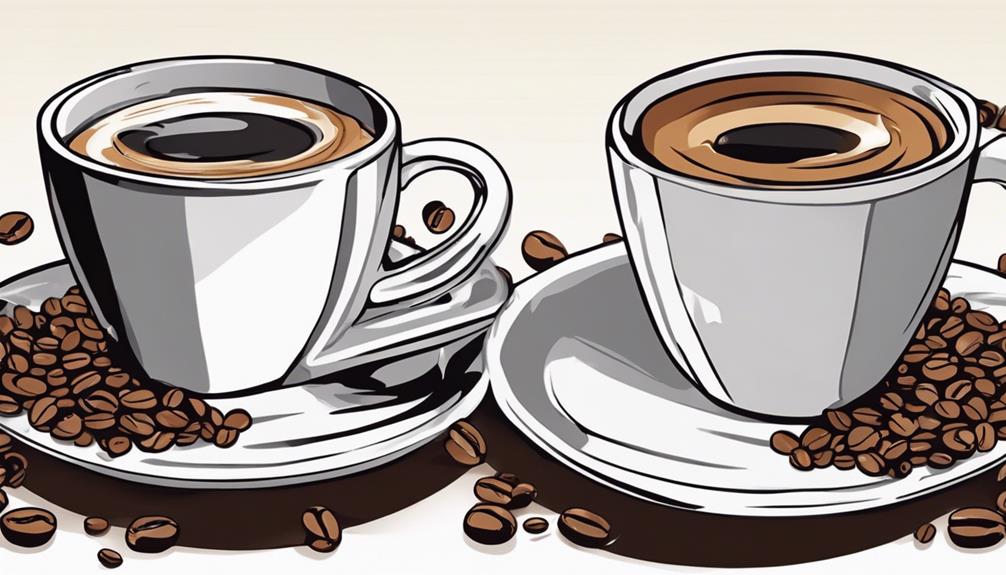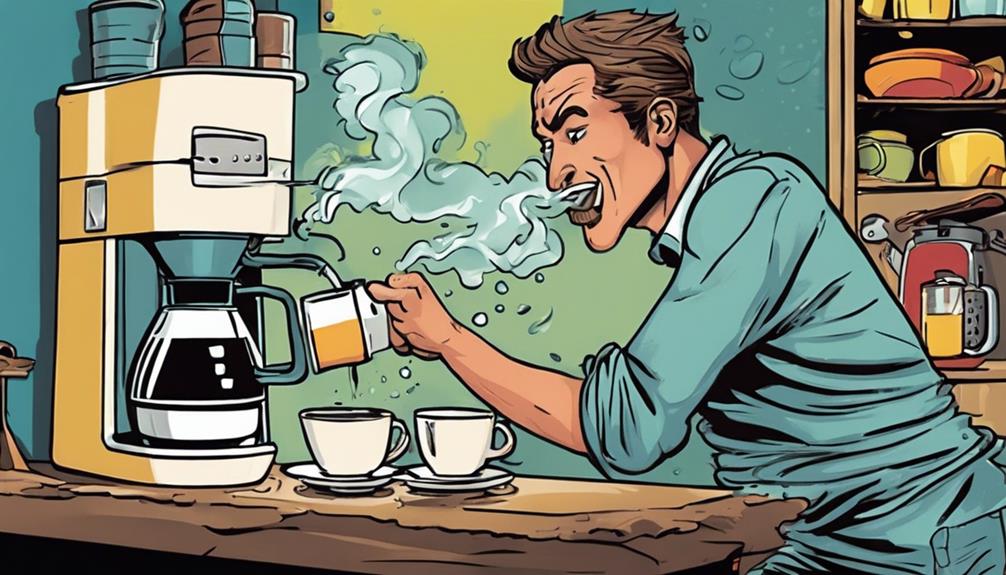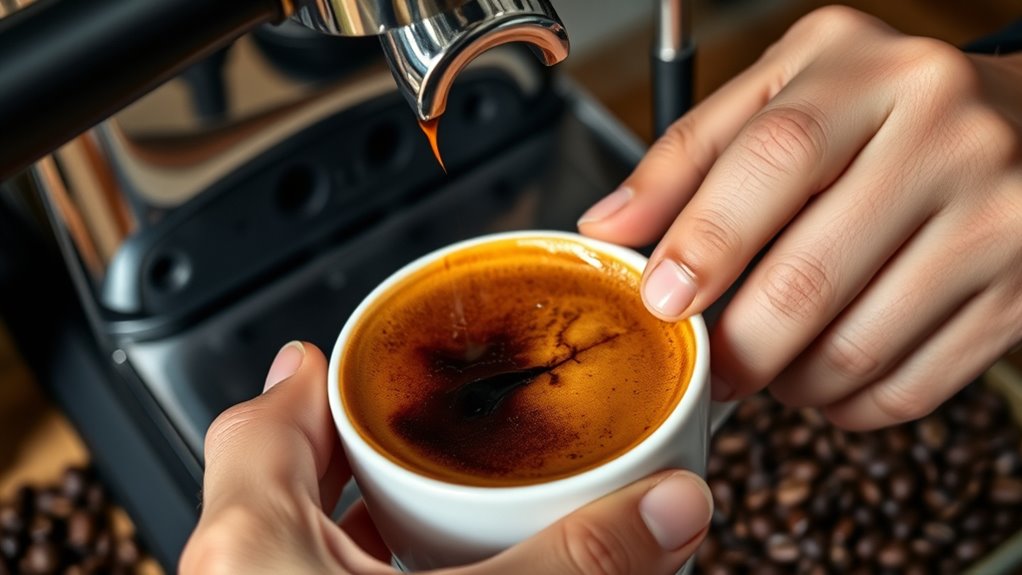
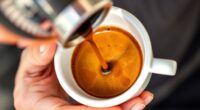
To fix bitter coffee, first check your grind size—too fine can cause over-extraction and bitterness, so try a coarser grind. Make sure your water isn’t too hot; aim for 195°F to 205°F to prevent burning the beans. Watch your brewing time—too long can extract bitter compounds, so keep it shorter. Use fresh, quality beans stored properly, and verify your equipment is clean. Keep these tips in mind to improve flavor—more solutions await if you keep exploring.
Key Takeaways
- Use a coarser grind to prevent over-extraction and bitterness.
- Brew with water between 195°F and 205°F to avoid overly hot extraction.
- Reduce brewing time to 2-3 minutes for methods like AeroPress or French press.
- Choose fresh, medium-roast beans stored properly to minimize stale, bitter flavors.
- Regularly clean your equipment to remove old oils and residues that can cause bitterness.
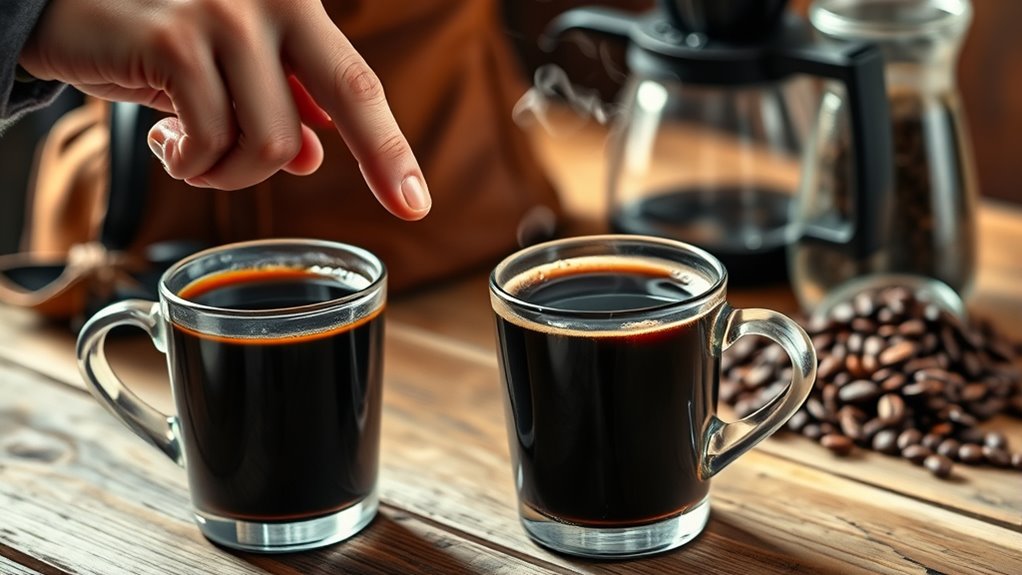
If your coffee tastes bitter and unpleasant, there are simple steps you can take to improve its flavor. One common cause of bitterness is the coffee grind. If your grind is too fine, it can lead to over-extraction during brewing, which releases bitter compounds. To fix this, try using a coarser grind suited to your brewing method. For example, if you’re making French press coffee, a coarse grind works best. If you’re using drip machines or pour-over, a medium grind is typically ideal. Experimenting with the grind size helps you find the perfect balance—too fine and you’ll get bitterness; too coarse and your coffee might taste weak. Along with adjusting the grind, water temperature plays a vital role. Water that’s too hot can extract bitter flavors from the coffee grounds, while water that’s too cool might under-extract, resulting in dull, flat coffee. The perfect water temperature for brewing coffee is usually between 195°F and 205°F. If your water is boiling vigorously, it’s likely too hot, so let it sit for a moment after boiling before pouring. Conversely, if your water isn’t hot enough, your coffee won’t fully extract, and you might miss out on essential flavors, leading to a dull taste. Maintaining the right water temperature ensures proper extraction, which extracts the desired flavors without pulling out the bitter compounds. Proper brewing techniques can also significantly influence the flavor outcome. Another factor that contributes to bitterness is the brewing time. Over-extracting the coffee by steeping it too long pulls out undesirable flavors, including bitterness. Keep an eye on your brewing duration—most methods have recommended times, such as 4-5 minutes for French press or 2-3 minutes for an AeroPress. Adjust your brewing time accordingly to avoid over-extraction. Additionally, consider the freshness of your coffee beans. Stale beans can produce a bitter, off-taste regardless of grind or temperature. Always use fresh, high-quality beans and store them properly in an airtight container away from light and heat. Over-roasting your beans can also increase bitterness, so opt for medium roasts if you prefer a smoother flavor profile. Lastly, confirm you’re using clean equipment, as old coffee oils and residues can contribute to bitterness. Regularly cleaning your coffee maker prevents buildup that can taint the flavor of your brew. Addressing these factors—adjusting your coffee grind, controlling water temperature, timing your brew correctly, choosing fresh beans, and keeping your equipment clean—can considerably reduce bitterness. With a little experimentation and attention to detail, you’ll be able to craft a smoother, more enjoyable cup every time.

Gevalia Special Reserve Guatemala Single Origin Medium Roast Coarse Ground Coffee (10 oz Bag)
One 10 oz bag of Gevalia Guatemalan Single Origin Special Reserve Coarse Ground Coffee
As an affiliate, we earn on qualifying purchases.
As an affiliate, we earn on qualifying purchases.
Frequently Asked Questions
Can the Type of Coffee Beans Affect Bitterness?
Yes, the type of coffee beans can affect bitterness. For example, beans from different origins, like African or South American, have distinct flavor profiles, which influence bitterness levels. Additionally, the roasting level plays a role; darker roasts tend to be more bitter due to the longer roasting process. By choosing beans from specific regions and adjusting the roasting level, you can control the bitterness in your coffee.
Does Water Temperature Impact Coffee Bitterness?
Yes, water temperature influences coffee bitterness. When brewing, if your water is too hot, it can extract bitter compounds from the beans, leading to a harsh taste. Using the right brewing temperature, typically between 195°F and 205°F, helps balance water chemistry and prevents over-extraction. Adjusting your water temperature guarantees you avoid bitterness and achieve a smoother, more flavorful cup.
How Does Grind Size Influence Bitterness?
Think of grind size as the dial on your coffee’s flavor, shaping its bitter notes. If your grind is uneven, with inconsistent particle size, it’s like a symphony out of tune—causing over-extraction and bitterness. Fine grinds increase surface area, releasing more bitter compounds, while coarse grinds can lead to under-extraction. Keep your grind consistency tight, and you’ll find a smoother, less bitter brew that sings with balanced flavors.
Are There Brewing Methods That Reduce Bitterness?
Yes, you can diminish bitterness by choosing brewing techniques like pour-over or Aeropress, which allow better control over extraction. Pairing these with the right flavorings, such as milk or sweeteners, can also mellow the coffee’s bitterness. Using high-quality brewing equipment guarantees consistent temperature and extraction, helping you achieve a smoother, more balanced flavor. Experiment with different methods and flavor pairings to find what best suits your taste.
Can Adding Milk or Sugar Lessen Bitterness?
Think of adding milk as a gentle hand guiding a stubborn horse—it can soften bitterness quickly. Milk addition coats the palate, reducing sharpness, while sugar effect sweetens the brew, balancing out the bitter notes. You’ll find that a splash of milk or a touch of sugar makes your coffee more inviting, much like a warm hug after a long day. Just don’t overdo it, or you might mask the coffee’s true flavor.
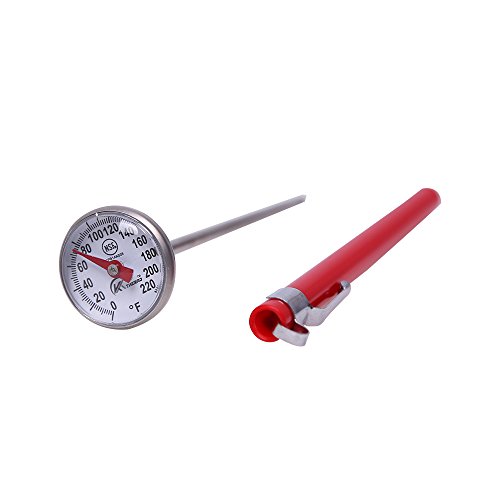
KT THERMO Instant Read 1-Inch Dial Thermometer,Best for The Coffee Drinks,Chocolate Milk Foam
DESIGN:Color partitioning is easier to observe.
As an affiliate, we earn on qualifying purchases.
As an affiliate, we earn on qualifying purchases.
Conclusion
Now that you know what causes bitter coffee, you’re better equipped to enjoy that perfect brew. Just remember, sometimes it’s the little tweaks that make all the difference. Don’t give up if it’s not perfect at first—practice makes perfect, after all. With patience and a few simple adjustments, you’ll turn that bitter cup into a smooth, flavorful delight. Keep at it, and soon you’ll be savoring coffee that truly hits the spot.

Veken French Press Coffee Maker 34oz, No Plastic Touching Cafe,Thickened Glass Stainless Steel Brewer, Cold Brew Cafetera Tea pot for Kitchen Travel Camping, Gifts, Decor, Bar Accessories, Dark Pewter
No Plastic Touching Food: Made with 304 stainless steel and food-grade silicone, our French press keeps all brewing…
As an affiliate, we earn on qualifying purchases.
As an affiliate, we earn on qualifying purchases.
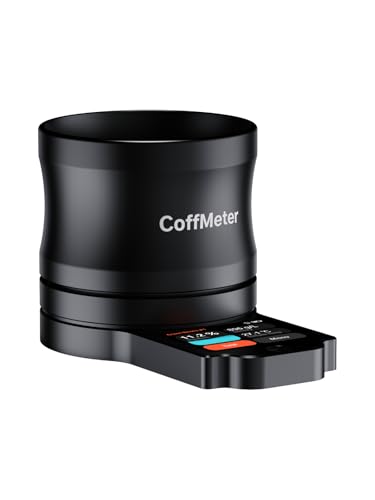
Coffee Moisture Tester for Moisture Content, Density, Sample Temperature, Patented Bean Distributor, HD Touchscreen, Portable, Real-Time Accuracy, for Professional Roasters & Coffee Enthusiasts
3-in-1: Designed for coffee professionals, the CoffMeter M1 coffee moisture meter integrates moisture content, density, and sample temperature…
As an affiliate, we earn on qualifying purchases.
As an affiliate, we earn on qualifying purchases.