
Healthy soil and a vibrant microbial community play a vital role in shaping the flavor of your coffee. When your soil is rich in organic amendments like compost and cover crops, it supports beneficial microorganisms that help plants absorb nutrients and resist disease. This leads to stronger, healthier coffee plants that produce beans with complex, aromatic flavors. By understanding how soil health influences quality, you’ll see how sustainable practices make all the difference in your coffee’s taste.

Get coffee and tea gear delivered free with Prime
- Fast, free delivery on millions of items
- Prime Video, Amazon Music and more included
- Member-only deals all year
Key Takeaways
- Healthy soil promotes a diverse root microbiome that enhances nutrient absorption and disease resistance in coffee plants.
- Organic amendments boost microbial activity, improving soil structure and fostering complex flavor development in coffee beans.
- Promoting soil microbial diversity leads to resilient ecosystems that support vibrant, aromatic coffee profiles.
- Stronger plant health from good soil management results in higher-quality beans with nuanced fruit, spice, and floral notes.
- Sustainable soil practices support microbial activity, ultimately driving the flavor complexity and overall quality of coffee.
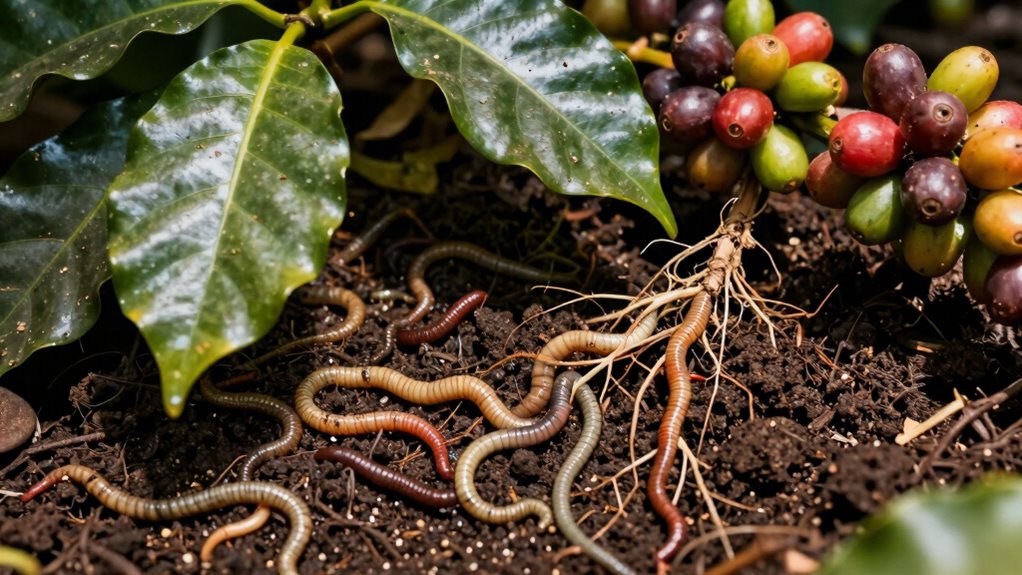
Have you ever wondered how the health of soil impacts the quality of your favorite coffee? It’s a subtle yet powerful connection that often goes unnoticed. The secret lies beneath the surface, in the complex web of life that exists within healthy soil. When you understand this, you realize that soil health isn’t just about adding fertilizer or avoiding pests — it’s about nurturing a vibrant ecosystem. Central to this ecosystem is the root microbiome, the community of microorganisms living around coffee plant roots. These tiny organisms play a crucial role in nutrient absorption, disease resistance, and overall plant vigor. When the root microbiome thrives, it helps your coffee plants access nutrients more efficiently and withstand environmental stresses, leading to stronger, healthier plants that produce better beans.
Healthy soil is also about what you add to it. Organic amendments, such as compost, cover crops, and manure, are essential tools for maintaining soil vitality. Unlike synthetic fertilizers, organic amendments enrich the soil naturally, fostering microbial diversity and activity. They provide a slow-release source of nutrients, support the growth of beneficial microbes, and improve soil structure. As these amendments break down, they create a thriving environment for the root microbiome, which in turn supports the plant’s health. Additionally, practices that promote soil microbial diversity help sustain a resilient soil ecosystem. Implementing soil management strategies that prioritize organic amendments can significantly enhance microbial activity and overall soil vitality. When you focus on organic amendments, you’re not just feeding the plants; you’re nurturing the entire soil ecosystem, which directly impacts the flavor profile of your coffee. A soil teeming with life results in coffee beans that are more aromatic, complex, and vibrant.
You might not see these processes happening, but their effects are evident in the final cup. When soil health is prioritized, coffee plants develop stronger roots, better disease resistance, and enhanced nutrient uptake, all of which contribute to superior bean quality. The flavors you savor—notes of fruit, spice, and floral qualities—are, in part, a reflection of the soil’s vitality. By maintaining a healthy root microbiome through organic amendments and mindful soil management, you’re supporting the natural processes that create the nuanced flavors coffee lovers seek. It’s a reminder that the quality of what ends up in your cup begins long before the beans are harvested — it starts underground, with the health of the soil and the life within it. Understanding soil health is essential for appreciating the full journey from soil to cup. Moreover, promoting microbial activity enhances the resilience of the soil ecosystem, which is vital for sustainable coffee farming. Recognizing the importance of soil ecosystem health can inspire more sustainable practices that benefit both the environment and coffee quality.
organic compost for coffee plants
As an affiliate, we earn on qualifying purchases.
As an affiliate, we earn on qualifying purchases.
Frequently Asked Questions
How Does Soil pH Impact Coffee Flavor?
You’ll notice that soil pH directly impacts coffee flavor by influencing soil microbial activity and nutrient absorption efficiency. When pH levels are ideal, microbes thrive, breaking down organic matter and releasing essential nutrients, which your coffee plants absorb better. This enhanced nutrient uptake leads to healthier plants and richer beans, ultimately improving flavor. If pH is too acidic or alkaline, microbial activity diminishes, reducing nutrient absorption and potentially dulling your coffee’s taste profile.
What Are Natural Ways to Improve Soil Fertility?
You can naturally improve soil fertility by using cover cropping and organic amendments. Plant cover crops like legumes, which fix nitrogen and enrich the soil naturally. Add organic amendments such as compost, manure, or biochar to boost nutrient levels and improve soil structure. These practices enhance soil health, support beneficial microorganisms, and create a sustainable environment for coffee plants to thrive, ultimately boosting flavor quality.
How Often Should Soil Tests Be Conducted?
You should conduct soil tests at least once every one to two years to keep your fertility management on point. Imagine soil testing as a health check-up for your farm’s soil—spotting deficiencies before they affect your coffee quality. Regular testing helps you understand nutrient levels and adjust practices accordingly, ensuring ideal soil health. This proactive approach keeps your coffee thriving and flavor-rich, ultimately improving crop quality and sustainability.
Can Soil Health Affect Coffee Bean Size?
Yes, soil health can affect coffee bean size. When you maintain a good soil nutrient balance and promote microbial activity, the plants receive essential nutrients more effectively. This boosts their growth, leading to larger beans. Healthy soil fosters strong root systems and better nutrient uptake, directly influencing bean size. So, by focusing on soil health, you’re supporting ideal coffee development and improving your crop’s overall quality.
What Role Do Earthworms Play in Soil Health?
Earthworm activity plays a crucial role in maintaining soil health by breaking down organic matter, which enriches the soil. As they burrow, earthworms aerate the soil, allowing roots to grow more effectively and water to infiltrate better. Their movement helps distribute nutrients evenly, boosting microbial activity. In coffee farms, healthy earthworm populations lead to more vibrant, flavorful beans by fostering a robust soil ecosystem.
Conclusion
Your care for soil health is like tending a silent, unseen river beneath your feet—its currents shaping the flavor of every coffee bean. When you nurture this hidden world, you’re planting the roots of richness and resilience that bloom in every cup. Remember, the significance beneath the surface is the true essence of exceptional coffee. By safeguarding your soil, you’re cultivating more than just beans—you’re brewing a legacy of flavor that runs deep.
Halloween Picks
halloween
As an affiliate, we earn on qualifying purchases.