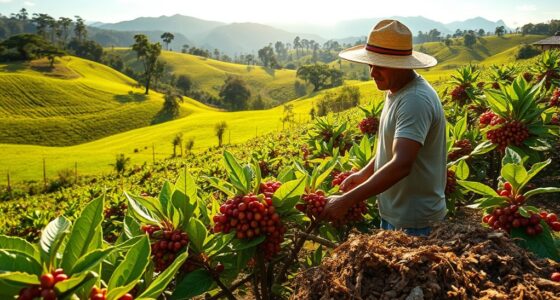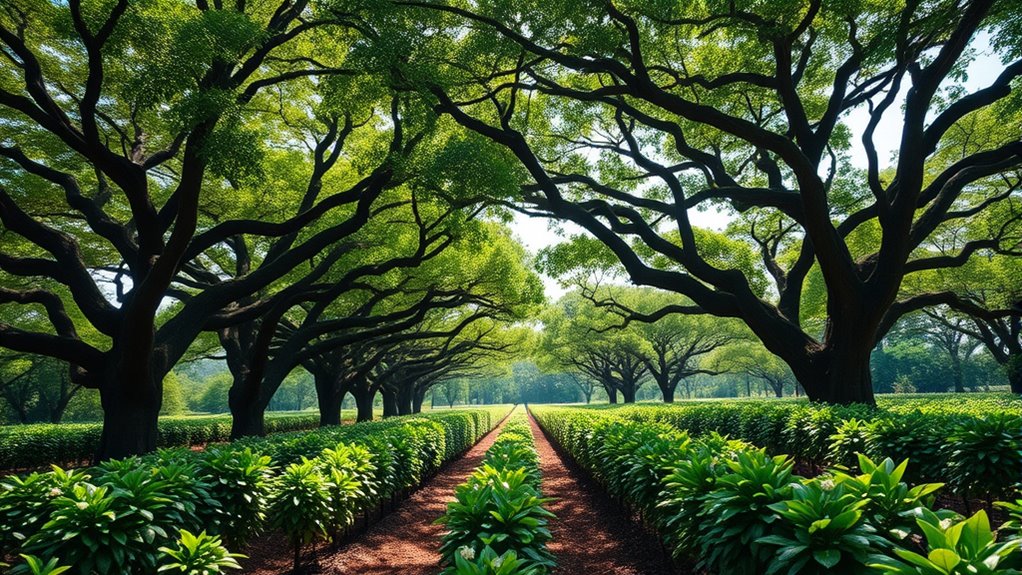

Shade-grown coffee means cultivating coffee under the canopy of native trees, creating a more sustainable and eco-friendly farm environment. This method supports biodiversity, helps conserve wildlife, and reduces the need for chemicals and irrigation. The trees also improve soil health and capture carbon, which benefits the climate. By choosing shade-grown coffee, you promote healthier ecosystems and long-term agricultural practices. Continue exploring to discover how this approach impacts the planet and your cup of coffee.
Key Takeaways
- Shade-grown coffee is cultivated beneath native tree canopies, promoting ecological health and biodiversity.
- It conserves natural landscapes, reduces chemical use, and supports sustainable farming practices.
- Shade trees provide habitat for pollinators and birds, enhancing ecosystem resilience and crop yields.
- This method improves soil health through natural nitrogen fixation and reduces soil erosion.
- Shade-grown coffee benefits the environment, wildlife, and farmer livelihoods, contributing to climate change mitigation.
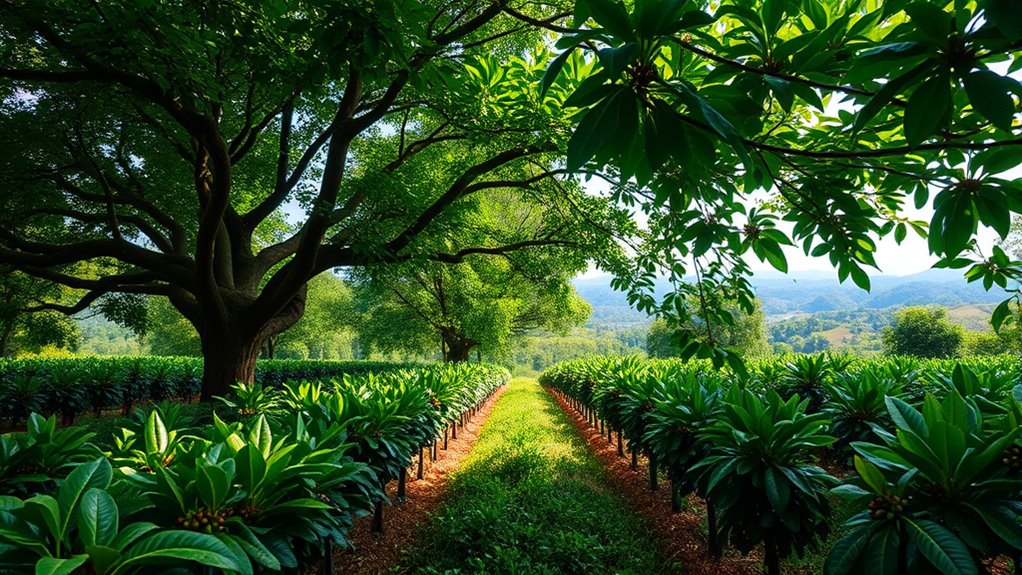
Shade-grown coffee is a sustainable farming method that offers numerous benefits for the environment and local communities. When you choose shade-grown coffee, you’re supporting agricultural practices that prioritize ecological health and long-term viability. Unlike sun-grown coffee, which is often cultivated in open, cleared land, shade-grown coffee is grown beneath the canopy of native trees. This approach not only helps conserve the natural landscape but also promotes sustainable farming by reducing the need for chemical inputs and irrigation. The trees provide shade that moderates temperature fluctuations and retains soil moisture, making the land more resilient and less prone to erosion. By maintaining natural habitats, shade-grown coffee farms contribute directly to biodiversity preservation, supporting a wide variety of plants, insects, birds, and other wildlife that depend on forested environments.
As someone interested in environmental impact, you’ll appreciate how shade-grown coffee farms act as mini-ecosystems. These farms serve as refuges for pollinators like bees and butterflies, which are essential for healthy crop production and maintaining the balance of local ecosystems. Additionally, the trees attract migratory birds, offering them shelter and food during their long journeys. This interconnected web of life benefits not only the environment but also the farmers, who often find that healthy biodiversity translates into more resilient crops and better yields over time. The shade trees also serve as natural pest control agents, reducing the need for chemical pesticides that can harm the environment and diminish biodiversity.
Choosing shade-grown coffee supports sustainable farming by fostering soil health and reducing the reliance on synthetic chemicals. The trees help fix nitrogen in the soil, making nutrients more available to coffee plants and decreasing the need for artificial fertilizers. This natural nutrient cycling preserves soil fertility and prevents degradation, which is *essential* for the long-term sustainability of coffee farming. By protecting biodiversity, shade-grown coffee farms also bolster ecosystem services like water filtration and carbon sequestration, which are *imperative* for combating climate change and ensuring clean water sources for nearby communities.
In short, when you opt for shade-grown coffee, you’re making a conscious decision to support farming methods that prioritize environmental health and biodiversity preservation. You’re helping to maintain ecosystems, protect wildlife, and promote agricultural sustainability. This choice contributes to a healthier planet and supports the livelihoods of farmers who practice eco-friendly farming methods. Your decision influences the coffee industry to adopt more sustainable practices, ensuring that future generations can enjoy their favorite brew without compromising the planet’s delicate balance.
Frequently Asked Questions
How Does Shade-Grown Coffee Impact Local Bird Populations?
Shade-grown coffee positively impacts local bird populations by preserving their habitat and supporting diverse bird species. You help maintain healthy bird habitats, which in turn stabilize migration patterns. By choosing shade-grown coffee, you promote a balanced ecosystem, providing birds with shelter, food, and nesting sites. This sustainable practice guarantees that bird populations thrive, benefiting the environment and maintaining ecological harmony in coffee-growing regions.
Are Shade-Grown Coffees More Expensive Than Sun-Grown Varieties?
Like a knight’s armor, shade-grown coffee often comes with a price premium. You’ll find it’s usually more expensive than sun-grown varieties because of higher production costs, including careful cultivation and maintaining biodiversity. While it might seem costly now, you’re investing in sustainable farming practices that protect ecosystems and support local communities. So, yes, shade-grown coffees tend to be pricier, but your purchase helps preserve the environment and ensures better quality.
Can Shade-Grown Coffee Be Certified as Sustainable or Organic?
Yes, shade-grown coffee can be certified as sustainable or organic. You’ll need to go through certification processes that adhere to organic standards and sustainable practices, ensuring the coffee is grown without harmful chemicals and promotes environmental health. Certification bodies review farming methods, conservation efforts, and labor practices. When certified, you can confidently buy shade-grown coffee that supports eco-friendly farming and meets organic and sustainability criteria.
What Are the Main Challenges in Cultivating Shade-Grown Coffee?
You face the challenge of balancing pest management and crop yield when cultivating shade-grown coffee. Like a tightrope walker, you must control pests without harming the delicate ecosystem beneath the canopy. Weather variability and limited sunlight can reduce yields, making it hard to maintain profitability. Additionally, managing pests organically demands extra effort and knowledge, testing your patience and skill in preserving the shade-grown coffee’s environmental benefits while ensuring a sustainable harvest.
How Does Shade-Grown Coffee Influence Soil Health and Erosion?
Shade-grown coffee improves soil health by maintaining soil fertility through organic matter from the canopy and roots. It also helps control erosion by stabilizing the soil with plant roots and reducing runoff. As you cultivate shade-grown coffee, you support a balanced ecosystem that prevents soil degradation and erosion, ensuring sustainable land use. This method promotes healthier soil, preserves biodiversity, and enhances long-term coffee production.
Conclusion
By choosing shade-grown coffee, you’re planting seeds of change that protect essential ecosystems and support local farmers. It’s like giving nature a gentle hug, ensuring coffee lovers and wildlife thrive side by side. Every sip becomes a small act of making the world a better place, turning your morning routine into a meaningful gesture. So next time, pick shade-grown—you’re not just drinking coffee; you’re nurturing the planet’s heart.