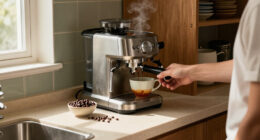
To cut water waste in your home coffee bar, use the right filter size and measure water carefully. Opt for reusable filters to reduce waste, and follow your machine’s guidelines to avoid overfilling. Regularly descale your coffee maker and consider appliances with water-saving features. Be mindful of small habits like collecting excess water for other tasks. Keep these tips in mind, and you’ll discover more ways to conserve water while enjoying your coffee.

Get coffee and tea gear delivered free with Prime
- Fast, free delivery on millions of items
- Prime Video, Amazon Music and more included
- Member-only deals all year
Key Takeaways
- Use the correct filter size and reusable filters to minimize excess water and waste.
- Measure water carefully and avoid overfilling the coffee machine.
- Regularly descale and maintain appliances for optimal efficiency and water conservation.
- Collect and reuse excess water from brewing for plants or cleaning.
- Invest in water-saving features and adopt mindful brewing habits to reduce overall water use.

Creating a home coffee bar is a great way to enjoy your favorite brews, but it can also lead to unnecessary water waste if you’re not careful. One of the main factors contributing to water waste is inefficient coffee filtration. When you’re brewing coffee, using the right amount of water and a proper filtration method helps guarantee minimal waste. Overfilling the coffee maker or using overly large filters can lead to excess water that isn’t fully absorbed by the coffee grounds, which then gets wasted down the drain. To combat this, measure your water carefully and choose the appropriate filter size for your machine. Reusable filters are also a smart option—they reduce waste and improve water efficiency because they don’t need to be replaced as often. When you pay attention to coffee filtration, you’re not only improving the quality of your brew but also practicing water conservation by avoiding excess water use.
Another way to cut down on water waste is by optimizing your brewing process. Many home coffee enthusiasts tend to run their machines for longer periods or use more water than necessary, especially if they’re experimenting with different recipes. Stick to the manufacturer’s guidelines and only use the amount of water needed for a single brew. If your machine has a water reserve, make sure to fill only what you need for each session instead of topping it off unnecessarily. Doing so helps prevent overfilling, which can lead to water being drawn and wasted without purpose. Additionally, regularly descaling your coffee machine ensures that it operates efficiently, using less water and energy with each brew. A well-maintained machine not only conserves water but also produces better-tasting coffee. Implementing water-saving features in your coffee maker can further enhance your water conservation efforts, helping reduce waste even more. Using efficient brewing methods can also make a notable difference in lowering water consumption over time. Remember that proper maintenance and water-efficient appliances are essential for maximizing your conservation efforts and reducing waste in your home coffee setup. Staying informed about water conservation techniques can help you adopt new habits that further reduce water use during your brewing routine.
You can also adopt simple habits to promote water conservation. For instance, collect excess water that drips or runs during brewing and reuse it for watering plants or cleaning. This small step avoids unnecessary waste and makes good use of water that would otherwise go down the drain. Moreover, consider investing in a more efficient coffee maker designed with water-saving features, such as automatic shut-off or programmable brewing that limits water use. Being mindful of your water habits, from measuring to maintenance, makes a significant difference in reducing waste. Remember, every drop counts, and small adjustments in how you handle coffee filtration and water use can lead to substantial savings over time. By staying conscious of your water consumption, you’ll enjoy your home coffee bar while doing your part to protect precious water resources.
As an affiliate, we earn on qualifying purchases.
Frequently Asked Questions
Can Water-Saving Tips Improve Coffee Quality?
Yes, water-saving tips can improve your coffee flavor and brewing consistency. When you use just the right amount of water, you prevent over-dilution, which keeps your coffee rich and flavorful. Additionally, conserving water often encourages you to pay closer attention to your brewing process, leading to more consistent results. By focusing on efficient water use, you’ll enjoy better-tasting coffee every time without sacrificing quality.
Are Eco-Friendly Coffee Machines More Water-Efficient?
Yes, eco-friendly brewing methods often feature water-efficient appliances that help you save water without sacrificing coffee quality. When you choose water-efficient appliances, you’re making a conscious effort to reduce waste and support sustainability. These appliances are designed to use less water while still delivering great-tasting coffee, making your home coffee bar more eco-friendly. By selecting eco-friendly brewing options, you contribute to conserving water and minimizing your environmental impact.
How Often Should I Descale My Coffee Equipment?
You should descale your coffee equipment every 1-3 months, depending on your water hardness. Did you know mineral buildup can reduce your machine’s efficiency by up to 30%? Regular descaling prevents this, ensuring your coffee tastes great and your machine lasts longer. Check your manufacturer’s recommendations and adjust the frequency if you notice slower brewing or strange tastes. Consistent descaling keeps your coffee bar eco-friendly and water-efficient.
Does Water Temperature Affect Waste Reduction?
Yes, water temperature affects waste reduction. Maintaining temperature consistency guarantees your coffee brews perfectly, preventing overuse of water and energy. Proper heating efficiency means your equipment heats water just right, avoiding excess runoff or reboiling. When your machine heats efficiently and keeps a steady temperature, you minimize waste by reducing the need for repeated brewing or adjustments, making your coffee process more sustainable and economical.
What Are the Best Water Conservation Practices for Espresso Machines?
To conserve water with your espresso machine, always use reusable filters to minimize waste and avoid unnecessary rinsing. When making drip brewing, only run the machine when you need coffee, and consider collecting excess water for other uses like watering plants. Regularly maintain your equipment to guarantee it operates efficiently, preventing leaks or overuse. These simple steps help reduce water waste while still enjoying quality coffee at home.
Conclusion
By making simple changes, you can turn your home coffee bar into a water-saving powerhouse. Every drop saved is like protecting an entire ocean of resources. Imagine the impact you’ll make by just being mindful—reducing waste not only saves water but also helps preserve our planet for future generations. So, take charge today, and let your coffee routine become a beacon of sustainability. Your small efforts can create waves of change that ripple far beyond your kitchen.
Halloween Picks
halloween
As an affiliate, we earn on qualifying purchases.