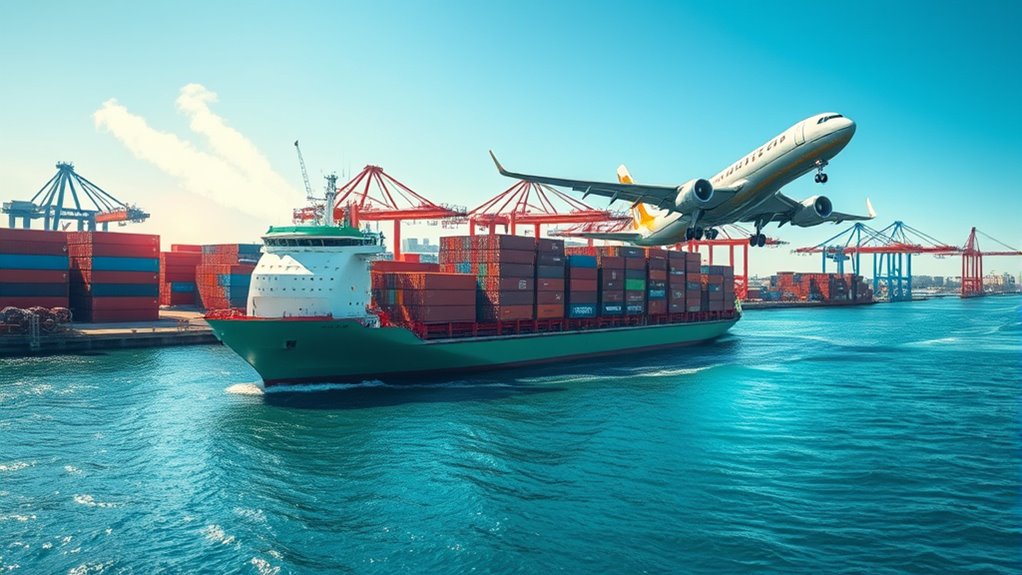

Green shipping aims to reduce emissions from maritime transport, making it much cleaner than traditional sea and air freight. While ships still emit pollutants, new zero emission vessels powered by hydrogen or batteries are cutting down greenhouse gases profoundly. In comparison, air freight produces higher emissions per ton-mile due to fuel-intensive engines. If you keep exploring, you’ll discover how innovations and policies are shaping a more sustainable future for global trade and our environment.
Key Takeaways
- Sea freight generally produces lower greenhouse gas emissions per ton-mile than air freight due to fuel efficiency.
- Air freight emits significantly more CO2 and other pollutants per unit of cargo compared to maritime shipping.
- Zero emission ships and alternative fuels are being developed to further reduce sea freight’s environmental impact.
- Ports and infrastructure improvements are crucial for supporting greener sea shipping; air freight is less affected by such infrastructure.
- Overall, shifting cargo from air to sea can substantially lower transportation-related emissions and environmental footprint.

Have you ever wondered how the shipping industry is working to reduce its environmental impact? The push toward greener shipping solutions has gained substantial momentum, especially with the development of zero emission vessels and the shift to alternative fuels. These innovations aim to cut down the massive emissions traditionally produced by ships, which are a major source of global greenhouse gases. Zero emission vessels are designed to operate without emitting pollutants, relying on groundbreaking technology like hydrogen fuel cells or electric batteries. These vessels are still in the early stages of deployment, but their potential to revolutionize maritime transport is huge. By replacing conventional diesel engines with zero emission options, the industry can drastically reduce its carbon footprint and improve air quality in port cities and maritime regions.
Switching to alternative fuels is another critical part of this changeover. Instead of heavy fuel oils, ships are now exploring options such as liquefied natural gas (LNG), biofuels, and even synthetic fuels. These fuels produce fewer emissions and are often more sustainable, helping shipping companies meet stricter international regulations. The use of alternative fuels isn’t just about reducing greenhouse gases; it also tackles other pollutants like sulfur oxides (SOx) and nitrogen oxides (NOx), which cause acid rain and contribute to respiratory problems. As these fuels become more accessible and affordable, their adoption will likely accelerate, making shipping cleaner and more sustainable.
Switching to alternative fuels like LNG and biofuels reduces emissions and pollution, making shipping more sustainable and eco-friendly.
However, switching to zero emission vessels and alternative fuels isn’t without challenges. The infrastructure required to support these new technologies is still developing, and the costs can be high. Ports need to invest in new fueling stations and charging facilities, and ships must be retrofitted or built anew to accommodate these systems. Despite these hurdles, industry leaders see the long-term benefits. Governments and organizations are offering incentives and setting ambitious targets to encourage investments in green shipping. You can expect to see more zero emission vessels entering service in the coming years, powered by a combination of innovative propulsion systems and sustainable fuels.
Ultimately, your concern about environmental impact is driving change in this sector. As the industry adopts these greener technologies, the emissions from sea freight will decrease considerably compared to traditional shipping methods. These advancements will help balance global trade needs with environmental responsibility, ensuring that maritime transport becomes more sustainable and less harmful to our planet. The move toward zero emission vessels and alternative fuels highlights the industry’s commitment to cleaner skies and healthier oceans, making it clear that greener shipping isn’t just a dream—it’s becoming a reality.

Fresh Roast SR800 Coffee Roaster – Roast Coffee at Home – Variable Heat and Fan Control – Digital Display – Roasts 6–8 oz (170–226g) Per Batch – Easy to Use – Fast Roast Time
Fresh and flavorfull coffee guaranteed - Why roast coffee at home? Commercially roasted whole bean coffee starts to...
As an affiliate, we earn on qualifying purchases.
Frequently Asked Questions
How Does Green Shipping Impact Global Supply Chain Costs?
Green shipping can lower your supply chain costs by reducing emissions through measures like port electrification, which cuts fuel expenses. Carbon offsetting might add upfront costs but helps meet sustainability goals, potentially avoiding penalties. These strategies can lead to long-term savings, improve your company’s reputation, and guarantee compliance with future regulations. Embracing green shipping practices not only benefits the environment but also makes your supply chain more resilient and cost-effective.
What Are Emerging Technologies Reducing Emissions in Maritime Transport?
You’re seeing emerging technologies like Zero Emission fuels and Smart Navigation transform maritime transport. Zero Emission options, such as hydrogen and ammonia, drastically cut greenhouse gases, while Smart Navigation systems optimize routes, reducing fuel consumption. These innovations work together to lower emissions, making shipping more sustainable. As a result, you’ll benefit from cleaner shipping practices that support environmental goals without compromising efficiency or cost.
How Do Regulations Vary Between Countries for Eco-Friendly Shipping Practices?
You’ll find that regulations for eco-friendly shipping practices vary widely between countries, making international standards essential for consistency. Some nations enforce strict emissions limits and require ships to use cleaner fuels, while others have more lenient rules. You need to guarantee regulatory compliance by staying updated on these differences, as adherence to international standards helps reduce emissions and promotes sustainable maritime transport. This way, you can operate efficiently across borders while respecting environmental guidelines.
What Role Do Alternative Fuels Play in Reducing Shipping Emissions?
You’re on the right track by exploring alternative fuels, which play an essential role in emission reduction. Switching to options like LNG, biofuels, or hydrogen can markedly cut greenhouse gases from shipping. While it’s not a silver bullet, embracing these fuels helps shipping companies stay ahead of regulations and reduce their carbon footprint. It’s a step in the right direction, and every effort counts toward a greener future.
How Can Consumers Influence Greener Shipping Choices?
You can influence greener shipping choices by staying informed about companies’ sustainability efforts through consumer awareness and demanding brand transparency. Support brands that prioritize eco-friendly practices, such as using alternative fuels or optimizing logistics for reduced emissions. Your purchasing decisions send a clear message, encouraging companies to adopt cleaner shipping methods. By choosing greener options, you help reduce the environmental impact of sea and air freight, fostering a more sustainable shipping industry.

LUEUR Electric Coffee Bean Roaster Machine for Home Use, 1500W Hot Air Coffee Roaster with Adjustable Timer, Variable Heat & Air Fan Settings, Chaff Collection Basket, 100g Capacity
Powerful 1500W Hot Air System: Roast your beans evenly and efficiently with 1500W of hot-air circulation. The advanced...
As an affiliate, we earn on qualifying purchases.
Conclusion
When choosing between sea and air freight, remember that shipping by sea produces about 10 times less CO₂ per ton-mile than air freight. That means you can markedly reduce your carbon footprint by opting for ships whenever time allows. If you’re aiming for greener logistics, understanding these differences helps you make smarter, more sustainable choices. Every small step counts toward protecting our planet—so next time, consider the impact of your shipping methods.

Electric Coffee Bean Roaster Machine for Home Use – 1500W Air Coffee Roaster with Adjustable Temperature & Timer, Built-In Chaff Collector & Air Circulation 100g Capacity Electric Coffee Roaster
Professional Home Coffee Roaster: Create café-quality coffee at home with this electric air coffee roaster. The 1500W heating...
As an affiliate, we earn on qualifying purchases.

GIVEROO 500g Coffee Bean Roaster Household Coffee Roasters Machine with Timer Electric Coffee Beans Roaster 0-240℃ Non-Stick for Cafe Shop Home Use. 110V
As an affiliate, we earn on qualifying purchases.