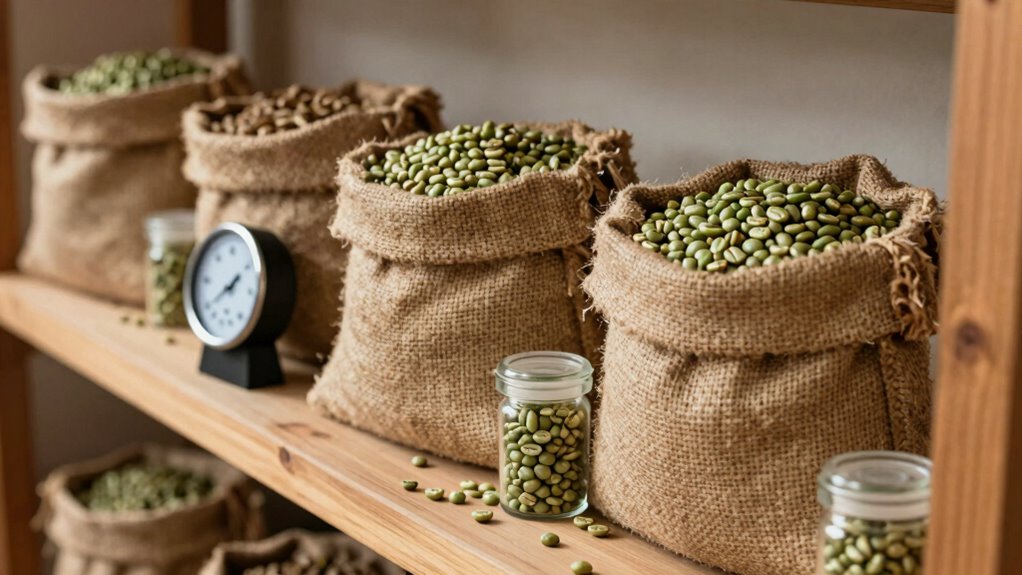

To keep your green coffee beans fresh, store them in a cool, dry, and dark place with humidity between 50-60%, using airtight containers with moisture control packs. Avoid odors by sealing beans in opaque containers away from strong smells like spices or cleaning products. Remember, green beans can last up to a year, but their quality declines over time—proper storage techniques can help you maximize freshness and flavor. Continue exploring to discover more tips for perfect storage.
Key Takeaways
- Store green coffee beans in a cool, dry, airtight container to control humidity and prevent mold growth.
- Maintain humidity levels between 50-60% to preserve freshness and avoid premature aging.
- Keep beans away from strong odors like spices or cleaning agents by sealing them in opaque, odor-proof containers.
- Regularly monitor beans for mold, discoloration, or off-odor to ensure optimal quality and freshness.
- Purchase and store beans in small quantities to maximize shelf life and maintain flavor integrity over time.
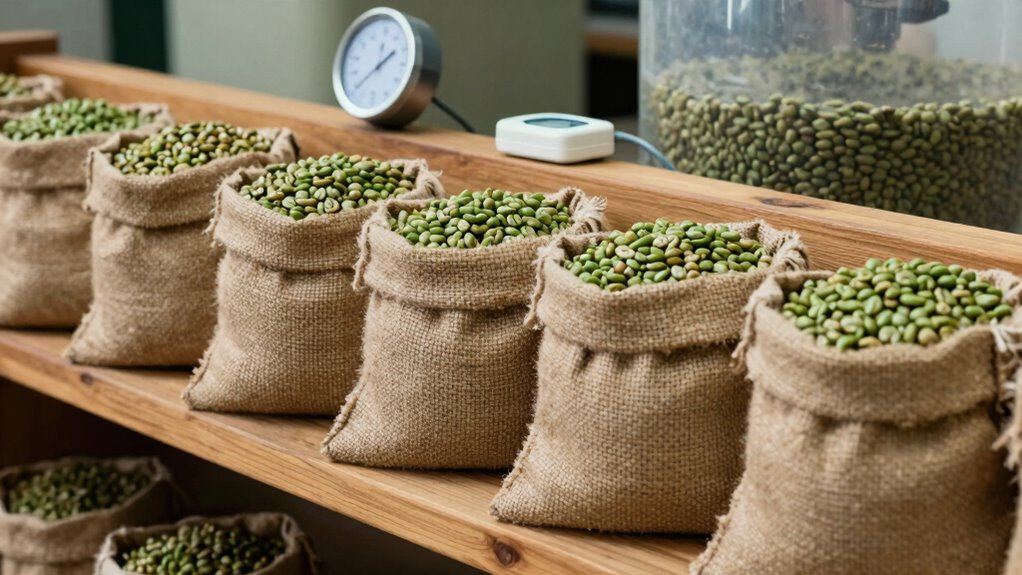
Properly storing green coffee beans is essential to maintain their freshness and quality over time. When you understand how storage impacts the roasting process, you’ll ensure your beans stay vibrant and flavorful from the first roast to the last. Green beans are naturally more stable than roasted coffee, but they are still sensitive to external factors that can compromise their bean freshness. The key is to keep them in conditions that prevent deterioration and preserve their natural qualities.
Proper storage preserves green coffee beans’ freshness and flavor over time.
Your primary concern should be controlling humidity. Excess moisture can cause mold growth or premature aging of the beans, which ultimately affects the roasting process. If beans absorb too much moisture, they become difficult to roast evenly, leading to inconsistent flavors and a dull profile. To prevent this, store your green coffee beans in a cool, dry environment with humidity levels ideally between 50-60%. Using airtight containers with moisture control packs can help maintain a stable environment, especially if you live in a humid climate. Avoid places like kitchens or near windows where temperature fluctuations and humidity spikes are common, as these can accelerate the loss of bean freshness.
Odors are another critical factor. Coffee beans are porous and easily absorb strong smells from their surroundings. If stored near spices, cleaning agents, or other aromatic substances, your green beans can pick up unwanted odors. This absorption can alter the flavor profile during roasting, resulting in a less desirable cup. To safeguard bean freshness, choose storage areas that are free from strong odors and keep your beans in sealed, opaque containers that block light and air exposure. This not only preserves their intrinsic aroma but also prevents flavor contamination that could compromise your roasting process and the quality of your final brew.
Shelf life is an important consideration because green coffee beans don’t last indefinitely. While they can remain viable for up to a year or more, their quality gradually declines over time. As beans age, their moisture content shifts, and their natural oils oxidize, making them harder to roast evenly and diminishing their flavor potential. To maximize shelf life, always purchase in small quantities that you can use within a few months, and store them properly. Regularly check your stored beans for signs of mold, off-odor, or discoloration, which indicate that it’s time to replace them. Additionally, proper storage practices can significantly extend the freshness and quality of your beans, ensuring a better roasting experience.
Frequently Asked Questions
What Are the Best Containers for Storing Green Coffee Beans?
You should store green coffee beans in airtight containers to keep out moisture and odors, preserving their freshness. Breathable packaging can help prevent mold by allowing some airflow, but for longer storage, airtight options are best. Choose containers made of non-reactive materials like glass or stainless steel. Keep the beans in a cool, dark place away from direct sunlight, humidity, and strong odors to maintain peak quality and shelf life.
How Does Temperature Affect Green Coffee Bean Preservation?
Think of green coffee beans as delicate dancers, sensitive to temperature shifts. You need to keep them steady; temperature fluctuations can accelerate aging and spoilage. Too high, and they risk mold and flavor loss; too low, and they may become brittle. Proper temperature control is essential, helping maintain freshness, aroma, and shelf life. Keep storage consistent and cool to preserve their quality—your beans will thank you.
Can Green Coffee Beans Be Frozen Without Quality Loss?
Yes, you can freeze green coffee beans without quality loss. Freezing benefits include slowing down the aging process and preserving freshness, especially if you won’t use the beans soon. To maintain quality, store them in an airtight, moisture-proof container before freezing. When you’re ready to use them, thaw slowly at room temperature. Proper freezing helps keep your green coffee beans fresh and flavorful over time.
How Long Do Green Coffee Beans Stay Fresh in Ideal Storage?
In ideal storage conditions, green coffee beans stay fresh for up to 6 to 12 months. You should keep them in a cool, dark, and dry place to slow bean aging and prevent quality loss. Proper storage minimizes exposure to humidity, odors, and light, which can accelerate deterioration. Regularly check your beans and use airtight containers to maximize freshness, ensuring peak flavor when you roast them later.
What Are Common Signs of Spoiled Green Coffee Beans?
If your green coffee beans are spoiled, you’ll notice mold growth or an off odor. Mold appears as fuzzy spots, and the beans may feel damp or sticky. An unpleasant, musty smell indicates they’re no longer fresh. You might also observe discoloration or a shriveled appearance. Trust your senses—if anything seems off, it’s best to discard the beans to prevent affecting your coffee’s flavor and quality.
Conclusion
By treating your green coffee beans with gentle care, you’ll preserve their delicate essence and release the full potential of every brew. Proper storage isn’t just about avoiding mishaps—it’s about creating a cozy haven where your beans can rest and mature gracefully. When you nurture them wisely, you’re not just storing coffee; you’re safeguarding a world of rich flavors waiting to awaken your senses. So, handle them thoughtfully, and enjoy the endless possibilities they hold.