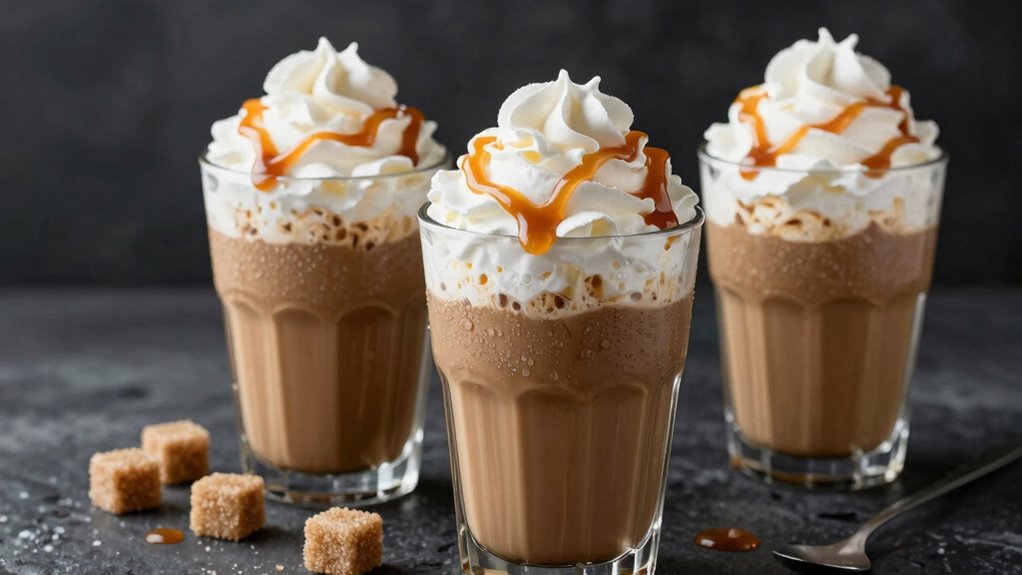

Frozen coffee drinks often hide a lot of sugar from syrups, flavored creams, and sweetened milk, making them calorie-dense and sweet beyond what you might expect. To mask coffee’s natural bitterness, many cafes add sweeteners, increasing sugar content and diminishing the true coffee flavor. Over time, these sugary indulgences pile up, contributing to excess calorie and sugar intake. Keep exploring to discover how understanding flavor profiles and making simple tweaks can help you enjoy these treats more mindfully.

Get coffee and tea gear delivered free with Prime
- Fast, free delivery on millions of items
- Prime Video, Amazon Music and more included
- Member-only deals all year
Key Takeaways
- Frozen coffee drinks often contain hidden sugars from syrups, flavored creams, and sweetened condensed milk, increasing calorie intake.
- Flavor enhancements like syrups mask natural coffee flavors, leading to higher sugar use to improve taste.
- Chain cafes frequently add excessive sugar without clear labeling, causing consumers to underestimate their sugar consumption.
- Regular consumption of sugary frozen coffees can lead to cumulative health issues and weight gain.
- Customizing drinks with less syrup and natural flavorings helps reduce sugar intake while enhancing flavor appreciation.
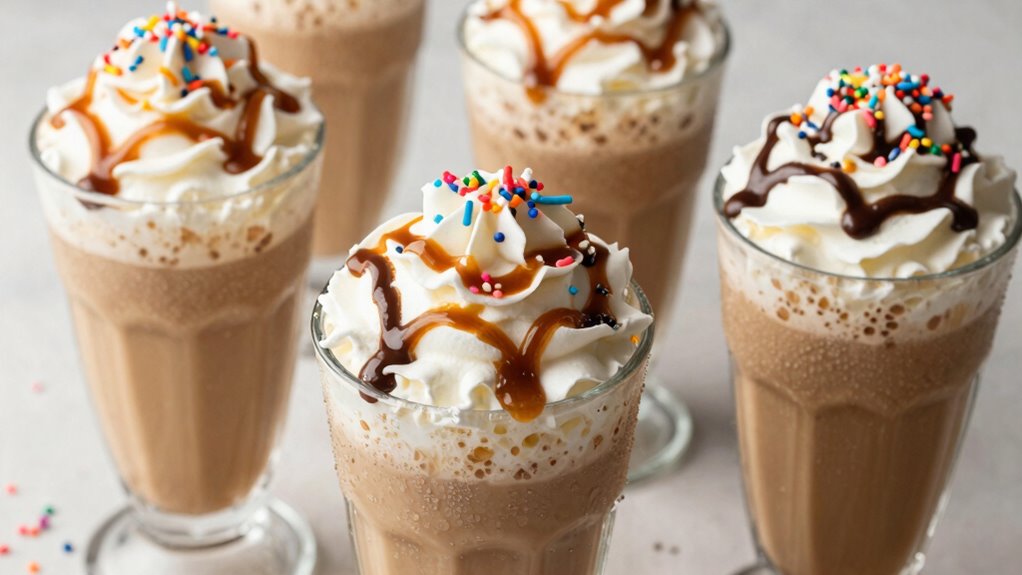
Frozen coffee drinks are a popular way to cool off and enjoy your caffeine fix, but they often come with a hidden cost: excessive sugar. When you order a blended coffee treat, it’s easy to overlook how much sugar is packed into that icy cup. Many chains add syrup, flavored creams, and sweetened condensed milk, all of which spike the sugar content. While the rich coffee flavor profiles might tempt you with hints of chocolate, caramel, or vanilla, these additions often overshadow the natural bitterness and depth of the coffee bean. As a result, your drink can become a sugar-laden indulgence that adds up quickly, especially if you’re ordering regularly.
Frozen coffee treats often hide high sugar levels from syrups and flavorings that overshadow natural coffee richness.
One of the main reasons sugar creeps into these drinks is that flavor enhancements often rely on sweeteners to mask the underlying bitterness or to create a more universally appealing taste. If you’re trying to cut back, you might notice that many menu options don’t provide clear information about sugar levels. That’s where understanding coffee flavor profiles becomes essential. When you know what to expect from different coffee beans—like the bright acidity of a Kenyan or the deep, chocolatey notes of a Colombian—you can better appreciate the natural flavors without excessive sweeteners. This knowledge empowers you to make smarter choices, whether by customizing your order or choosing simpler versions. Developing this understanding also helps you recognize the natural flavor notes in different coffees, making it easier to enjoy them without added sugar. Additionally, understanding the coffee roasting process can give you insight into the flavor characteristics of various beans and how they influence sweetness perception. Gaining insight into the origin of coffee beans can further enhance your appreciation for the unique flavors and reduce reliance on sugary additives.
To genuinely enjoy frozen coffee drinks without overloading on sugar, consider implementing some sugar reduction strategies. First, ask for your drink to be made with less syrup or flavored additives. Many cafes are happy to accommodate these requests. You can also opt for alternative milk options like unsweetened almond or coconut milk, which tend to have lower sugar content. Another effective strategy is to add a splash of cinnamon or cocoa powder yourself—these natural flavor enhancers can elevate the coffee’s taste without added sugar. Additionally, brewing your own frozen coffee at home allows you to control every ingredient, from the type of coffee beans to the amount of sweetener used. Understanding seed preservation and how to control ingredients can help you create healthier, customized drinks. Having a grasp of coffee flavor profiles also helps you identify the natural notes in your brew, reducing the need for added sweeteners. By choosing the right beans and preparation methods, you can enjoy a delicious, lower-sugar frozen coffee experience.
Ultimately, understanding coffee flavor profiles and employing sugar reduction strategies can help you indulge in frozen coffee drinks without the guilt. By being mindful of what goes into your cup, you turn a tempting treat into a more balanced and enjoyable experience. The next time you reach for that icy coffee, remember that a little customization can go a long way—letting you savor the rich, complex flavors of coffee without the unnecessary sugar overload.
As an affiliate, we earn on qualifying purchases.
Frequently Asked Questions
How Can I Make Healthier Frozen Coffee Drinks at Home?
You can make healthier frozen coffee drinks at home by choosing natural sweeteners like honey or maple syrup instead of sugar, and controlling the amount you add. Use unsweetened almond or oat milk to reduce calories. For rich flavor, add coffee flavorings like vanilla extract or cinnamon. Make certain the ice consistency is just right by blending until smooth and thick, giving you a satisfying, low-sugar treat that’s better for you.
What Are the Best Sugar Substitutes for Frozen Coffee Beverages?
You can use sugar alternatives like stevia, erythritol, or monk fruit to cut calories and reduce sugar in your frozen coffee drinks. These options provide sweetness without spiking blood sugar levels. To boost flavor, add cinnamon, vanilla extract, or cocoa powder, which enhance taste naturally. Experiment with these sugar substitutes and flavor enhancements to create a delicious, healthier frozen coffee beverage tailored to your preferences.
Do Sugar Levels Vary Between Different Coffee Shop Chains?
You’ll notice that sugar levels definitely vary between coffee shop chains, which is ironic given they all aim for that perfect coffee flavor. Some places load their drinks with sugar to boost taste, while others keep it lighter. So, if you’re watching your sugar content, don’t assume all frozen coffee drinks have the same amount—each chain has its own secret recipe, making your caffeine fix a surprisingly different experience.
How Does Sugar Intake From Frozen Coffee Affect Long-Term Health?
Consuming frozen coffee drinks high in sugar can impact your long-term health by affecting sugar metabolism and increasing the risk of insulin resistance. When you regularly ingest excess sugar, your body struggles to process glucose efficiently, potentially leading to higher blood sugar levels and type 2 diabetes. Over time, this can impair your insulin response, making it harder to maintain healthy energy levels and increasing your risk for metabolic issues.
Are There Any Low-Sugar or Sugar-Free Frozen Coffee Options?
Yes, you can find low-sugar or sugar-free frozen coffee options that keep you energized without the guilt. Think about using sugar-free syrups or zero-calorie sweeteners—these secret ingredients transform your drink into a delicious treat without spiking your sugar levels. With a little creativity, you’ll enjoy your frozen coffee guilt-free, savoring every sip while staying true to your health goals. Who knew coffee could be this smart?
Conclusion
Next time you indulge in a frozen coffee drink, remember how quickly sugar adds up. Imagine Sarah, a busy mom who started enjoying her favorite caffeinated treat daily, only to realize she gained 10 pounds in a few months. By being mindful of sugar content, you can still savor your coffee without the hidden calories. Small changes make a big difference—your health will thank you for it.
Halloween Picks
halloween
As an affiliate, we earn on qualifying purchases.