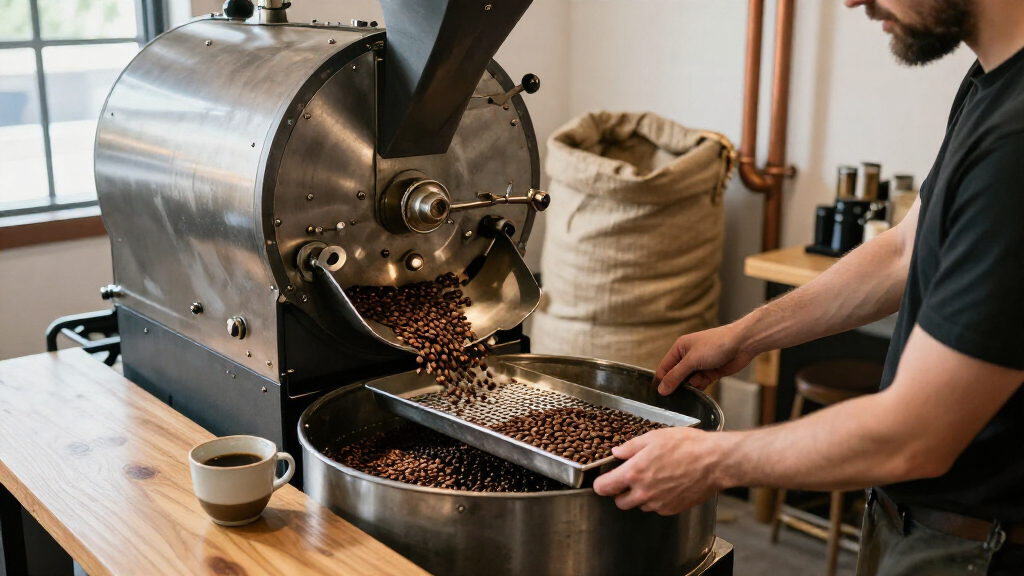

Among the best commercial coffee roasters in this lineup, I name the 1 kg Commercial Electric Coffee Roaster with Artisan Software and LCD Screen the best overall for its smaller, more manageable batch size and control-focused setup. The Kaldi Fortis is a standout for buyers who want a compact 600 g roaster, while the BEILOCKERY 110 lb gas roaster is aimed at operations built around very large batches. The central tradeoff is straightforward: higher capacity can support production, but it also asks for more space, utilities, ventilation, and process control. Compact machines are easier to fit into a small operation but may not keep up with larger demand. Read on for my full breakdown and guidance on matching capacity and heat source to your business.

Get coffee and tea gear delivered free with Prime
- Fast, free delivery on millions of items
- Prime Video, Amazon Music and more included
- Member-only deals all year
Complete the kit



Key Takeaways
- The 1 kg Artisan Software and LCD model is my best overall pick because its stated capacity keeps batch size approachable while software and screen controls point toward a more deliberate roasting workflow.
- The lineup spans sharply different scales: the Kaldi Fortis lists 600 g capacity, while BEILOCKERY and EQCOTWEA each list 110 lb gas roasters; these are not interchangeable choices for the same workspace or production plan.
- Gas versus electric is a site decision as much as a machine decision. The large gas models may suit production-focused operations, while electric options avoid relying on a gas connection but still require a suitable power supply and exhaust plan.
- Capacity labels alone do not establish usable output. Batch size, roast-cycle length, cooling, loading, and operator time all affect how much roasted coffee a business can consistently deliver.
- Special-purpose and multipurpose claims need scrutiny. Models listing coffee alongside nuts, peanuts, or grains may suit varied roasting tasks, but buyers should confirm that the drum, controls, cleaning process, and manufacturer guidance fit coffee production.
| Kaldi Fortis Coffee Roaster with Accessories, 600 g Batch Capacity |  | Best for Hands-On Small-Batch Roasting | Batch capacity: 600 g | Roasting type: Semi-convective | Thermometer: Dual data logger | VIEW LATEST PRICE | See Our Full Breakdown |
| HNZXIB Commercial Electric Coffee Bean Roaster, 4.4 lb Capacity |  | Best for Compact Electric Batch Roasting | Capacity: 4.4 lb | Temperature range: 86–572°F | Timer: 0–999 minutes | VIEW LATEST PRICE | See Our Full Breakdown |
| EQCOTWEA Commercial Electric Coffee Bean and Nut Roaster, 16.5 lb Capacity |  | Best for High-Volume Electric Roasting | Model: 56D | Capacity: 16.5 lb (7.5 kg) | Power: 3000 W | VIEW LATEST PRICE | See Our Full Breakdown |
| Electric Coffee Bean Roaster with Smokeless Drum |  | Best for Roast Control and Smoke Reduction | Model: BAMI-T500 | Maximum bean capacity: 500 g | Roasting modes: Automatic, assisted, manual | VIEW LATEST PRICE | See Our Full Breakdown |
| GYQSSD Electric Coffee Roaster, 2,000–4,000 g |  | Best for Multi-Purpose Dry-Goods Roasting | Capacity: 2,000–4,000 g | Power: 1.8 kW / 2.5 kW | Temperature range: 0–350°C | VIEW LATEST PRICE | See Our Full Breakdown |
| BEILOCKERY Commercial Automatic Gas Roaster, 110 lb Capacity |  | Best for High-Volume Production | Capacity: 110 lb (50 kg) | Fuel: LPG or natural gas | Power: 280 W | VIEW LATEST PRICE | See Our Full Breakdown |
| EQCOTWEA Commercial Gas Roaster, 110 lb Capacity, 304 Stainless Steel, 280 W |  | Best for Automatic Drum Reversal | Capacity: Title states 110 lb; description states 25 kg pot body | Fuel: LPG or natural gas | Power: 280 W | VIEW LATEST PRICE | See Our Full Breakdown |
| Automatic Stainless Steel Coffee Bean Roaster, 3.83-Gallon Capacity |  | Best for Small-Batch Flexibility | Capacity: 3.83 gallons (14.5 L) | Roasting capacity: About 5.51–6.61 lb per batch | Motor power: 14 W | VIEW LATEST PRICE | See Our Full Breakdown |
| ICZW 14.5 L Stainless Steel Drum Coffee Bean Roaster |  | Best for Gas-Stove Batch Roasting | Model: JT-3A | Capacity: 14.5 L | Batch capacity: Approximately 3.5–4.0 kg (7.7–8.8 lb) | VIEW LATEST PRICE | See Our Full Breakdown |
| HENGCMM Electric Drum Coffee Roaster, Type 10 |  | Best for Electric Control in Moderate Batches | Model: crts-929600, Type 10 | Roasting capacity: Approximately 4 kg of coffee beans | Voltage: 110 V | VIEW LATEST PRICE | See Our Full Breakdown |
| 1 kg Commercial Electric Coffee Roaster with Artisan Software and LCD Screen |  | Best for Profile-Driven Small Roasteries | Batch capacity: 1 kg (2 lb) | Daily roasting capacity: Up to 20 kg (44 lb) | Power: 2000 W, 240 V | VIEW LATEST PRICE | See Our Full Breakdown |
| Commercial Electric Drum Roaster for Coffee Beans, Peanuts, Nuts, and Grains, Type 5 |  | Best for Multi-Use Dry Goods Roasting | Model: Type 5 | Coffee capacity: Approximately 2 kg | Power: 1.8 kW | VIEW LATEST PRICE | See Our Full Breakdown |
| B500 Electric Coffee Bean Roaster |  | Best Compact Roaster for Small Batches | Model: B500 | Roasting capacity: 500 g | Roasting method: Electric drum roasting with direct-fire-style roasting | VIEW LATEST PRICE | See Our Full Breakdown |
| commercial coffee roaster | Dimensions | Model | Capacity | Power |
|---|---|---|---|---|
| Kaldi Fortis Coffee Roaster wi | 20.87 × 12.6 × 17.32 inches | FORTIS | — | — |
| HNZXIB Commercial Electric Cof | 10 × 10 × 10 inches | — | 4.4 lb | — |
| EQCOTWEA Commercial Electric C | 26.8 × 26.8 × 31.5 inches (D × W × H) | 56D | 16.5 lb (7.5 kg) | 3000 W |
| Electric Coffee Bean Roaster w | 19.29 × 10.24 × 15.75 inches | BAMI-T500 | — | — |
| GYQSSD Electric Coffee Roaster | — | — | 2,000–4,000 g | 1.8 kW / 2.5 kW |
| BEILOCKERY Commercial Automati | 29.13 × 66.93 × 50.39 in (D × W × H) | — | 110 lb (50 kg) | 280 W |
| EQCOTWEA Commercial Gas Roaste | 29.19 × 66.93 × 50.39 in (D × W × H) | — | Title states 110 lb; description states 25 kg pot body | 280 W |
| Automatic Stainless Steel Coff | 11.8 × 7.1 × 13.6 in | — | 3.83 gallons (14.5 L) | — |
| ICZW 14.5 L Stainless Steel Dr | — | JT-3A | 14.5 L | — |
| HENGCMM Electric Drum Coffee R | — | crts-929600, Type 10 | — | 1.5 kW / 2.2 kW |
| 1 kg Commercial Electric Coffe | 21.3 × 13.4 × 17.7 in (D × W × H) | — | — | 2000 W, 240 V |
| Commercial Electric Drum Roast | — | Type 5 | — | 1.8 kW |
| B500 Electric Coffee Bean Roas | 19.2 × 10.6 × 16.1 in | B500 | — | — |
More Details on Our Top Picks
Kaldi Fortis Coffee Roaster with Accessories, 600 g Batch Capacity
The Kaldi Fortis suits buyers who want a compact, manually managed roasting setup rather than the larger output of a production machine. Its 600 g capacity edges past the 500 g limit of the Electric Coffee Bean Roaster with Smokeless Drum, while the dual data logger thermometer gives roasters a way to monitor temperature during a batch. The semi-convective design and included accessories support a more involved roasting process, but the Fortis requires a separate gas burner, so it is not a self-contained electric option. Its modest listed weight may make it easier to reposition than the 185 lb EQCOTWEA 16.5 lb roaster, though buyers should check that the setup suits their workspace. This is a better fit for small specialty operations and serious hobbyists than for high-volume commercial production.
Pros:- 600 g batch capacity exceeds the 500 g limit of the Electric Coffee Bean Roaster with Smokeless Drum
- Dual data logger thermometer supports temperature monitoring during roasting
- Accessories are included
- Semi-convective roasting format suits hands-on batch work
Cons:- Requires a separate gas burner to operate
- 600 g capacity is small beside the 16.5 lb EQCOTWEA electric roaster
- The listed dimensions call for dedicated counter or workspace planning
Best for: Small coffee businesses and experienced hobby roasters who want hands-on control, batches above 500 g, and already have a suitable gas burner.
Not ideal for: Roasters seeking a plug-in electric machine, a turnkey setup, or enough capacity for sustained high-volume production.
- Batch capacity:600 g
- Roasting type:Semi-convective
- Thermometer:Dual data logger
- Power requirement:Gas burner required
- Dimensions:20.87 × 12.6 × 17.32 inches
- Item weight:1.32 lb
- Model:FORTIS
Our verdict“Choose the Kaldi Fortis for hands-on small batches and temperature tracking if you can supply a gas burner and do not need large-scale output.”
HNZXIB Commercial Electric Coffee Bean Roaster, 4.4 lb Capacity
The HNZXIB Commercial Electric Coffee Bean Roaster offers a useful middle ground: its 4.4 lb capacity is far larger than the Kaldi Fortis’s 600 g batch, yet its listed 10-inch cube footprint is much smaller than the 16.5 lb EQCOTWEA machine. A rotating stainless steel drum and PID control give operators adjustable temperature from 86°F to 572°F, while the removable drum is designed to simplify cleaning. The timer’s long range and the option to roast nuts and grains add flexibility, though they do not replace the workflow features of a dedicated high-output roaster. The main operating limit is clear: continuous heating should not exceed four hours. That makes this a practical fit for shorter production runs, not all-day roasting without breaks.
Pros:- 4.4 lb capacity substantially exceeds the Kaldi Fortis’s 600 g batch size
- PID temperature control spans 86°F to 572°F
- Removable rotating drum is designed for easier cleaning
- Can roast coffee beans, nuts, and grains
Cons:- Continuous heating is limited to four hours
- The 4.4 lb capacity is well below the 16.5 lb EQCOTWEA roaster
- A 999-minute timer range does not remove the stated continuous-heating limit
Best for: Small cafés, market vendors, and food businesses that need electric roasting in moderate batches and can schedule production within the four-hour heating limit.
Not ideal for: High-throughput roasteries needing long continuous runs or buyers who require a larger batch than 4.4 lb.
- Capacity:4.4 lb
- Temperature range:86–572°F
- Timer:0–999 minutes
- Material:Stainless steel
- Power source:Electric, 110 V
- Dimensions:10 × 10 × 10 inches
- Weight:22 lb
- Continuous heating limit:4 hours
Our verdict“Pick the HNZXIB for compact electric roasting in moderate runs, but choose a larger commercial machine if your production needs extended operation or higher batch volume.”
EQCOTWEA Commercial Electric Coffee Bean and Nut Roaster, 16.5 lb Capacity
For buyers who put batch size first, the EQCOTWEA 56D is the clear capacity leader among these five: its 16.5 lb (7.5 kg) pot dwarfs the HNZXIB’s 4.4 lb drum and the Kaldi Fortis’s 600 g batch. A 3D stirring-blade design is intended to keep beans moving through the cast-iron pot, while adjustable time and temperature controls support different roasting runs. The stainless steel frame is described as rust-resistant and easy to clean, a practical advantage in a busy workspace. The tradeoff is infrastructure: this machine needs 220 V single-phase power, and at 185 lb it is not a casual countertop appliance. I would choose it for a dedicated commercial station, not a small café that needs a portable, low-commitment setup.
Pros:- 16.5 lb capacity is the largest of these five products
- 3D stirring blades are designed to promote even movement through the roasting pot
- Adjustable time and temperature controls support varied roasting runs
- Stainless steel frame is described as rust-resistant and easy to clean
Cons:- Requires a 220 V single-phase power supply
- At 185 lb, it is difficult to relocate once installed
- Its 26.8 × 26.8 × 31.5 inch footprint needs dedicated floor or counter space
Best for: Established cafés, small production roasteries, and food businesses with a 220 V single-phase supply and space for a heavy, high-capacity machine.
Not ideal for: Home roasters, mobile vendors, or small cafés without 220 V power, installation space, or a need for 16.5 lb batches.
- Model:56D
- Capacity:16.5 lb (7.5 kg)
- Power:3000 W
- Electrical supply:220 V, 60 Hz, single-phase
- Dimensions:26.8 × 26.8 × 31.5 inches (D × W × H)
- Weight:185 lb
- Frame material:Stainless steel
- Roasting pot material:Cast iron
Our verdict“Choose the EQCOTWEA 56D when 16.5 lb electric batches justify the power and space requirements; skip it for smaller or mobile operations.”
Electric Coffee Bean Roaster with Smokeless Drum
The Electric Coffee Bean Roaster with Smokeless Drum is the most control-oriented choice here for operators who want several levels of involvement. Its automatic, assisted, and manual modes let a buyer start with guided operation and later adjust bean temperature, rate of rise, firepower, and airflow. The built-in purifier is designed to reduce smoke and dust before discharge, a useful feature for indoor workspaces where the GYQSSD’s description specifically calls for good ventilation. Capacity is the compromise: at 500 g per batch, it holds less than the Kaldi Fortis’s 600 g and far less than the HNZXIB’s 4.4 lb. The ability to preheat another batch while one cools may help keep small runs moving, but this remains a small-batch machine rather than a production-volume pick.
Pros:- Automatic, assisted, and manual modes suit different operator experience levels
- Temperature, rate-of-rise, firepower, and airflow controls allow roast adjustment
- Purifier is designed to reduce smoke and dust before discharge
- Can preheat the next batch while the previous batch cools
Cons:- 500 g maximum capacity is smaller than the Kaldi Fortis’s 600 g batch
- Capacity is far below the HNZXIB’s 4.4 lb and EQCOTWEA’s 16.5 lb
- Smoke and dust reduction does not establish that no ventilation is needed
Best for: Small cafés, training spaces, and specialty roasters who value adjustable roast control and smoke reduction more than large batch size.
Not ideal for: Commercial operators needing high daily output or batches larger than 500 g.
- Model:BAMI-T500
- Maximum bean capacity:500 g
- Roasting modes:Automatic, assisted, manual
- Controls:Bean temperature, ROR, firepower, damper
- Purifier:Smoke and dust purification
- Dimensions:19.29 × 10.24 × 15.75 inches
- Weight:22 lb
Our verdict“Choose this roaster for flexible small-batch control and built-in smoke reduction, not for high-volume production.”
GYQSSD Electric Coffee Roaster, 2,000–4,000 g
The GYQSSD Electric Coffee Roaster makes the most sense for buyers who want one machine for coffee and other dry goods, with a stated capacity range of 2,000–4,000 g. Its stainless steel heating tube, stirring paddle, adjustable temperature, and timer give operators straightforward control without the roast-mode selection found on the Smokeless Drum model. The capacity range puts it above the Kaldi Fortis and its 600 g batches, though it remains well below the EQCOTWEA’s 16.5 lb pot. One planning wrinkle is that the product information lists two capacity and size options, so buyers should confirm which configuration they are ordering. Roasting also produces smoke and calls for good ventilation; unlike the BAMI-T500, no purifier is listed. This is a flexible utility roaster, not the best fit for a smoke-sensitive indoor space.
Pros:- Handles coffee beans and a variety of other dry goods
- Adjustable temperature from 0–350°C and timer from 0–999 minutes
- Stirring paddle is designed to help heat contents evenly
- Stainless steel heating tube
Cons:- Roasting produces smoke, so good ventilation is required
- Product information lists two capacity and size options that buyers should distinguish
- Capacity is below the EQCOTWEA’s 16.5 lb batch size
Best for: Small food businesses and specialty retailers that roast coffee alongside nuts or other dry goods and have a well-ventilated workspace.
Not ideal for: Indoor operations without suitable exhaust or buyers who need clearly specified, high-volume capacity comparable to the EQCOTWEA 16.5 lb model.
- Capacity:2,000–4,000 g
- Power:1.8 kW / 2.5 kW
- Temperature range:0–350°C
- Timer range:0–999 minutes
- Roasting bucket sizes:φ20 × 30 × 12 cm / φ26 × 40.5 × 14 cm
- Product dimensions:475 × 270 × 290 mm / 55.5 × 32 × 37.5 cm
- Item weight:22 lb
- Manufacturer:GYQSSD
Our verdict“Choose the GYQSSD for flexible coffee and dry-goods roasting in a ventilated workspace, after confirming the capacity configuration you need.”
BEILOCKERY Commercial Automatic Gas Roaster, 110 lb Capacity
For a production operation that needs a large drum, the BEILOCKERY offers a stated 110 lb capacity and a horizontal design intended to heat beans evenly. Its 304 stainless steel liner and adjustable range up to 300°C give buyers useful material and temperature details, while four casters can help with positioning this substantial machine. Compared with the smaller-batch HENGCMM Electric Drum Coffee Roaster, Type 10, this roaster is aimed at much greater throughput, but it also requires far more floor space and a compatible gas hookup. The listing specifies LPG or natural gas alongside 220 V single-phase power, so the site needs both the right fuel and electrical service. Its weight and large footprint make it a poor fit for a small roastery or flexible counter setup.
Pros:- Stated 110 lb capacity targets high-volume production.
- 304 stainless steel inner liner is specified for food contact.
- Temperature adjusts up to 300°C.
- Four casters assist with positioning the large machine.
Cons:- Its 66.93-inch width and 342.82 lb net weight demand substantial floor space and handling capacity.
- Requires a compatible gas supply as well as 220 V single-phase power.
Best for: Commercial roasteries and food processors with space, gas service, and a need to handle large batches.
Not ideal for: Small cafés or startup roasters without a dedicated production area, LPG or natural-gas access, and 220 V power.
- Capacity:110 lb (50 kg)
- Fuel:LPG or natural gas
- Power:280 W
- Electrical supply:220 V, single-phase
- Temperature range:32–572°F (0–300°C)
- Inner liner:Food-grade 304 stainless steel
- Dimensions:29.13 × 66.93 × 50.39 in (D × W × H)
- Net weight:342.82 lb (155.5 kg)
Our verdict“Choose the BEILOCKERY for a spacious production site needing a large gas-fired drum, not for a compact or lightly equipped roasting operation.”
EQCOTWEA Commercial Gas Roaster, 110 lb Capacity, 304 Stainless Steel, 280 W
The EQCOTWEA is a gas-fired production roaster distinguished by its automatic forward and reverse controls, adjustable heat, and timer. Reversing the drum gives operators a control feature not specified for the BEILOCKERY Commercial Automatic Gas Roaster, whose appeal is its stated large capacity and horizontal drum. Capacity here needs careful reading: the title says 110 lb, while the description identifies a 25 kg pot body, so I would verify the usable batch size with the seller before planning output. The 304 stainless steel liner and 0–300°C range suit a commercial setting, but the machine weighs 490 lb and calls for both a gas connection and 220 V single-phase power. It is a more specialized installation than the small electric HENGCMM Type 10, not a plug-in option for a café counter.
Pros:- Automatic forward and reverse switches provide drum-direction control.
- Adjustable heat and time support process control.
- 304 stainless steel roasting liner and 0–300°C temperature range are specified.
- Four casters help with positioning.
Cons:- Capacity information conflicts: the title states 110 lb, while the description lists a 25 kg pot body.
- At 490 lb, it is difficult to move and requires a substantial installation area.
- Requires LPG or natural gas and 220 V single-phase electrical service.
Best for: Food-processing facilities and commercial roasteries that want gas heat, adjustable timing, and automatic drum-direction controls.
Not ideal for: Buyers who need a clearly documented batch capacity, a lightweight machine, or an installation that avoids gas and 220 V service.
- Capacity:Title states 110 lb; description states 25 kg pot body
- Fuel:LPG or natural gas
- Power:280 W
- Electrical supply:220 V, single-phase AC
- Temperature range:0–300°C
- Controls:Automatic forward and reverse switches; adjustable heat and time
- Dimensions:29.19 × 66.93 × 50.39 in (D × W × H)
- Item weight:490 lb
Our verdict“Pick the EQCOTWEA when automatic reversal is a priority and you can confirm its usable capacity and support a heavy gas-powered installation.”
Automatic Stainless Steel Coffee Bean Roaster, 3.83-Gallon Capacity
This compact drum offers a middle ground between small sample equipment and the heavy production machines in this group. Its stated 5.51–6.61 lb batch range is far below the BEILOCKERY’s 110 lb capacity, but the 13.2 lb body and countertop-scale dimensions are easier to accommodate in a pilot space or small food business. An adjustable 5–45 rpm rotation speed lets buyers vary drum movement, and the viewing hole helps monitor the contents. The product data does not specify a heating method or an adjustable temperature range, so buyers should confirm how heat is supplied and controlled before treating it as a complete commercial roasting system. Compared with the gas-heated ICZW 14.5 L Stainless Steel Drum Coffee Bean Roaster, this model offers a stated motor speed range but needs a 12 V DC supply.
Pros:- Handles about 5.51–6.61 lb per batch in a compact 13.2 lb unit.
- Rotation speed adjusts from 5 to 45 rpm.
- Viewing hole supports monitoring during roasting.
- Listed for coffee beans, peanuts, nuts, and soybeans.
Cons:- The supplied product data does not specify a heating method or temperature range.
- Requires a 12 V DC power supply.
- Its small-batch capacity cannot match the large gas-fired BEILOCKERY or EQCOTWEA.
Best for: Small-batch roasters, product developers, and food businesses testing beans or other dry ingredients in limited production runs.
Not ideal for: High-volume roasteries needing documented heat control, large batch throughput, or a clearly specified commercial installation.
- Capacity:3.83 gallons (14.5 L)
- Roasting capacity:About 5.51–6.61 lb per batch
- Motor power:14 W
- Voltage:12 V DC
- Rotation speed:5–45 rpm
- Materials:Stainless steel and Bakelite
- Dimensions:11.8 × 7.1 × 13.6 in
- Weight:13.2 lb
Our verdict“Choose this roaster for compact, modest batches only after confirming its heat source and temperature-control setup.”
ICZW 14.5 L Stainless Steel Drum Coffee Bean Roaster
The ICZW pairs an approximately 7.7–8.8 lb batch capacity with a lightweight, 7 lb drum, making it easier to handle than the 490 lb EQCOTWEA or the BEILOCKERY. Its double baffles and cooling holes are intended to support even roasting, and the included thermometer gives buyers a way to monitor temperature. The key distinction is the heat source: this unit uses a gas stove, rather than presenting itself as a self-contained commercial gas roaster. That can suit a small operation with an appropriate stove, but it also means the buyer must plan around the separate heating setup. Compared with the Automatic Stainless Steel Coffee Bean Roaster, the ICZW lists a thermometer and a larger stated batch range, while its gas-stove requirement makes installation less self-contained. I would not treat its broad commercial-use claim as proof of production-line throughput.
Pros:- Roasts approximately 7.7–8.8 lb per batch.
- Double baffles and cooling holes are designed to support even roasting.
- Includes a thermometer for temperature monitoring.
- At 7 lb, it is easier to handle than the large BEILOCKERY and EQCOTWEA units.
Cons:- Requires a gas stove for heat rather than specifying a self-contained heating system.
- Its batch size is unsuitable for high-volume production.
- The supplied 100 V specification may need checking against the intended setup.
Best for: Small roasteries and food businesses with a suitable gas stove that want a portable drum and batches under 9 lb.
Not ideal for: Production facilities seeking an integrated high-capacity roaster or buyers without a compatible gas stove.
- Model:JT-3A
- Capacity:14.5 L
- Batch capacity:Approximately 3.5–4.0 kg (7.7–8.8 lb)
- Heating method:Gas stove
- Material:Stainless steel
- Wattage:22 W
- Voltage:100 V
- Item weight:7 lb
Our verdict“Choose the ICZW for manageable gas-stove batches and portability, but skip it if your operation needs an integrated production roaster.”
HENGCMM Electric Drum Coffee Roaster, Type 10
The HENGCMM Type 10 stands apart from the gas-fired BEILOCKERY and EQCOTWEA by using a stated 110 V electric supply, automatic stirring, and an industrial microcomputer temperature controller. Its approximately 4 kg coffee capacity suits moderate batches rather than the very large output promised by those gas models. Temperature can be set from 30–350°C, and the timer spans 0–999 minutes; together, those controls give operators a specified framework for repeatable settings. The removable inner drum also makes cleaning more practical than a fixed-drum setup. The listing gives varying power, weight, and dimensions, however, so I would confirm the exact Type 10 configuration before arranging space or electrical service. Compared with the ICZW, it offers built-in electric temperature and timer controls, but is heavier and depends on the listed 110 V setup.
Pros:- Approximately 4 kg coffee capacity suits moderate production batches.
- Temperature range of 30–350°C and a 0–999 minute timer provide adjustable controls.
- Automatic stirring supports movement of the contents during roasting.
- Removable inner drum simplifies cleaning.
Cons:- Power, weight, and dimensions vary across the listed Type 10 specifications and need confirmation.
- The 110 V supply and listed power options may not match every commercial site.
- Its capacity is far below the BEILOCKERY and EQCOTWEA gas roasters.
Best for: Small commercial roasters and specialty food producers seeking electric temperature and timer controls for batches around 4 kg.
Not ideal for: High-throughput operations needing large gas-fired batches, or buyers who need unambiguous electrical and dimensional specifications before purchase.
- Model:crts-929600, Type 10
- Roasting capacity:Approximately 4 kg of coffee beans
- Voltage:110 V
- Frequency:60 Hz
- Power:1.5 kW / 2.2 kW
- Temperature range:30–350°C
- Timer range:0–999 minutes
- Construction:Stainless steel; removable inner drum
Our verdict“Choose the HENGCMM if you want specified electric temperature and timer controls for moderate batches and can confirm the exact configuration.”
1 kg Commercial Electric Coffee Roaster with Artisan Software and LCD Screen
For a small roastery that values repeatable batches and roast data, this 1 kg roaster offers a more connected workflow than the B500, which records roast curves but has half the batch capacity. Its Artisan compatibility, manual profile saving, and 10 automatic profiles give operators options for building repeatable recipes without relying solely on manual adjustments. The 10.1-inch touchscreen provides room to monitor roasting data, while the stated daily capacity of up to 20 kg suits regular small-scale production. The tradeoff is infrastructure: this model needs 240 V power and its NEMA 6-15 plug may require a dedicated compatible outlet. At 70 lb, it is also less convenient to relocate than the lighter B500. I’d choose it for data-led production, not for a shared space with limited electrical capacity.
Pros:- Artisan compatibility and manual profile saving support repeatable, data-led roasting.
- Ten automatic profiles give operators ready-made options alongside custom settings.
- The 10.1-inch touchscreen makes roasting data easier to monitor.
- Stated daily capacity of up to 20 kg suits consistent small-batch production.
Cons:- Requires 240 V power and a compatible NEMA 6-15 outlet.
- At 70 lb, it is cumbersome to move or reposition.
- Its 1 kg batch size is far below the capacities of the roundup’s large commercial gas roasters.
Best for: Small roasteries and coffee businesses that want saved roast profiles, Artisan-compatible monitoring, and batches up to 1 kg.
Not ideal for: Home users or pop-up operators without a compatible 240 V outlet, or anyone who needs to move the roaster frequently.
- Batch capacity:1 kg (2 lb)
- Daily roasting capacity:Up to 20 kg (44 lb)
- Power:2000 W, 240 V
- Operation:Semi-automatic
- Controls:10.1-inch touchscreen LCD
- Profiles and software:10 preset automatic profiles; manual profile saving; Artisan compatible
- Material and weight:Stainless steel; 70 lb
- Dimensions:21.3 × 13.4 × 17.7 in (D × W × H)
- Plug:NEMA 6-15
Our verdict“Choose this roaster for profile-based small-scale production if your workspace can support its 240 V connection and fixed footprint.”
Commercial Electric Drum Roaster for Coffee Beans, Peanuts, Nuts, and Grains, Type 5
The Type 5 is the most versatile choice here for operators who roast more than coffee: its removable drum and stirring paddle are designed for beans, nuts, grains, and other dry goods. With approximately 2 kg of coffee capacity, it also holds a larger batch than the 1 kg Artisan-compatible roaster, though it lacks that model’s stated daily throughput and software workflow. Temperature adjustment from 0–350°C and a timer extending to 999 minutes offer broad control, but the provided specifications do not describe roast profiles or data recording. That makes it better suited to straightforward, hands-on production than to profile-led specialty roasting. The machine weighs 27.5 lb, making it easier to reposition than the 70 lb touchscreen model. Its stated operating cautions also narrow the use case: avoid flour and very small particles, and damp products may require uncovered roasting.
Pros:- Roasts coffee beans, nuts, grains, and other dry goods, offering broader use than coffee-only models.
- Approximately 2 kg coffee capacity exceeds the 1 kg Artisan-compatible roaster’s batch size.
- Adjustable temperature and a long timer range provide flexible manual control.
- Removable drum and stirring paddle support cleaning and even heating.
Cons:- No roast-curve recording, preset profiles, or software compatibility is listed.
- Instructions advise against roasting flour or very small particles.
- Damp products may require the machine to be operated uncovered.
Best for: Small food producers or cafés that want one electric drum roaster for coffee plus suitable nuts and grains, with removable parts for cleaning.
Not ideal for: Specialty coffee roasters who need documented roast curves or software-supported profile management, or operators processing flour and very small particles.
- Model:Type 5
- Coffee capacity:Approximately 2 kg
- Power:1.8 kW
- Temperature range:0–350°C
- Timer range:0–999 minutes
- Roasting components:Removable drum and stirring paddle
- Material:Stainless steel
- Item weight:27.5 lb
- Package dimensions:20.87 × 13.39 × 12.01 in
Our verdict“Pick the Type 5 if you need a mid-capacity electric roaster for several kinds of dry goods and can work without roast-profile software.”
B500 Electric Coffee Bean Roaster
The B500 is the compact, lower-capacity option in this group: its 500 g batch size makes more sense for sample roasting or limited production than the Type 5’s approximately 2 kg capacity. PID temperature control and roast-curve recording give it useful tools for tracking and refining small batches, while its electric drum uses a direct-fire-style approach. Those features suit a home-based roaster or a small business testing coffee before committing larger quantities. The limitation is throughput: compared with the 1 kg touchscreen model, the B500 roasts half as much per batch, and no daily capacity is specified. At 22 lb, it is lighter than that model’s 70 lb build, though still not effortless to carry around. I’d favor it for controlled small batches, not as the sole production roaster for a busy commercial operation.
Pros:- 500 g capacity fits sample roasting and small production runs.
- PID temperature control supports steadier temperature management.
- Roast-curve recording helps track and refine batches.
- Its 22 lb weight is substantially lower than the 1 kg touchscreen roaster’s 70 lb.
Cons:- Its 500 g batch capacity limits output compared with the 1 kg and approximately 2 kg alternatives.
- No daily roasting capacity is provided, making production planning harder.
- At 22 lb, it may still be cumbersome to move regularly.
Best for: Home-based coffee businesses, sample roasters, and small cafés that prioritize roast-curve tracking over large batch output.
Not ideal for: Commercial operators who need higher volume per batch or a stated daily production capacity.
- Model:B500
- Roasting capacity:500 g
- Roasting method:Electric drum roasting with direct-fire-style roasting
- Temperature control:PID
- Roast-curve recording:Supported
- Dimensions:19.2 × 10.6 × 16.1 in
- Weight:22 lb
Our verdict“Choose the B500 for tracked, small-batch roasting or sample work, but look to the larger models for regular commercial volume.”
How We Picked
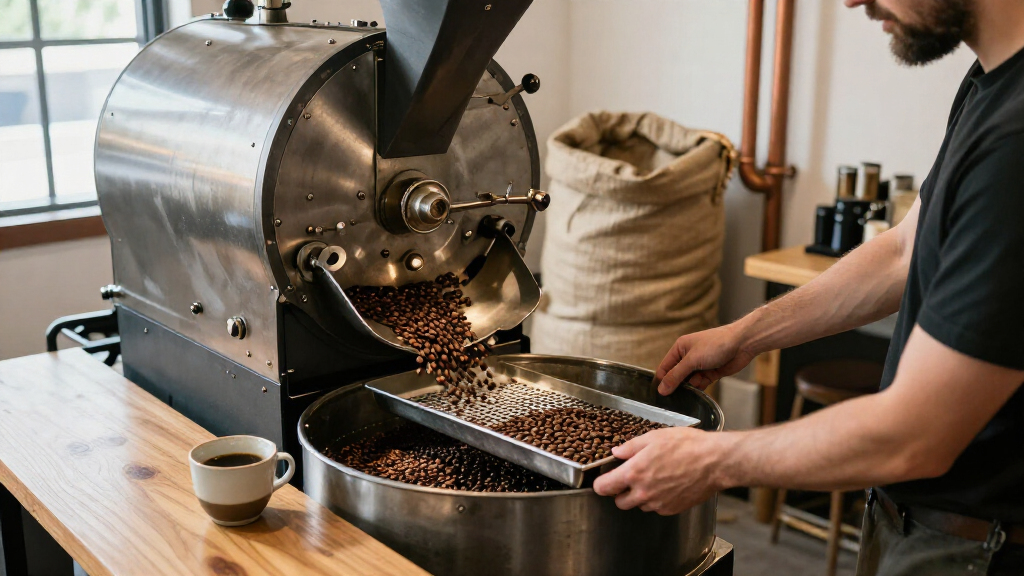
I ranked these machines around the decisions that shape a commercial roasting setup: stated batch capacity, heat source, control options, construction details, and the likely demands on space and workflow. A model with a moderate capacity and a more developed control interface can be a better fit for a small roastery than a much larger machine if the larger unit exceeds the buyer’s site or output needs. I also treated specific information—such as the Kaldi Fortis’s 600 g capacity, the EQCOTWEA stainless-steel listing, and the Artisan Software model’s LCD screen—as useful evidence, not a substitute for missing details about ventilation, cooling, service, or electrical requirements.
The order reflects fit and decision usefulness, not capacity alone. I favor the 1 kg electric machine as the broadest starting point in this lineup, then distinguish compact, mid-scale, high-capacity, and task-flexible options. Models with sparse specifications rank less decisively because buyers cannot judge installation needs or roast control from a capacity claim alone. Before committing, I would verify rated output, utility requirements, exhaust arrangements, warranty and service access, and whether the seller supports the intended commercial workload.
Factors to Consider When Choosing Best Commercial Coffee Roasters
Choosing a commercial roaster starts with the operating plan, not the biggest capacity number. I would work out how many saleable batches the business needs, what the site can support, and who will run the machine before comparing features. The following checks help expose costs and constraints that product listings often leave unclear.
Match Batch Capacity to Your Real Weekly Output
Estimate demand in roasted coffee, then account for how many batches your team can realistically roast, cool, record, and package in a working day. A large stated batch capacity does not tell you how long a cycle takes or how often the machine can run without interruptions. New roasters often buy for a hoped-for future volume and end up with equipment that consumes space and capital before sales justify it. The opposite mistake is choosing a small drum without checking whether repeated batches will bottleneck production. Ask manufacturers for typical green-bean charge size, cycle time, and expected daily output under normal use. I would leave room for seasonal peaks, but base the purchase on a credible near-term plan rather than an ambitious forecast.
Check Utilities and Ventilation Before Choosing Electric or Gas
Heat source affects installation, operating routines, and the options available at a particular site. Gas machines require a compatible connection and careful review of local installation rules, while electric models need a circuit that meets the maker’s voltage, amperage, and phase requirements. Neither option removes the need to plan for smoke, chaff, heat, and exhaust. A common purchasing error is treating a roaster as a plug-in appliance and discovering later that the room needs electrical work or a dedicated ventilation system. Get the utility specifications and exhaust guidance in writing before ordering, then have qualified local tradespeople review the site. That check can rule out an otherwise attractive high-capacity machine before costs accumulate.
Prioritize Repeatable Control Over Feature Count
For a business, the ability to reproduce a roast matters more than a long feature list. Check what the machine actually measures and controls, such as temperature readings, airflow adjustments, drum speed, profile recording, or automated steps. A screen or software mention is useful only if the interface supports the operator’s process and captures information that can be reused. Ask whether controls allow manual intervention, how profiles are saved, and whether the readings correspond to documented probe locations. Buyers should also plan training and written procedures so results do not depend on one operator’s memory. If the seller cannot explain how a feature supports repeatability, I would not pay extra for the feature name alone.
Look Beyond Stainless Steel to Serviceability
Stainless steel can be a useful construction detail, but it does not answer how readily the roaster can be cleaned or repaired. Ask which parts collect chaff, how the drum and cooling area are accessed, and whether wear items and replacement components are available. A machine that is difficult to clean can slow a busy workflow and make it harder to maintain consistent results between batches. Confirm the warranty terms, service contact, parts lead times, and whether repairs can be handled locally. For imported equipment, ask who provides technical support in your region rather than assuming the marketplace seller can service it. A clear maintenance and support plan can matter more to uptime than a small difference in listed capacity.
Treat Multi-Use Claims as a Separate Qualification
Some machines in this lineup are described for coffee as well as nuts, peanuts, or grains, but shared use should not be assumed to work well for every product. Different foods can leave oils, aromas, debris, or residue that affect later coffee batches. Ask the manufacturer whether the machine is designed for coffee roasting at the required profile range and how it should be cleaned between products. Also check whether using other ingredients affects warranty coverage or food-safety obligations. A multipurpose roaster may make sense for a business with varied production, but it adds process controls and cleaning steps. If coffee quality and flavor separation are the priority, a dedicated coffee workflow may be the simpler choice.
Plan for the Full Batch Workflow, Not Just the Roast
Roasting capacity is only one part of throughput: green-bean storage, loading, cooling, weighing, logging, and packaging all take time and space. Buyers often focus on the drum and overlook whether the cooling tray, chaff collection, or operator position fits the room. Map the path from stored green coffee to cooled beans, and check how many people are needed to run each step. A larger roaster can create a surge of beans that a small cooling or packing setup cannot handle. Before buying, request dimensions, clearance guidance, cooling details, and the recommended number of operators. A balanced line can produce more reliable output than a bigger roaster surrounded by bottlenecks.
Frequently Asked Questions
Is a 110 lb coffee roaster a sensible first commercial machine?
It can make sense for a business with proven demand, suitable premises, and staff ready to manage production at that scale. The capacity claim alone does not reveal cycle time, daily output, installation requirements, or how much cooling and storage space the operation needs. I would request full utility and exhaust specifications, service details, and a demonstration or operating documentation before committing. For a new roasting business still validating demand, a smaller machine may limit risk and make profile development more manageable. Choose the large format only when the surrounding operation can use it consistently.
What capacity should I choose if I sell coffee online and to local cafés?
Start with forecast weekly roasted volume, then estimate how many hours are available for roasting and packing. Café orders may require dependable repeat batches, while online sales can create a different pattern of smaller, more frequent orders. Ask each supplier for realistic batch size and cycle time, then include cooling, cleaning, and changeover time in the calculation. A machine that fits the average week but cannot handle a busy week may leave you scrambling; a very large model can sit underused. I would compare a modest capacity with the workload of your actual production schedule, not just total sales goals.
Should I choose a gas or electric commercial roaster?
Choose based on the site’s available utilities, installation cost, operating needs, and the maker’s specifications rather than assuming one heat source is inherently better. Gas units can suit production settings planned around gas service, while electric models may fit sites where that arrangement is more practical. Both need appropriate ventilation and safe installation, and electric roasters can have demanding power requirements. Before comparing roast performance, have a qualified professional confirm that your premises can support the proposed machine. Request the exact voltage, amperage or gas specification, phase, and exhaust details from the seller.
Can a roaster marketed for coffee and nuts make consistent specialty coffee?
Possibly, but a multipurpose description does not establish the level of control or repeatability needed for your coffee program. Ask for coffee-specific operating guidance, details about temperature and airflow control, and examples of how profiles can be recorded and repeated. Shared use may also leave oils or aromas that carry into coffee, so cleaning instructions and cross-use limitations matter. Check whether processing non-coffee products affects support or warranty coverage. If your business depends on distinct coffee profiles and flavor separation, a dedicated coffee machine may be easier to manage.
What information should I get from a seller before ordering a commercial roaster?
Request the machine’s dimensions, weight, rated batch size, recommended daily workload, cycle-time guidance, and full utility requirements. Ask for ventilation and chaff-handling instructions, cooling details, cleaning steps, and any clearances required around the unit. Get warranty terms, support contacts, spare-parts availability, and service arrangements for your region in writing. If the listing names software or automated controls, ask what data they record and whether profiles can be saved or exported. These answers help you judge whether the roaster fits your site and workflow, not just whether its headline capacity looks suitable.
Conclusion
For the broadest balance in this lineup, I recommend the 1 kg Commercial Electric Coffee Roaster with Artisan Software and LCD Screen as best overall, particularly for a business that values a manageable batch size and a more control-oriented interface. The Kaldi Fortis is my pick for beginners or compact operations willing to work in 600 g batches; its smaller format is easier to place, but it will not suit high-volume demand. For value, I would start by comparing the HNZXIB 4.4 lb electric roaster with other mid-capacity options, while verifying utilities, controls, and support before deciding. Buyers seeking a premium, large-production setup should investigate the BEILOCKERY or EQCOTWEA 110 lb gas roasters only after confirming site readiness and service coverage. For specific needs, the smokeless-drum model merits a closer look where smoke handling is a concern, and the multi-use listings may suit operations roasting more than coffee—but neither label replaces a detailed check of performance and installation requirements.