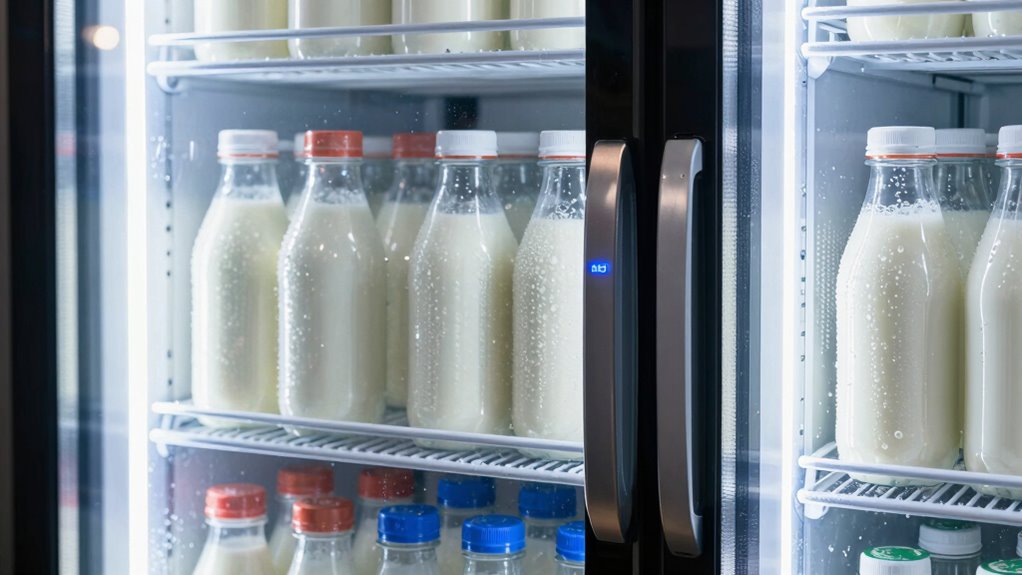

To keep milk safe in your beverage fridge, the most important temperature detail is maintaining it between 1°C and 4°C (34°F to 39°F). Many fridges aren’t set correctly or aren’t designed for dairy, which can cause milk to warm up and spoil. Fluctuations from door openings or poor placement can also harm freshness. Staying within this temperature range and monitoring regularly helps prevent bacterial growth. If you want to discover more about keeping your milk fresh, keep exploring.

Get coffee and tea gear delivered free with Prime
- Fast, free delivery on millions of items
- Prime Video, Amazon Music and more included
- Member-only deals all year
Key Takeaways
- Maintaining a temperature between 1°C and 4°C is crucial for milk safety in beverage fridges.
- Beverage fridges often have higher default settings, risking milk spoilage if not properly adjusted.
- Temperature fluctuations from frequent door openings promote bacterial growth and spoilage.
- Using a thermometer ensures accurate monitoring and helps keep the fridge within the safe temperature range.
- Proper placement and minimal door opening stabilize temperature, safeguarding milk from microbial contamination.
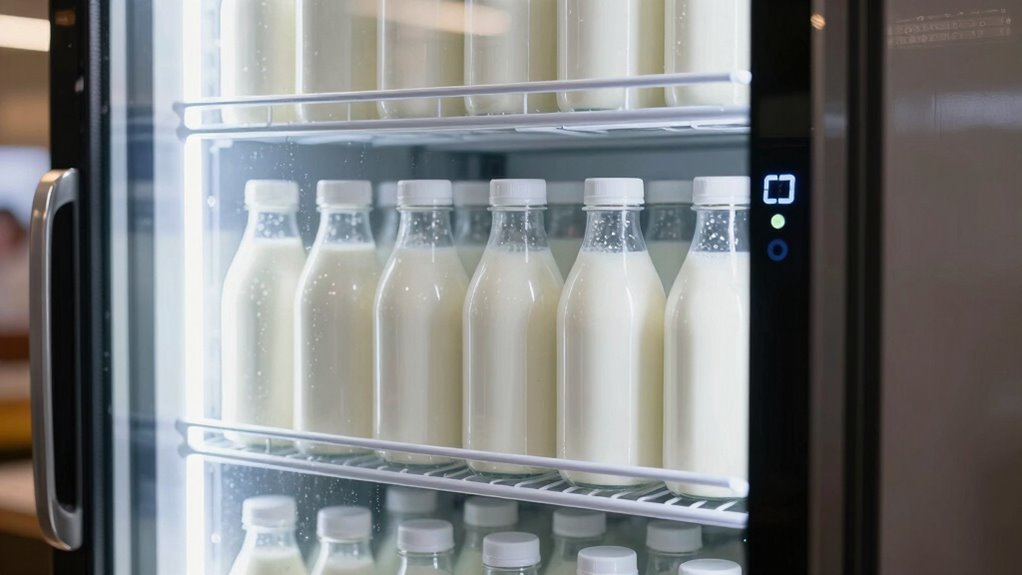
Beverage fridges are convenient for keeping drinks cold, but when it comes to storing milk, you need to guarantee proper safety measures. The key factor here is temperature regulation. Milk is highly perishable and sensitive to temperature changes, so maintaining the right environment is essential to prevent spoilage and ensure safety. If the fridge isn’t set at the correct temperature, you risk microbial growth, which can lead to foodborne illnesses. The ideal temperature for storing milk in a beverage fridge is between 1°C and 4°C (34°F and 39°F). Anything above this range allows bacteria to multiply more rapidly, reducing the milk’s freshness and safety.
You might think that since beverage fridges are designed for drinks, they automatically keep everything cold enough for milk. However, many models aren’t built specifically for dairy products. They often have temperature controls meant for cans and bottles, which might be set too high for milk storage. If the fridge’s temperature isn’t properly regulated, milk can warm up enough to become a breeding ground for bacteria. Microbial growth accelerates as temperatures rise above 4°C, making milk unsafe to drink in a short period. That’s why it’s imperative to regularly check and adjust the fridge’s thermostat to keep it within the safe range for milk. Proper temperature regulation is also crucial in avoiding microbial proliferation and ensuring that the fridge functions efficiently over time. Additionally, understanding dairy storage best practices can help you optimize your fridge’s performance and safety.
Another point to keep in mind is that inconsistent temperature regulation can create fluctuations that compromise milk safety. If the fridge cycles on and off or if the door is frequently opened, the temperature can fluctuate outside the safe zone. These fluctuations give bacteria a chance to multiply, increasing the risk of spoilage. To avoid this, position the fridge in a stable environment away from heat sources and avoid frequent door openings. Installing a thermometer inside the fridge can help you monitor the temperature accurately, guaranteeing it stays consistent. Proper air circulation within the fridge also plays a role in maintaining uniform temperatures throughout the storage space.
Finally, understanding the importance of controlling microbial growth is essential. When milk is stored at the right temperature, it slows down bacterial activity, extending its freshness and safety. Conversely, poorly regulated temperature settings can lead to rapid bacterial growth, which not only causes spoilage but also poses health risks. Proper temperature regulation is also influenced by the design and placement of the fridge, which can impact its ability to maintain a stable environment. Paying close attention to your beverage fridge’s temperature regulation is the simplest way to safeguard your milk. Properly storing milk ensures it remains fresh, safe, and enjoyable to consume, while also protecting your health.
digital refrigerator thermometer for milk
As an affiliate, we earn on qualifying purchases.
As an affiliate, we earn on qualifying purchases.
Frequently Asked Questions
How Often Should I Clean My Beverage Fridge?
You should clean your beverage fridge at least once a month to maintain a good cleaning schedule. Regular cleaning helps with odor control and keeps your drinks tasting fresh. Wipe down shelves, clean the interior, and check for spills or mold. If you notice any strong odors or spills sooner, clean it immediately. Consistent maintenance guarantees your fridge stays hygienic and odor-free, making your beverage experience more enjoyable.
Can Beverage Fridges Be Used for Storing Other Perishable Items?
Absolutely, beverage fridges can be great for alternative uses, including storing other perishable items. Think of it as a mini food vault, perfect for keeping snacks, fruits, or even certain dairy products fresh. Just make certain the temperature stays consistent and suitable for food storage. While designed mainly for beverages, you can safely expand its use, but always double-check the fridge’s temperature settings for ideal food safety.
What Is the Ideal Humidity Level for Beverage Fridge Storage?
You should aim for a humidity level of around 50-60% in your beverage fridge. Proper humidity control helps prevent excess condensation, which can lead to mold and spoilage. Maintaining this balance minimizes condensation buildup, keeping your drinks fresh and your fridge’s interior dry. Regularly check and adjust humidity settings if possible, ensuring ideal storage conditions that protect your beverages and extend their freshness.
How Do I Troubleshoot Temperature Fluctuations in My Fridge?
A stitch in time saves nine, so start troubleshooting your fridge’s temperature fluctuations promptly. First, check if the temperature calibration is accurate and adjust if necessary. Next, examine for power fluctuations that might cause inconsistent cooling. Make certain the door seals tightly and avoid overloading. If issues persist, consult a professional. Regular maintenance helps keep your fridge running smoothly and maintains consistent temperatures.
Are There Energy-Efficient Beverage Fridges Available?
Yes, there are energy-efficient beverage fridges available. Look for models with high appliance ratings, which indicate better energy savings. These fridges often feature advanced insulation, efficient compressors, and eco-friendly refrigerants, helping you save on electricity costs. By choosing an energy-efficient model, you not only reduce your environmental impact but also enjoy long-term savings, making it a smart investment for keeping beverages cold without high energy bills.
Conclusion
Remember, if you ignore that tiny temperature detail, you’re risking more than just spoiled milk—you’re inviting a potential food safety disaster into your home! A single degree too warm can turn your fresh milk into a breeding ground for bacteria, transforming your fridge into a bacterial battleground. Keep your beverage fridge at the perfect temperature, and you’ll stay miles ahead of the game—protecting your health and ensuring every sip is pure, fresh, and safe. Don’t let a small mistake become a big problem!
Halloween Picks
halloween
As an affiliate, we earn on qualifying purchases.