TL;DR

Get coffee and tea gear delivered free with Prime
- Fast, free delivery on millions of items
- Prime Video, Amazon Music and more included
- Member-only deals all year
Candles release smoke, particles and chemical compounds, but experts cited in a Good Housekeeping report say studies modeling typical household use generally found emissions below levels of concern. Researchers have not established a precise harmful exposure threshold; ventilation, candle use and individual sensitivity affect exposure.
Scented candles release particles and chemical compounds into indoor air, but studies that simulate normal household use have generally measured emissions below levels of concern, according to experts interviewed by Good Housekeeping. The report says there is no established threshold for how many candles, burned for how long or in what size room might create a harmful exposure, leaving ventilation and individual sensitivity central to practical risk.
Meghan E. Rebuli, a respiratory toxicologist and University of North Carolina at Chapel Hill pediatrics professor, told Good Housekeeping that candle burning can release soot, particulate matter and volatile or semi-volatile organic compounds. She said studies designed to resemble ordinary household use have mostly found amounts below levels of concern, regardless of candle type. Some research, she added, suggests that fragranced or paraffin-wax candles may produce higher levels of certain emissions, though the reported levels are not likely to be a major concern.
Daniel Croft, an associate professor of pulmonary and critical care medicine at the University of Rochester Medical Center, said the exposure a person receives depends on factors including the number and size of candles, burn duration and room size. He described the dose as central to assessing risk. Research has linked long-term particulate exposure generally—not necessarily exposure from candles specifically—to asthma attacks, worsening chronic obstructive pulmonary disease, cardiovascular events and stroke. Those associations do not establish that ordinary candle use causes those outcomes.
The report also notes a 2025 study that found burning scented candles led to a significant increase in certain strains of airborne bacteria. It does not provide details in the supplied material about the study’s setting or whether the finding translates into illness risk. The evidence discussed does not set a specific point at which candle emissions become harmful. Experts recommend paying attention to indoor air and using ventilation, rather than treating all candle use as either safe or dangerous.
How Candle Use Affects Indoor Air
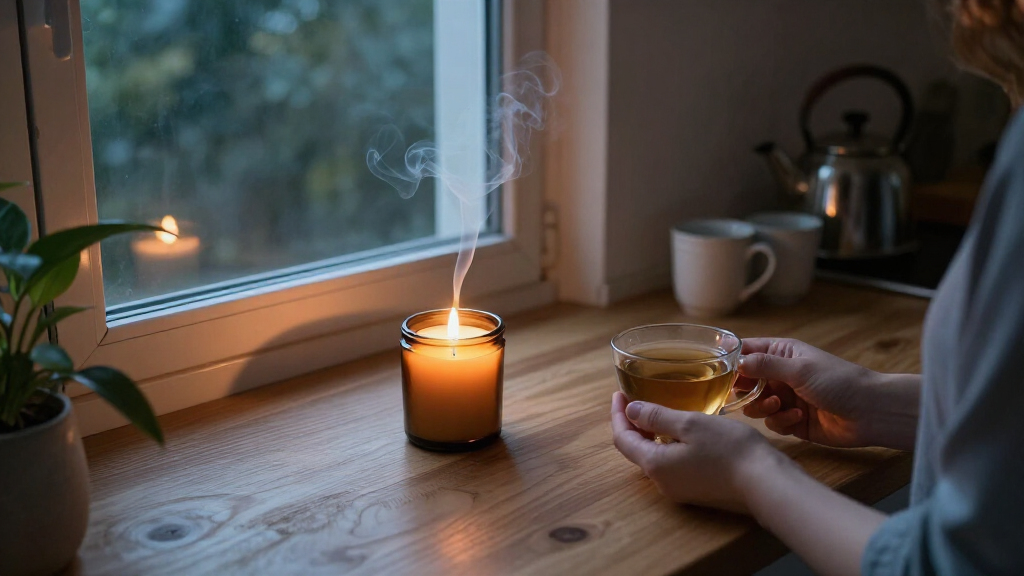
The practical issue is cumulative indoor exposure, not simply whether a candle is scented. Smoke and particles from candles add to the air people breathe, and the concentration can vary with room size, ventilation, the number of candles and how long they burn. A small, ventilated room with one candle is not the same exposure scenario as several candles burning for hours in a closed space.
People with asthma or allergies, and pregnant women, may want to take extra care around potential air pollutants, the experts told Good Housekeeping. That caution is not a finding that candles have been shown to harm these groups; it reflects concern about reducing avoidable exposures. If a candle produces visible smoke or soot, or its scent feels overpowering, improving airflow or putting it out can reduce continued exposure.
Products Worth Considering

Ninja Foodi Smart 6-in-1 Indoor Grill and Air Fryer, 4 Qt, FG551

Cuisinart Chef's Classic 11-Piece Stainless Steel Cookware Set

Cuisinart 8-in-1 Air Fryer Toaster Oven with Grill, 1800W, Stainless Steel (TOA-70NAS)
As an affiliate, we earn on qualifying purchases.
What Candle Studies Have Measured
A 2021 study examined ultrafine-particle emissions from five pillar-candle types over six hours. Croft said emissions appeared higher when candles first began burning and later became relatively stable. The paraffin candle in that study was among those with higher emissions, but he said the candles’ measured ranges were relatively similar. Earlier research has raised concerns about paraffin, so Croft said avoiding it is a reasonable personal choice while the evidence remains unsettled.
A separate 2021 study, as described in the report, estimated that clearing carbon dioxide from two candles in a room would require the same effort as clearing carbon dioxide exhaled by one 176-pound person. Croft used the comparison to explain the role of ventilation, not to establish a health-risk threshold. The report also cites a 2023 study by the Research Institute for Fragrance Materials, but the supplied source text ends before giving its findings, so no conclusion from that study can be stated here.
“The dose makes the poison.”
— Daniel Croft, associate professor at the University of Rochester Medical Center
No Candle Exposure Limit Established
Researchers have not established how many candles, for how long, or in what room size would produce a harmful exposure, according to the report. Findings from laboratory or modeled household conditions also cannot answer every question about repeated use in homes with differing ventilation and air quality. The reported links between long-term particulate exposure and health effects concern particulate matter broadly and do not prove that candle emissions cause those effects.
The supplied source material gives limited information about the 2025 airborne-bacteria study and the 2023 fragrance-material study. It does not establish whether the bacterial changes lead to health problems, nor does it provide enough detail to independently evaluate the fragrance study’s methods or conclusions. The relative risks of scented versus unscented candles and paraffin versus other waxes also remain uncertain.
Watch for More Exposure Research
No specific new study, government guidance or regulatory decision is announced in the report. The clearest next step for the evidence is research that measures emissions under varied real-world conditions and connects those exposures to health outcomes, including for people with respiratory sensitivities. Until clearer exposure limits are available, experts cited by Good Housekeeping advise ventilating rooms and considering how many candles are burning and for how long.
Key Questions
Are scented candles proven to be dangerous?
No. The report says studies simulating normal household use have mostly found emissions below levels of concern. That does not establish that every candle or exposure is risk-free, and researchers have not set a specific harmful exposure threshold.
Do scented candles release pollutants?
Yes. Experts cited in the report say burning candles can release soot, particulate matter and chemical compounds. How much a person is exposed to depends on factors such as candle number, burn time, room size and ventilation.
Are paraffin candles worse than other candles?
Evidence is not conclusive. A 2021 study found relatively similar emission ranges across the candle types it examined, although its paraffin candle had some of the higher particulate emissions. Croft said choosing to avoid paraffin is a reasonable precaution while research remains unsettled.
How can I reduce exposure when burning candles?
Experts recommend ventilation, limiting how many candles burn at once and avoiding prolonged burning in a small, poorly ventilated room. People with asthma or allergies, and pregnant women, may choose to be more cautious about indoor-air exposures.
Source: goodhousekeeping.com