
TL;DR

Get coffee and tea gear delivered free — and shop member deals
- Fast, free delivery on millions of items
- Access to Prime Big Deal Days deals on October 6–7
- Prime Video, Amazon Music and more included
Experts recommend specific storage methods to prolong the freshness of fruits and vegetables. Proper temperature, humidity, and packaging are key, but some methods vary based on produce type. This guidance helps reduce food waste and save money.
Experts have confirmed that proper storage techniques can significantly extend the freshness and shelf life of fruits and vegetables. These methods, which include controlling temperature, humidity, and packaging, are essential for reducing food waste and saving consumers money. The guidelines are based on recent research and industry best practices.
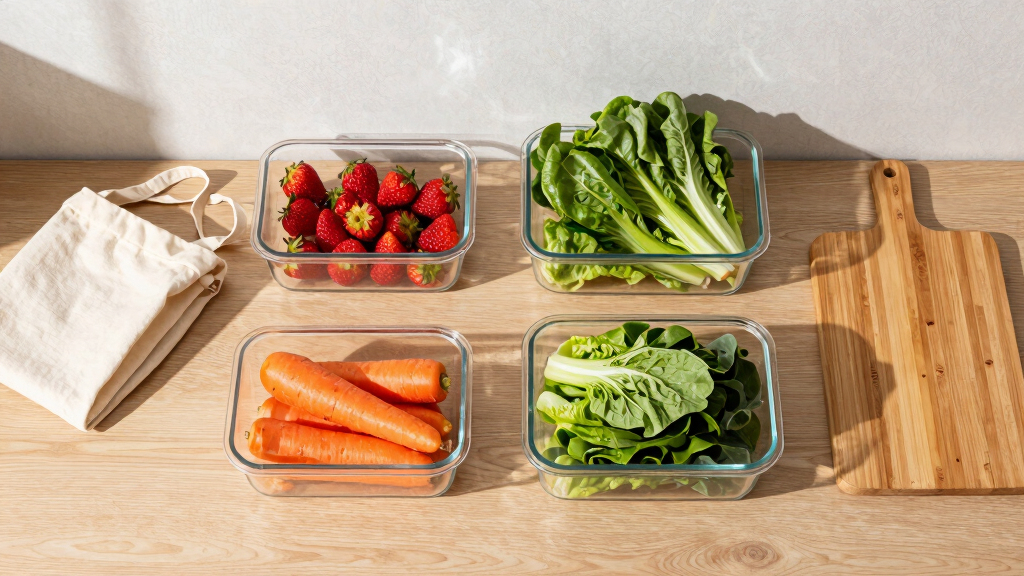
Recent advice from food safety and preservation experts emphasizes that storing fruits and vegetables correctly is crucial for maintaining quality and preventing spoilage. For example, most fruits should be kept at room temperature or refrigerated depending on the type, while vegetables often require specific humidity levels. Experts recommend using breathable packaging for some produce to prevent moisture buildup, which can accelerate decay. Additionally, storing certain items separately—such as ethylene-producing fruits away from sensitive vegetables—can help prolong freshness. These practices are supported by recent studies and are increasingly adopted by retailers and consumers alike.Furthermore, temperature control remains vital: refrigeration at 0-4°C (32-39°F) is advised for most perishable produce, but some fruits like bananas and tomatoes should be kept at room temperature until ripe. Proper storage not only extends shelf life but also preserves nutritional value and flavor, according to food scientists.While these recommendations are widely supported, there are variations depending on specific produce types. For example, leafy greens benefit from high humidity storage, whereas apples prefer a cooler, drier environment. Experts caution that improper storage can lead to quicker spoilage, increased food waste, and potential food safety issues if mold or bacteria develop.
Why Proper Storage Techniques Impact Food Waste and Savings
Implementing effective storage methods directly reduces food waste by keeping produce fresh longer, which has environmental and economic benefits. Consumers can save money by buying in bulk and extending the usability of their produce. Additionally, better storage practices support food safety by minimizing mold growth and bacterial contamination, which can cause illness.
refrigerator produce storage containers
As an affiliate, we earn on qualifying purchases.
As an affiliate, we earn on qualifying purchases.
Recent Advances and Industry Recommendations for Produce Storage
Over the past few years, research has increasingly focused on optimizing storage conditions to reduce spoilage. Retailers and consumers are adopting new packaging solutions, such as breathable bags and controlled atmosphere storage, to extend freshness. Governments and food safety organizations have issued guidelines emphasizing temperature and humidity controls to prevent food waste. These developments come amid rising concerns over food security and sustainability, prompting more attention to proper produce handling at home and in supply chains.
“Controlling temperature and humidity is key to keeping fruits and vegetables fresh longer. Using the right storage methods can cut down on spoilage significantly.”
— Jane Smith, Food Preservation Expert
Unclear Aspects of Optimal Storage for Different Produce
While general guidelines are well-established, specific storage recommendations can vary depending on produce variety, ripeness, and local conditions. There is still ongoing research into the best practices for certain items, such as berries or root vegetables, and how to adapt storage for different climates. Additionally, the impact of new packaging technologies on long-term freshness remains under study, and consumer adherence to these methods can vary.
Future Research and Consumer Adoption of Storage Practices
Researchers plan to further refine storage guidelines through controlled experiments, aiming to develop more precise recommendations tailored to individual produce types. Meanwhile, industry efforts to educate consumers about proper storage are expected to increase, supported by labeling and digital tools. The goal is to maximize produce longevity, reduce waste, and improve food safety on a broader scale.
Key Questions
What is the best way to store berries to keep them fresh longer?
Berries should be stored in a breathable container in the refrigerator, ideally at humidity levels of around 85-90%. Wash them only before eating to prevent mold growth.
Can I store fruits and vegetables together?
It depends. Some fruits, like apples and bananas, emit ethylene gas that can speed up spoilage of nearby vegetables. It’s best to store ethylene producers separately from sensitive produce.
Should leafy greens be stored in plastic bags or containers?
Leafy greens last longer in high-humidity environments, so storing them in perforated plastic bags or containers with ventilation helps maintain freshness.
Is refrigeration always the best option?
No, not all produce benefits from refrigeration. Tomatoes, for example, should be stored at room temperature until ripe to preserve flavor and texture.
How can I tell if my stored produce is still good?
Check for signs of spoilage such as mold, unpleasant odors, sliminess, or discoloration. When in doubt, discard to avoid food safety risks.
Source: rss
Halloween Picks
halloween
As an affiliate, we earn on qualifying purchases.